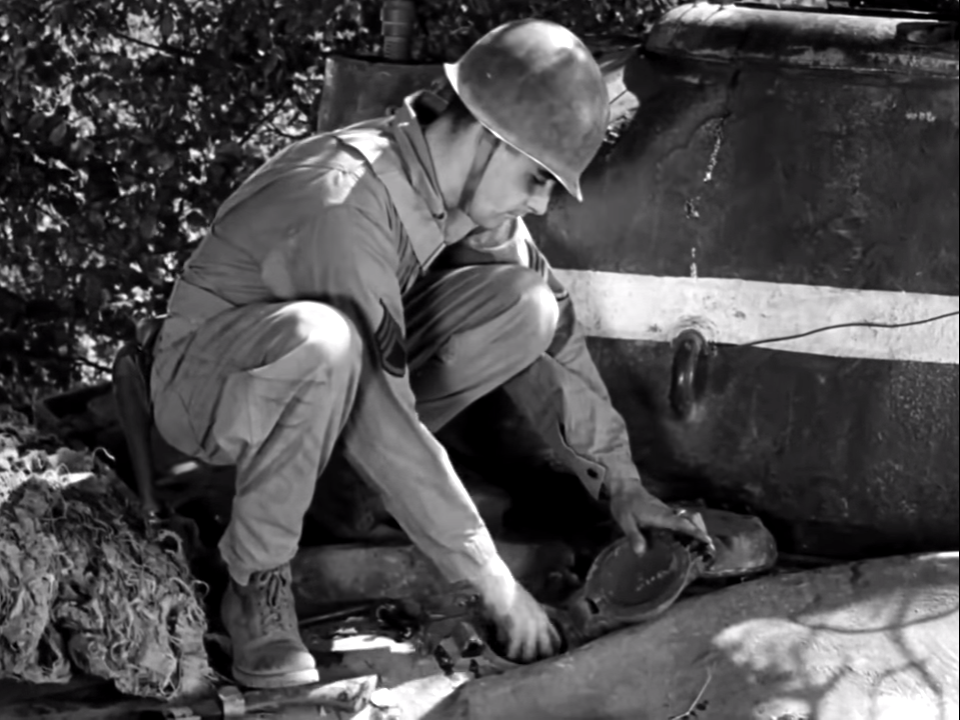
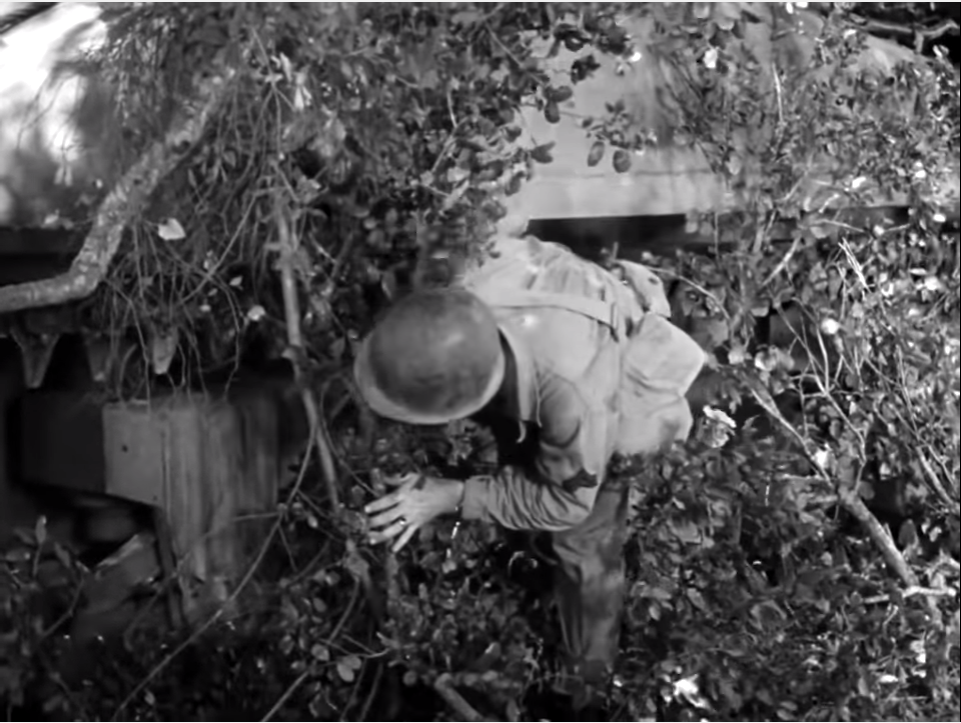
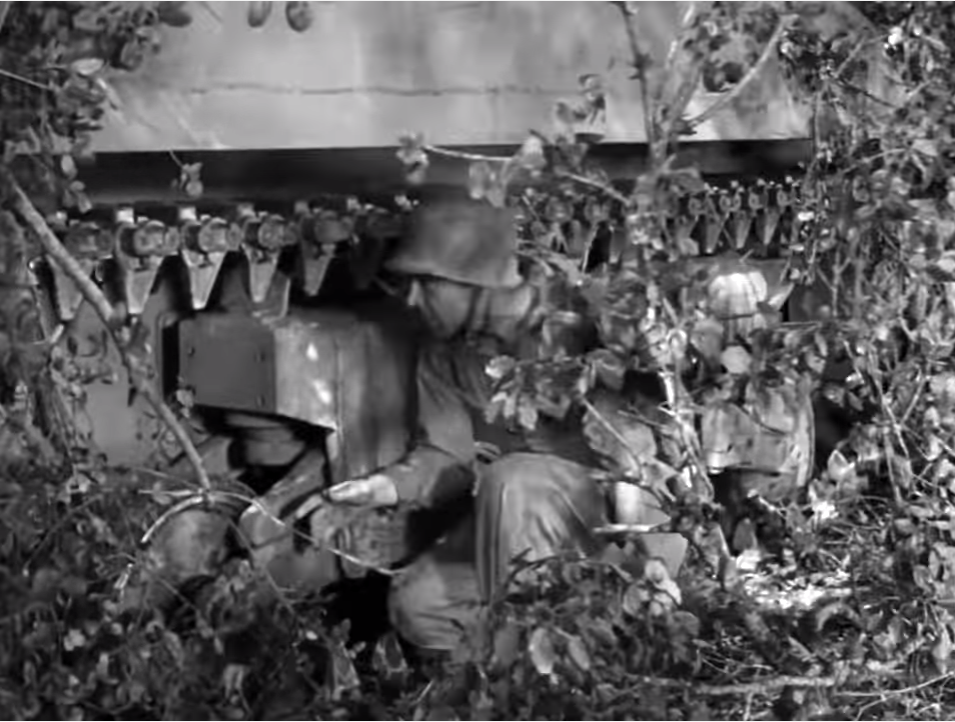
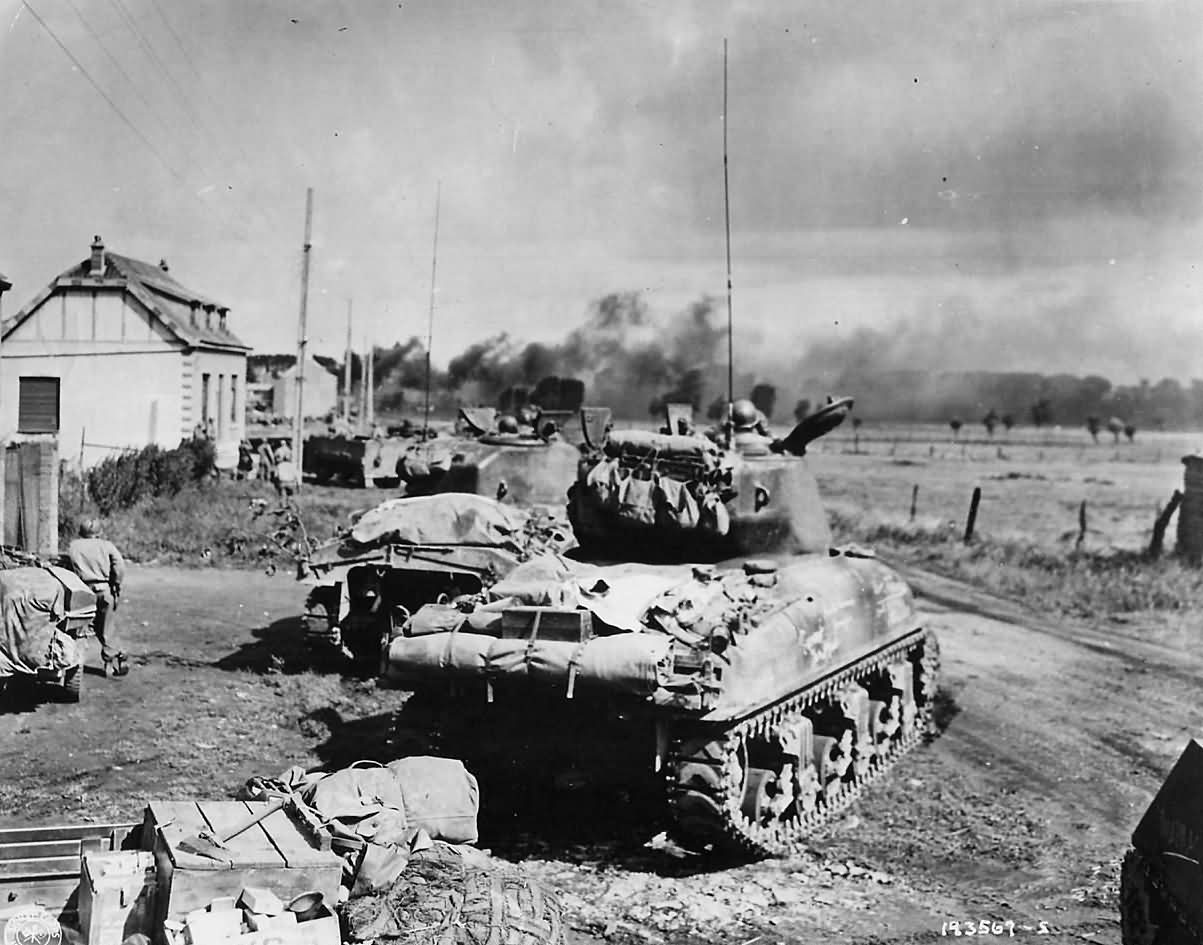
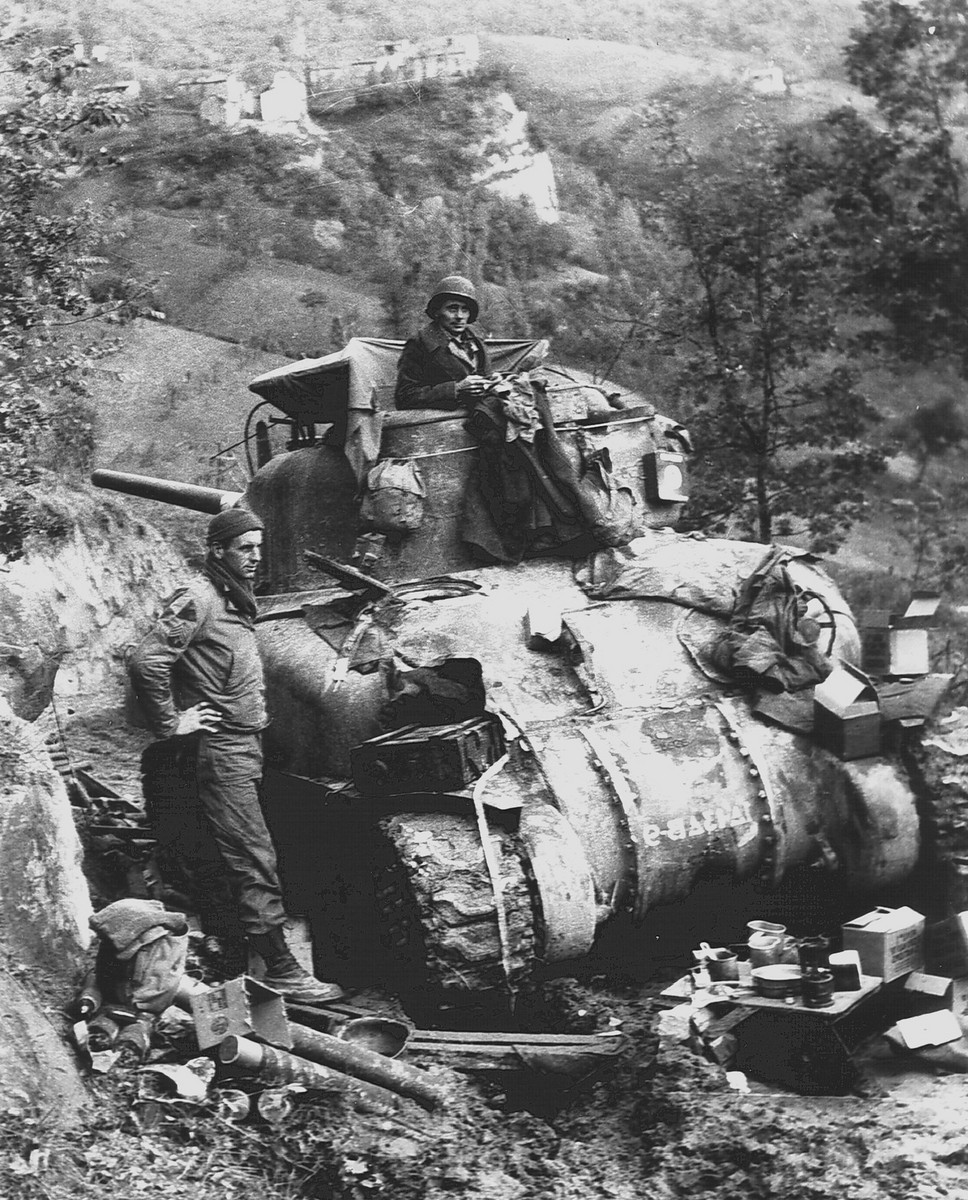
In November of last year the site went live, but I was learning how to the page building stuff worked, and I really didn’t have the complete setup until December. Over the year I’ve had a lot of people contact me about it, and gotten a lot of feedback from the comments and in emails and changed a thing or two as a result. I’ve gotten many comments correcting image captions, and I am always happy to get those. I’ve also gotten a small number of negative comments, and the most negative I left out, but I responded to just about everything. That’s just life on the internet.
Let’s talk about some boring numbers, the first two months the site was live last year it saw 6708 visitors, they checked out 76k pages over just over 18k visits, and downloaded about 20 gigs from the site. This year has seen a lot of growth. So far this year, we have had 94k unique visitors, and they visited 259k times and checked out 714,000 pages and they downloaded over 2100 GBs of data. Most of it came in through Google, but the Sturgeons House, Reddit, Atlas obscura, World of tanks forums and War Thunders forums and of course Facebook have brought in traffic too, enough to be noticeable. Who knew the Sherman tank was all that interesting.
Of the documents available for download, the most popular almost every month is odd, and the same file. The file is, the Index for the United States Strategic Bombing Survey. This is just the index of the various report subjects in the survey. Three hundred and twenty four pages of index. Why this document is popular is a mystery to me. I do have a few of the reports, either ready to host when I get around to it, or already hosted. This month so far it’s only in the number three spot. Number two and three are normally one of the technical manuals on a tank like the M4A3, TM9-752 currently number two, or 9-750 number one this month so far, it’s on the M3 Lee.
I could go on about stats but I won’t because although I find it amusing, I don’t think the rest of the world cares that Sherman tank Interior lights was a popular keyword search for months.
Since this site is my hobby, and a labor of love, how fast the content comes out is based on how much free time I have and how life is going. This year has been a pretty rough one, it started out ok and I could crank a lot stuff out, and had already had a lot of content on hand from the forum thread that started this all. Once the site was up, I found even more resources, and have so much to do, I’ll be posting stuff about the Sherman and it’s users for years, but the pace is going to depend on how good 2017 is to us. 2016 was great for me. I lost a dog, labs don’t normally reach 18 but she almost did. That coupled with some family and health issues, things slowed down a tad over the summer.
The site is all paid up for another year, and I have a lot of content to work on, and life is cooperating for now too so the pace should pic up. If I ever exhaust my resources on the Sherman, I can move onto the WWII F4U Corsair, or P-38 Lightning fighters.
So to wrap this up, let all look forward to a good new year.
Sherman Tanks of the US Army Official History books: This post will cover the Sherman related images in “The War Against Germany And Italy, Mediterranean and adjacent areas”.
As we talked about in the last post on The Army has a series of History books they published shortly after the war nicknamed the Green books. You can find them all on the US Army Official History site the “Green Books” in PDF format. Most of these books have minimal photos, but they put out a pair three picture books and this post will cover the one on Italy, Southern France and North Africa.
This book, like the one on the northern European Campaign was not the highest quality scan, so the picture quality is not great. It is good though, and you can make out a good amount of detail in them. There are also fewer Sherman photos, because the Sherman was not as usable in Italy, because of the terrain, but it was still a very common item on the battlefield in the MTO. The book starts off with some images from the Torch landings and covers the fighting in Tunisia.
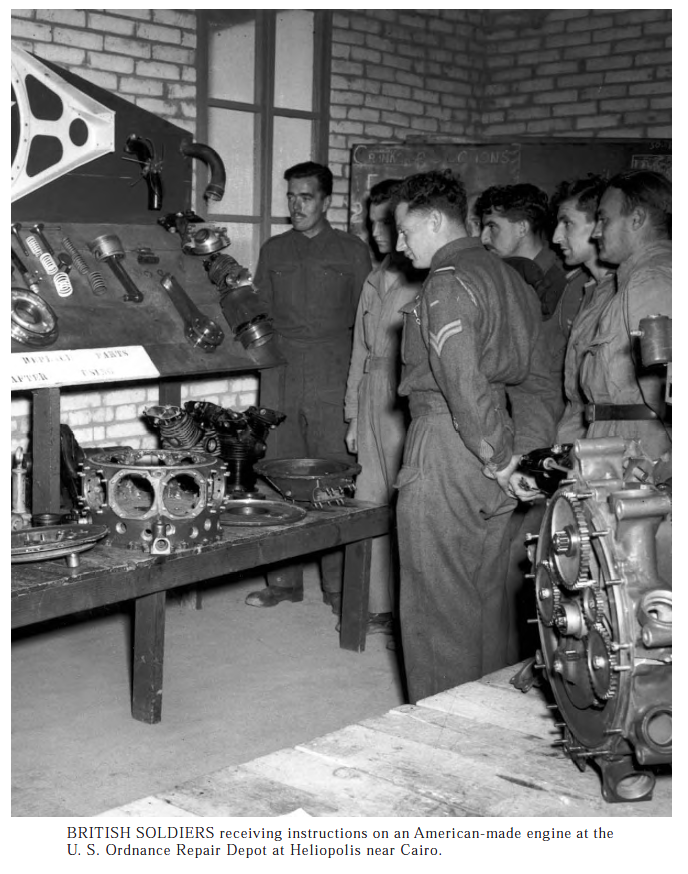
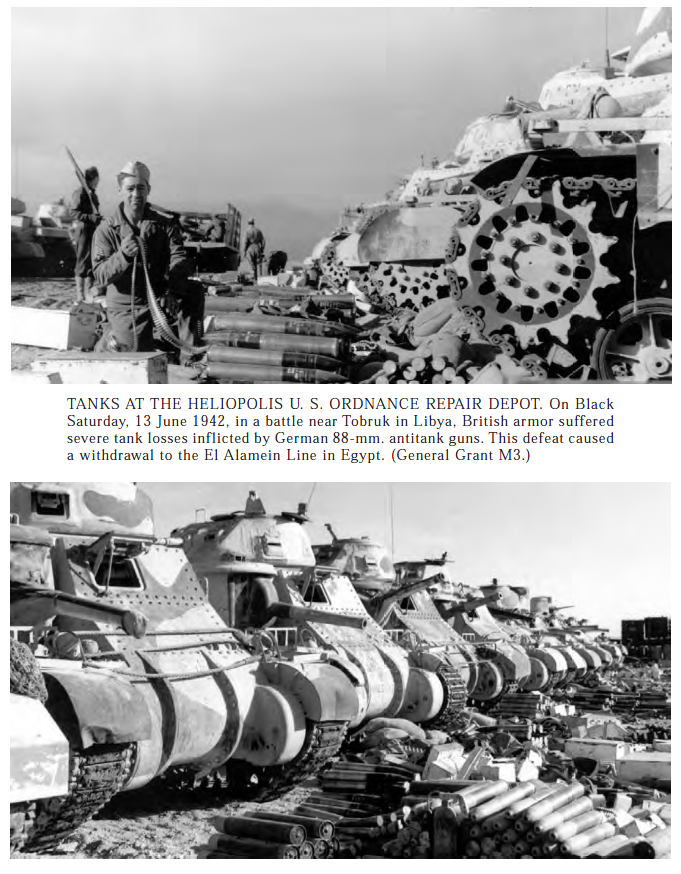
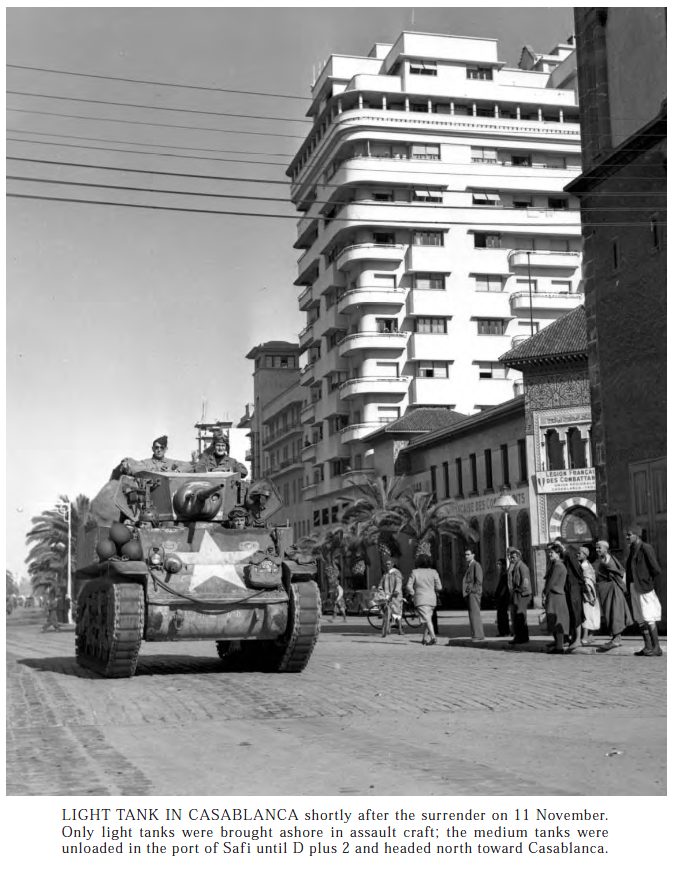
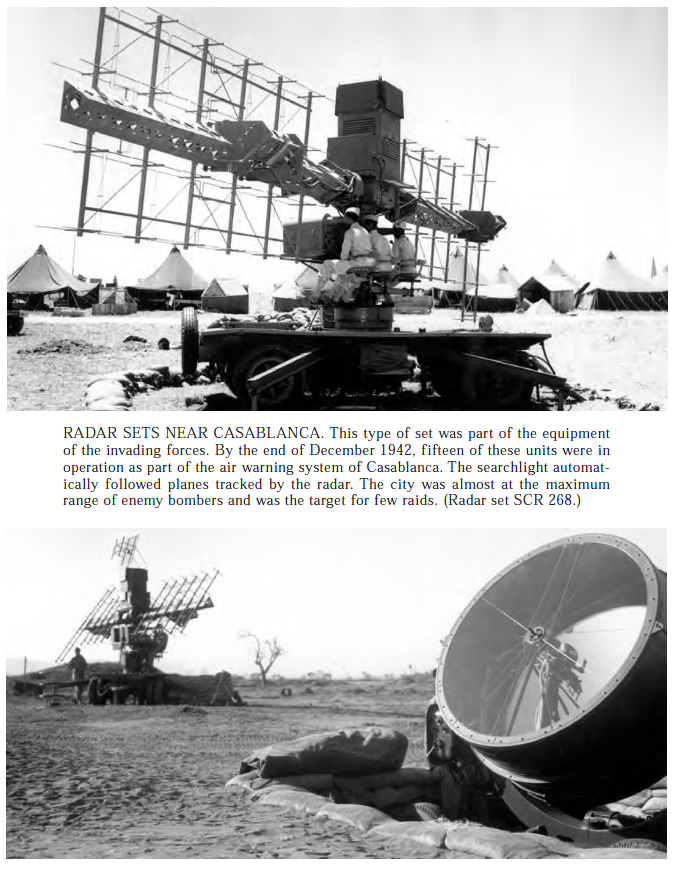
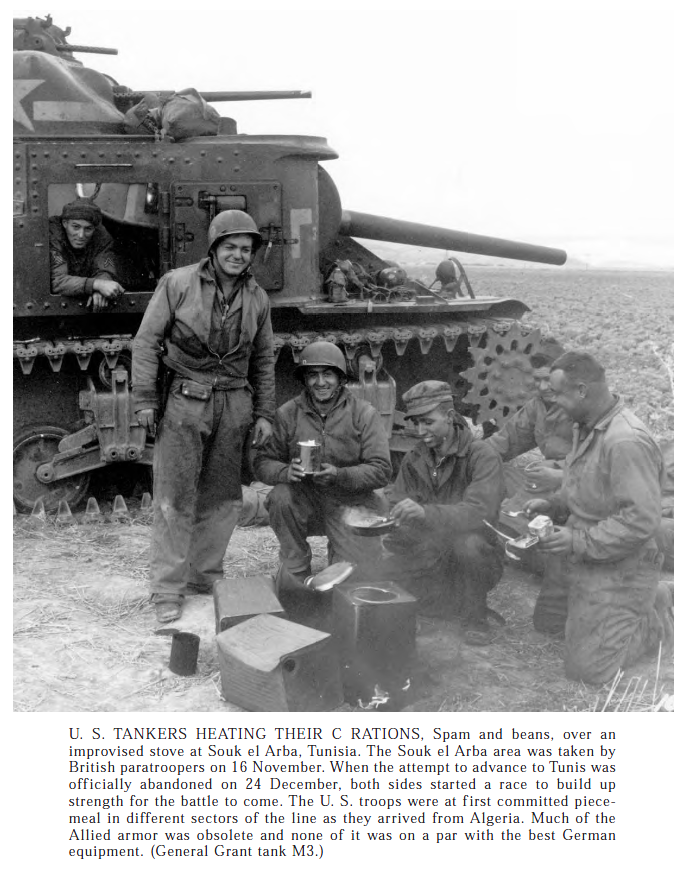
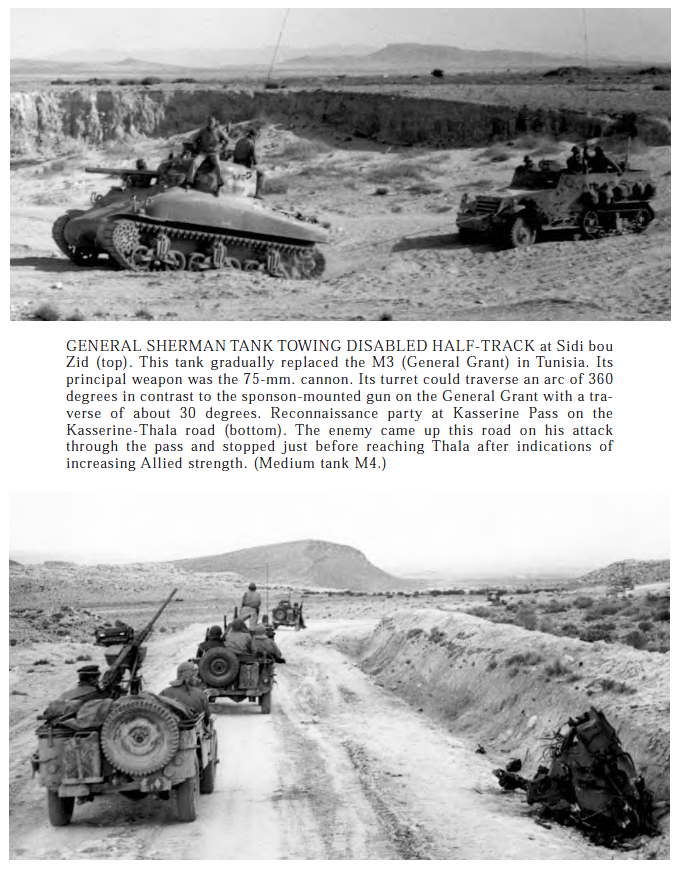
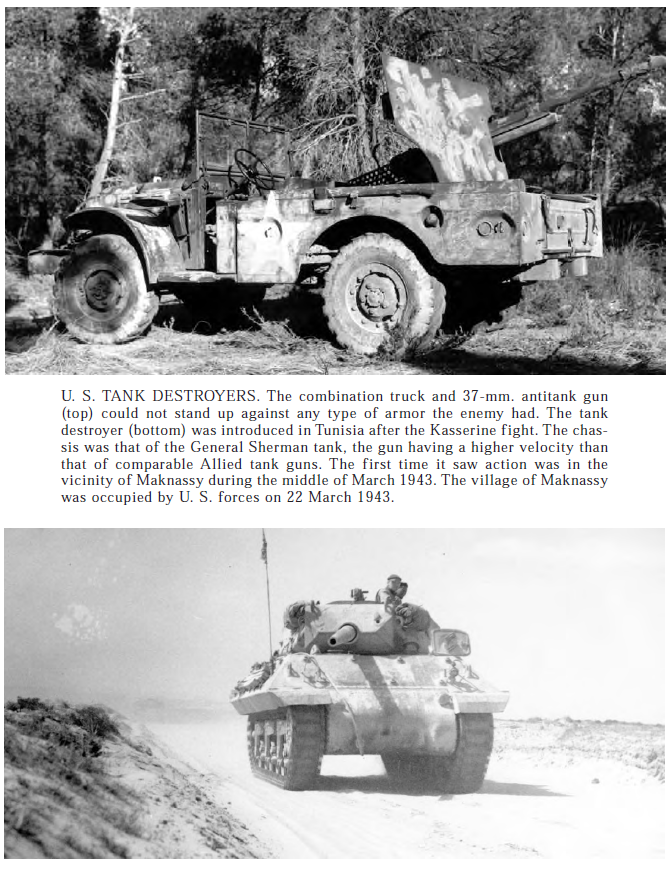
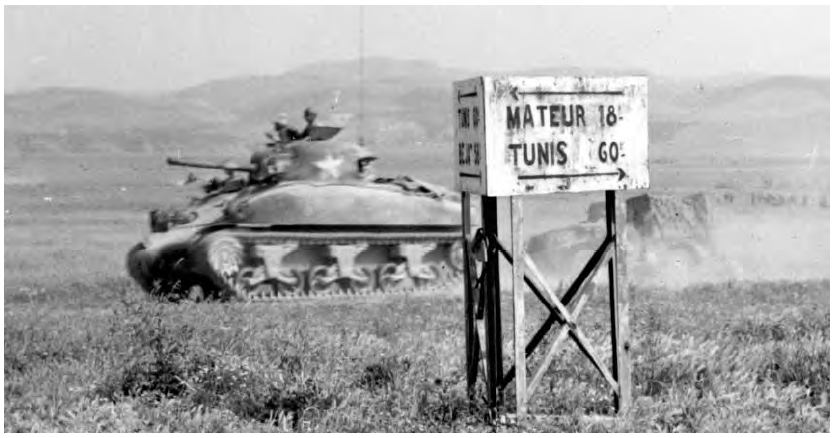
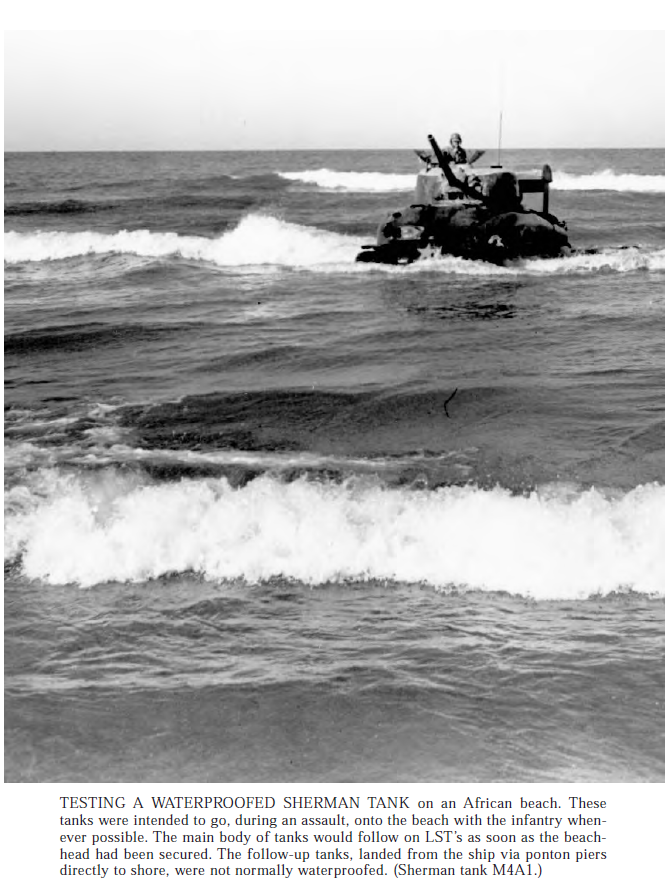
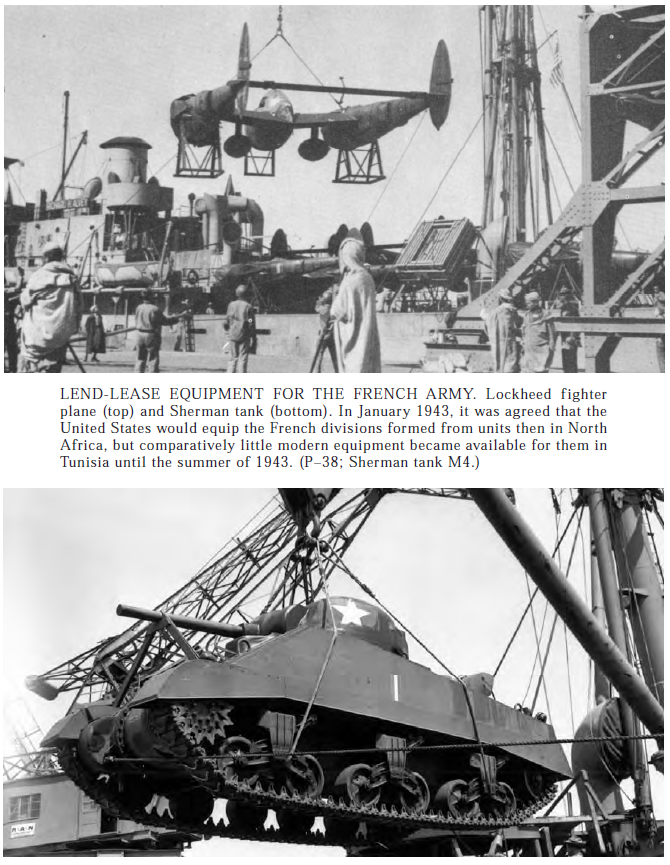
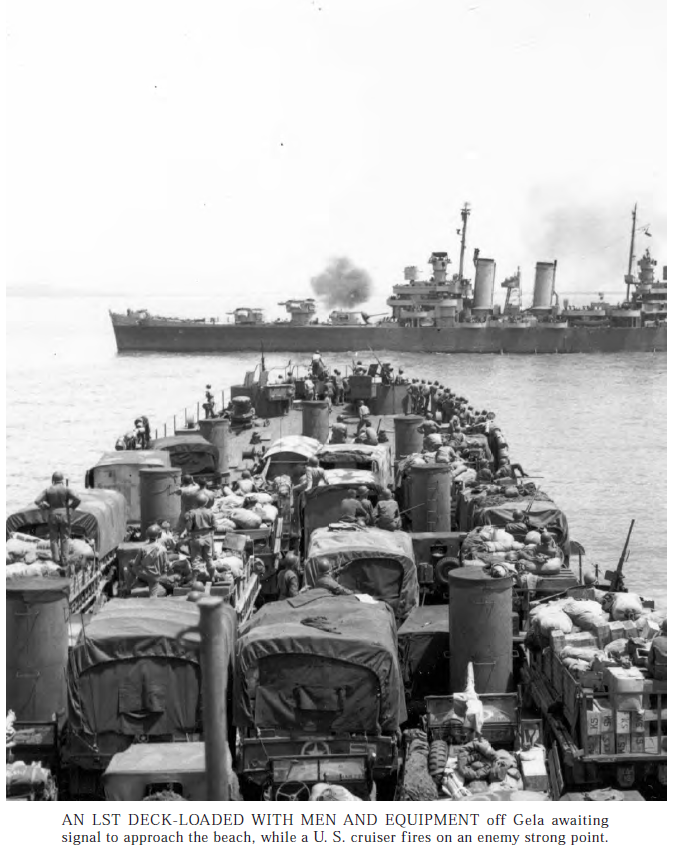
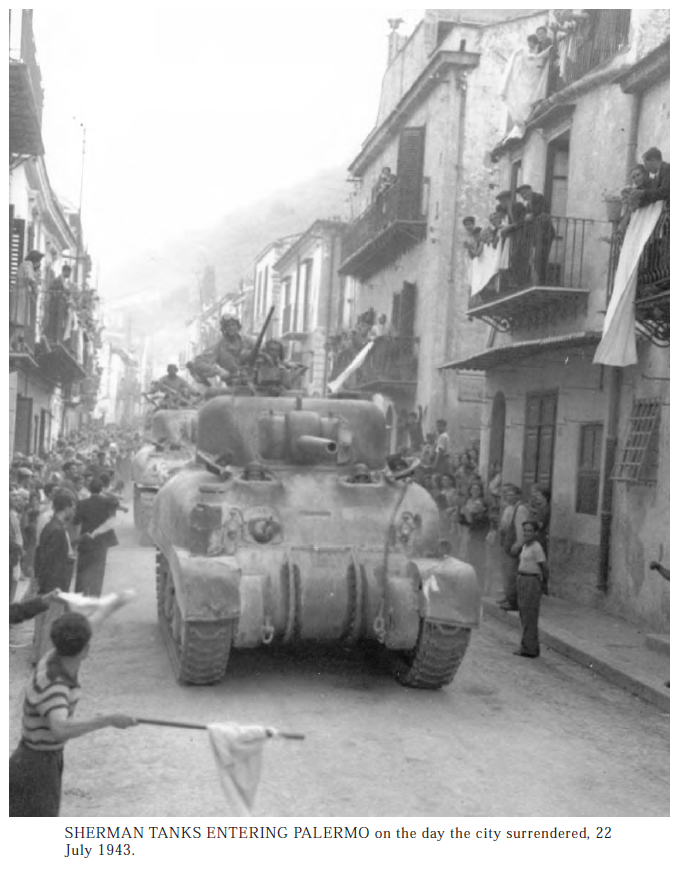
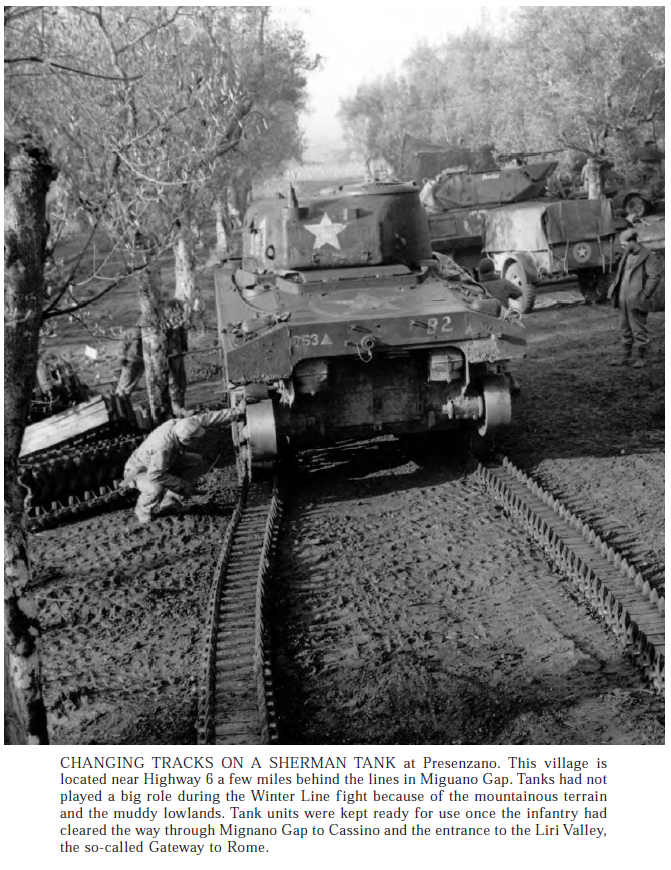
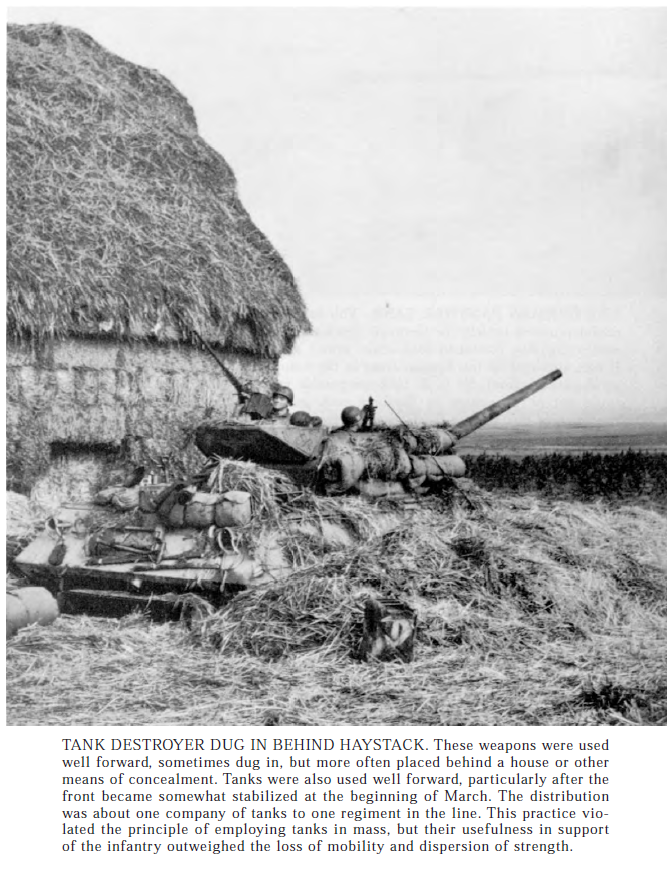
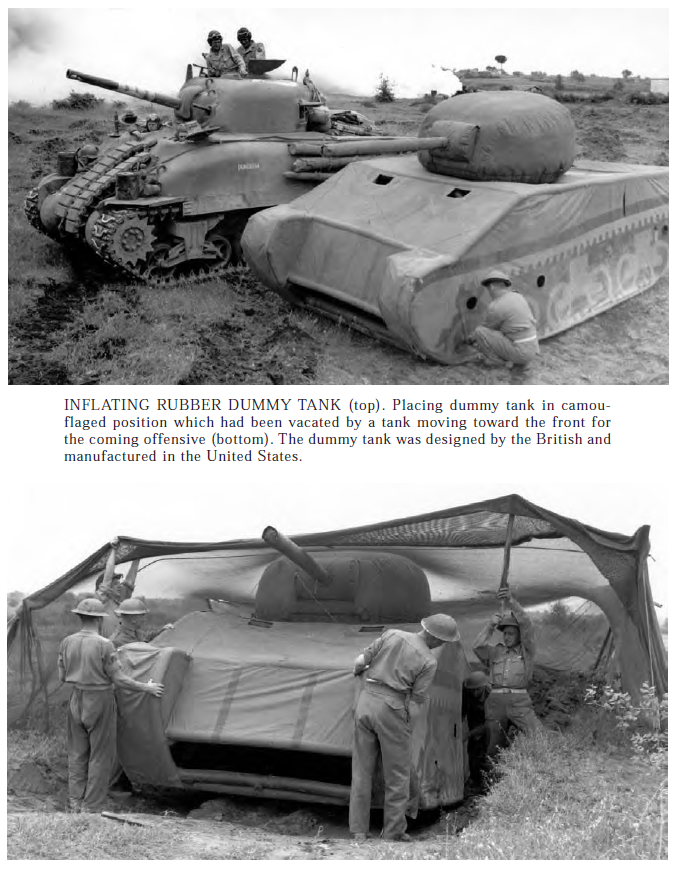
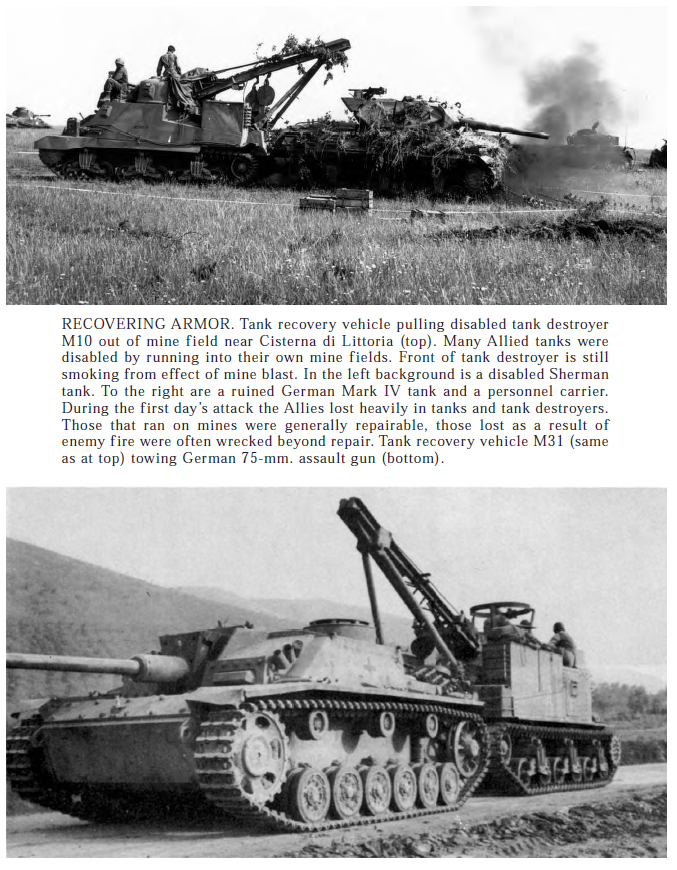
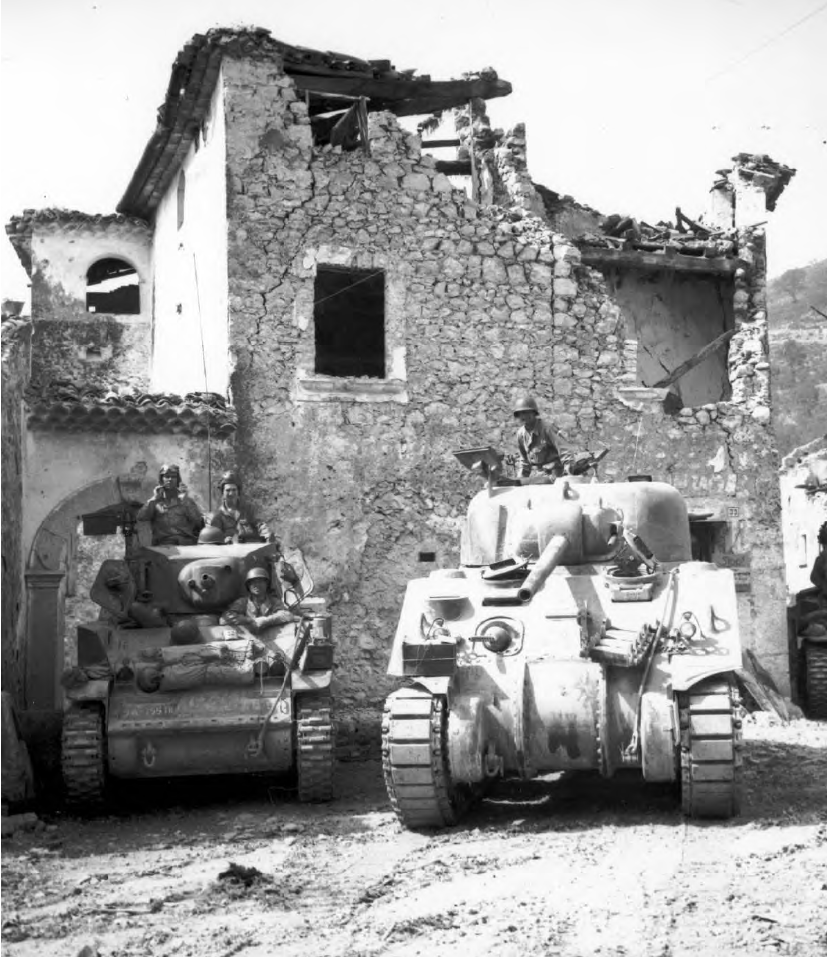
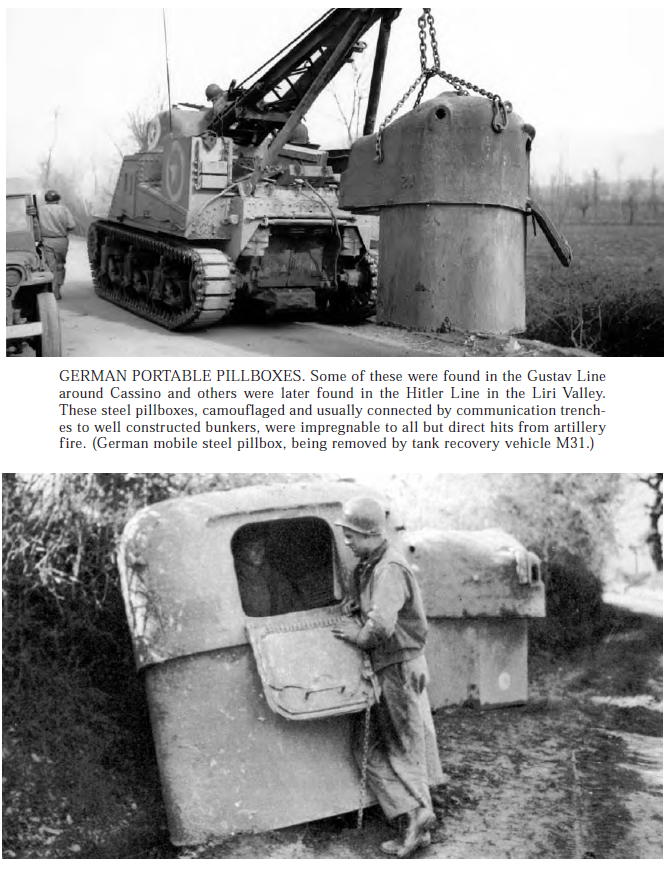
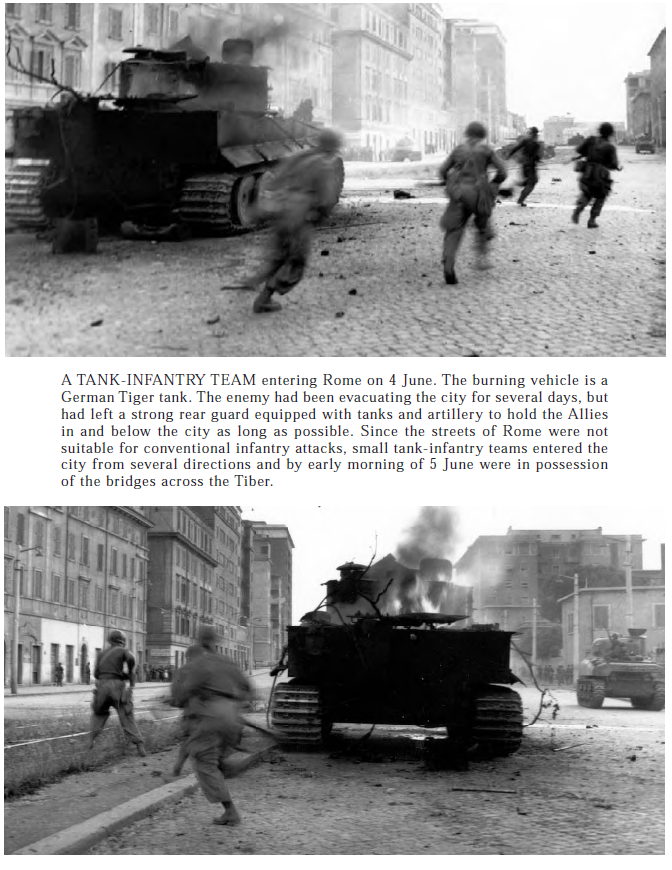
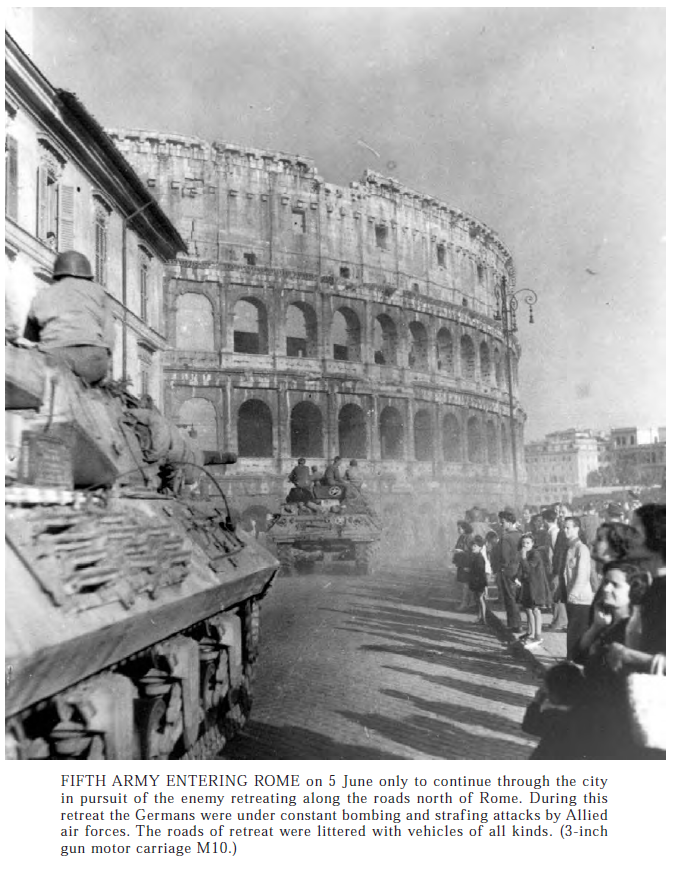
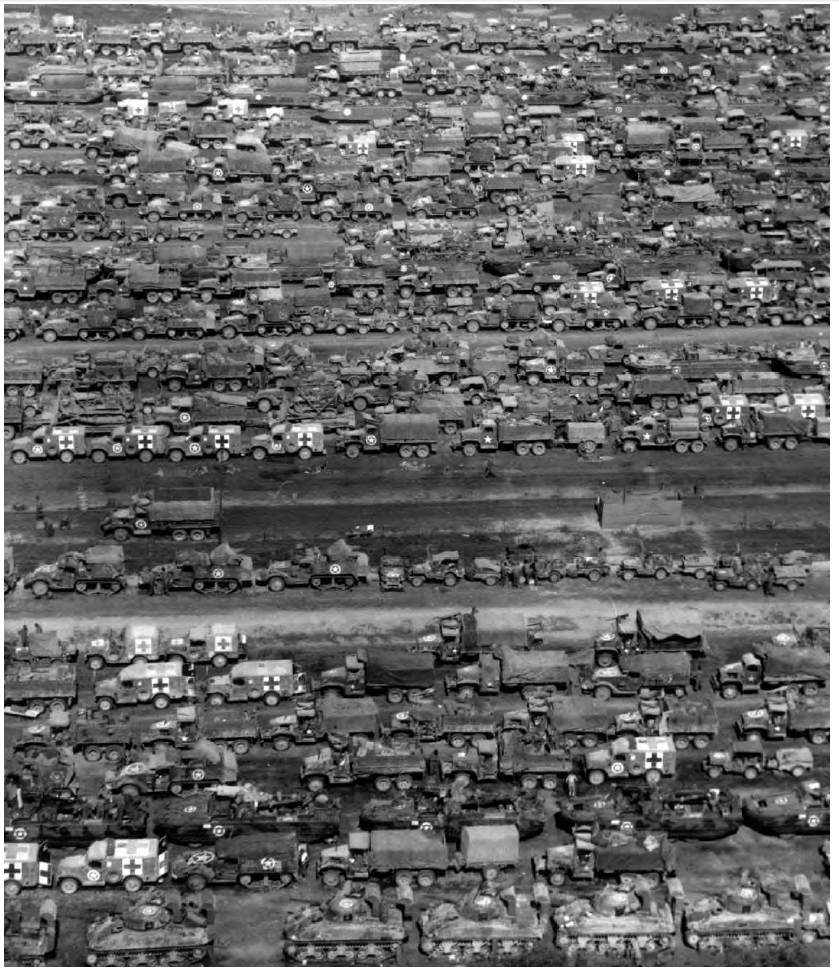
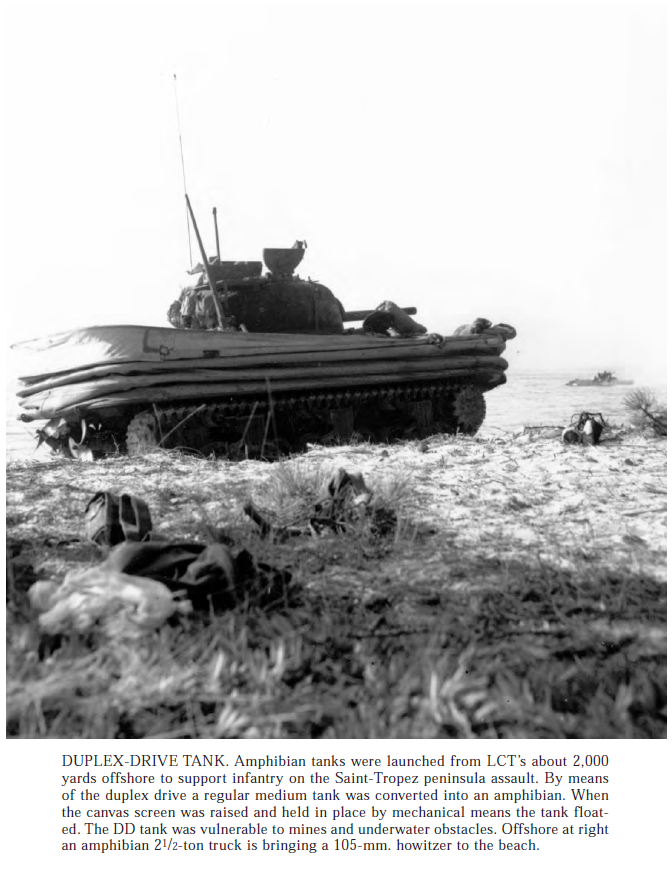
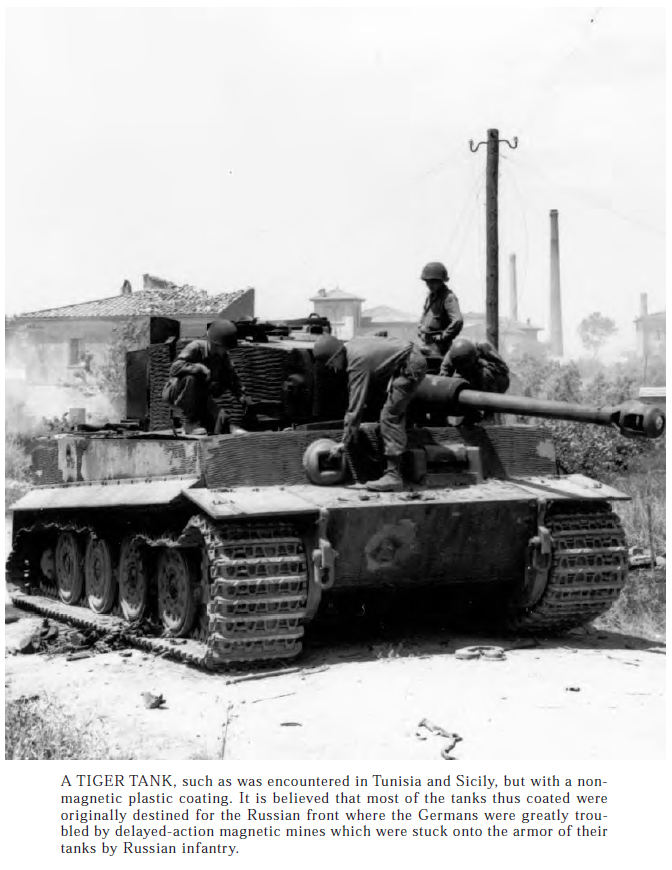
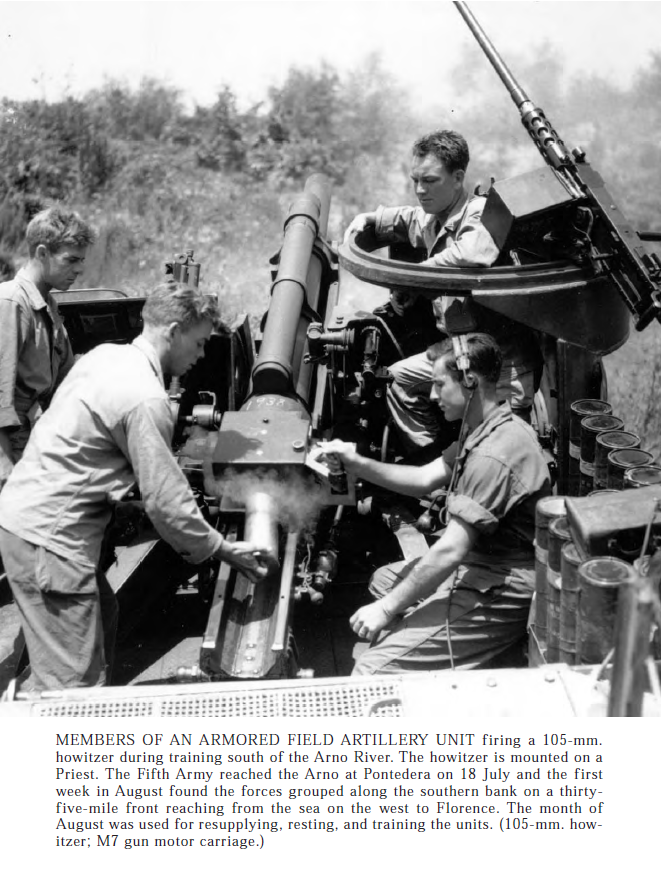
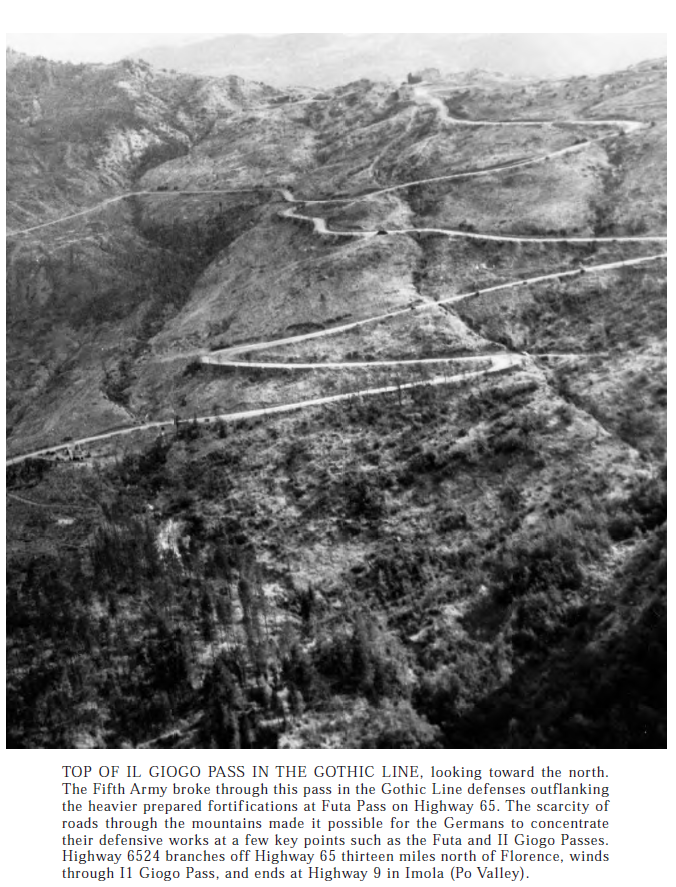
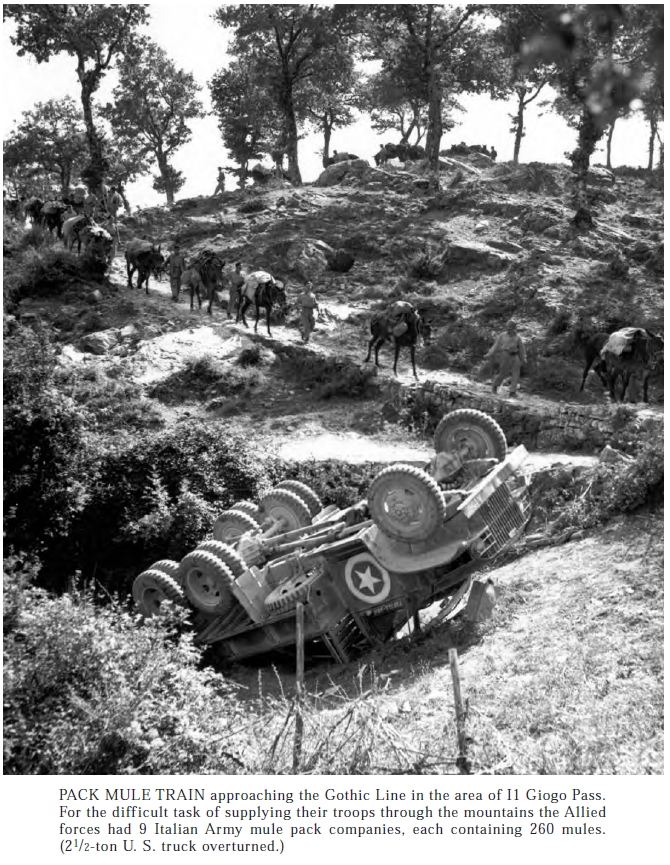
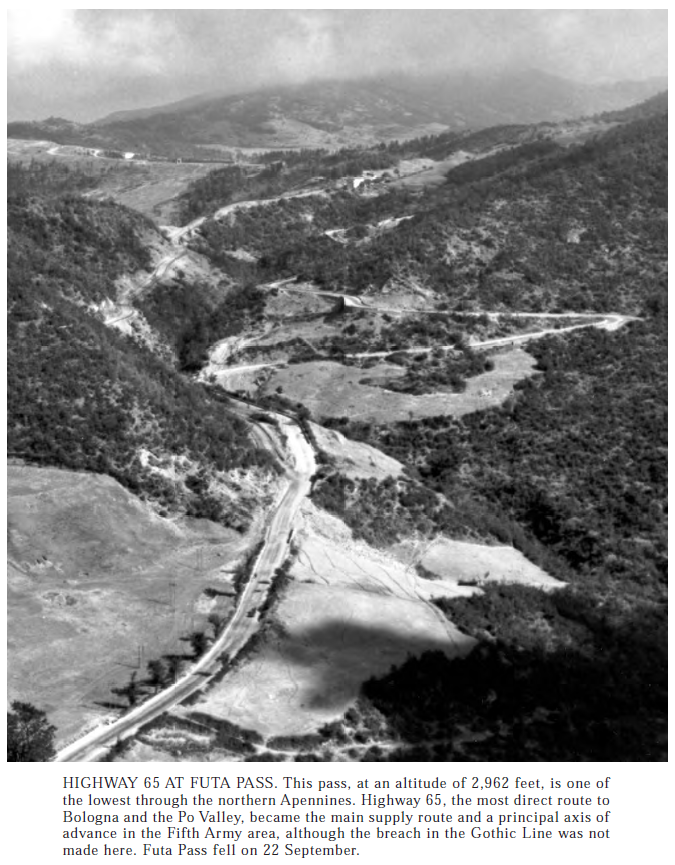
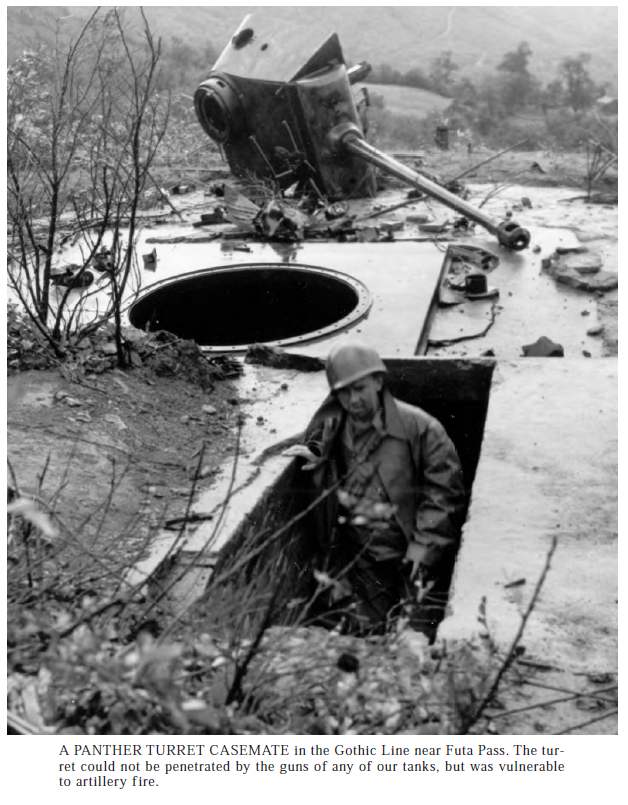
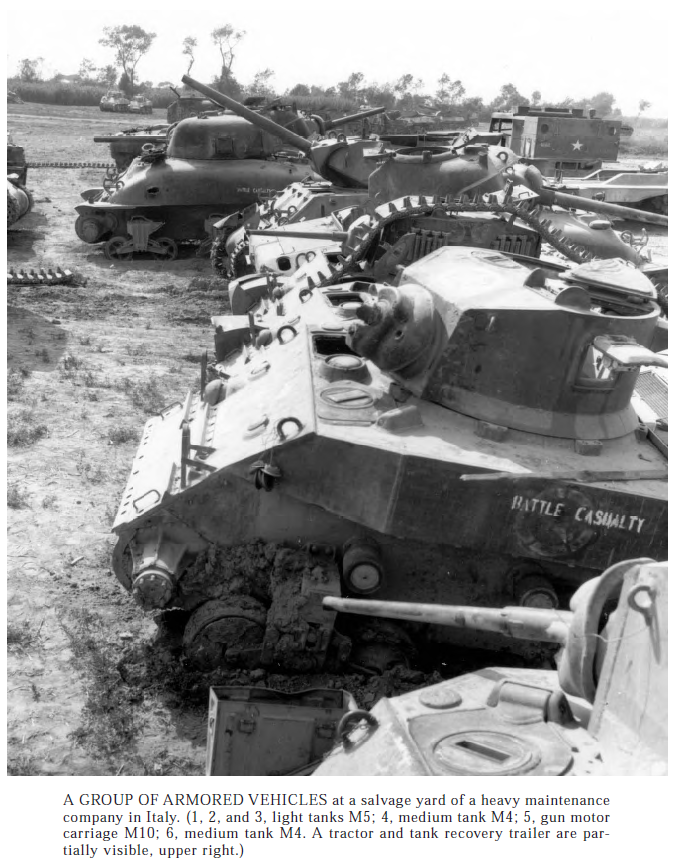
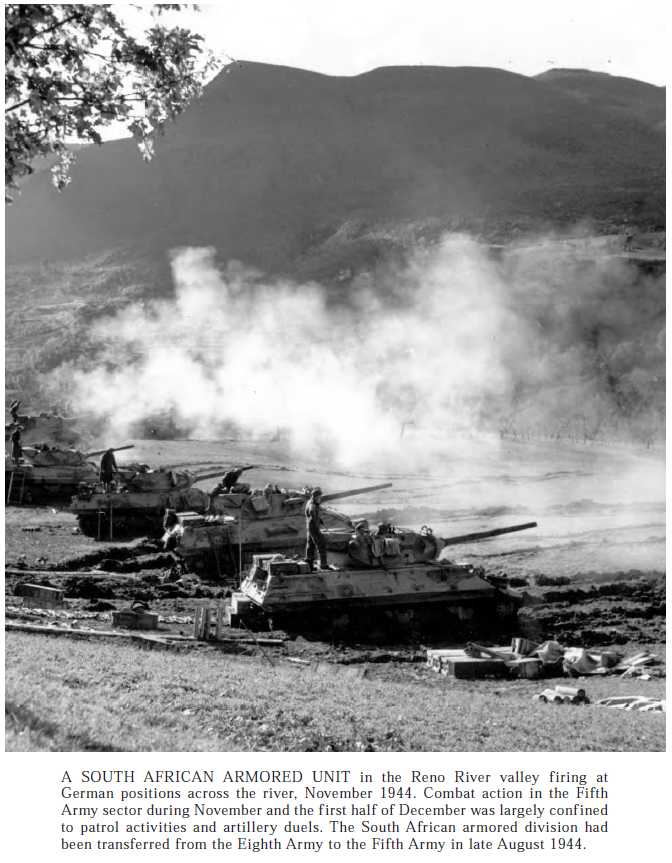
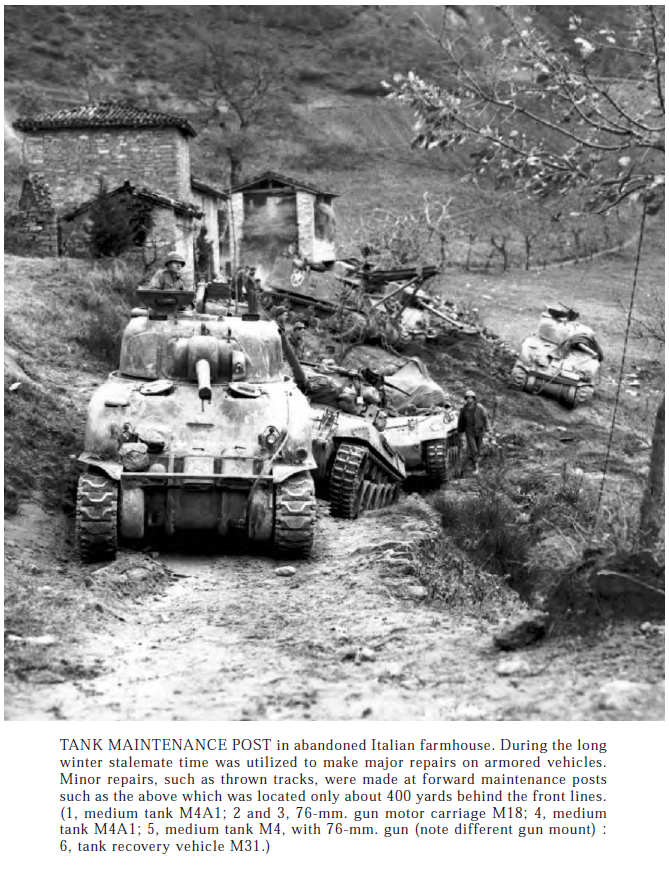
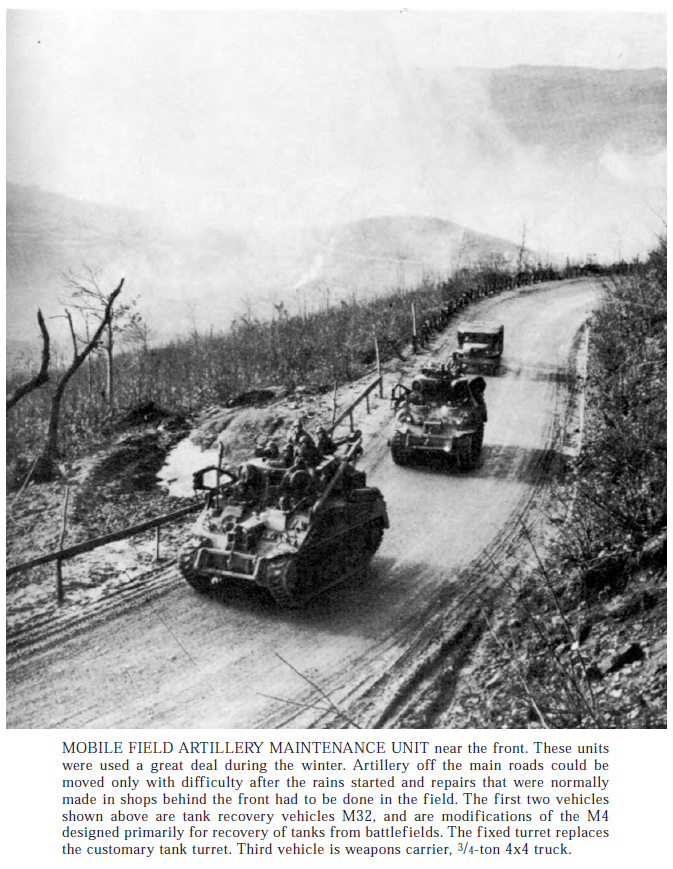
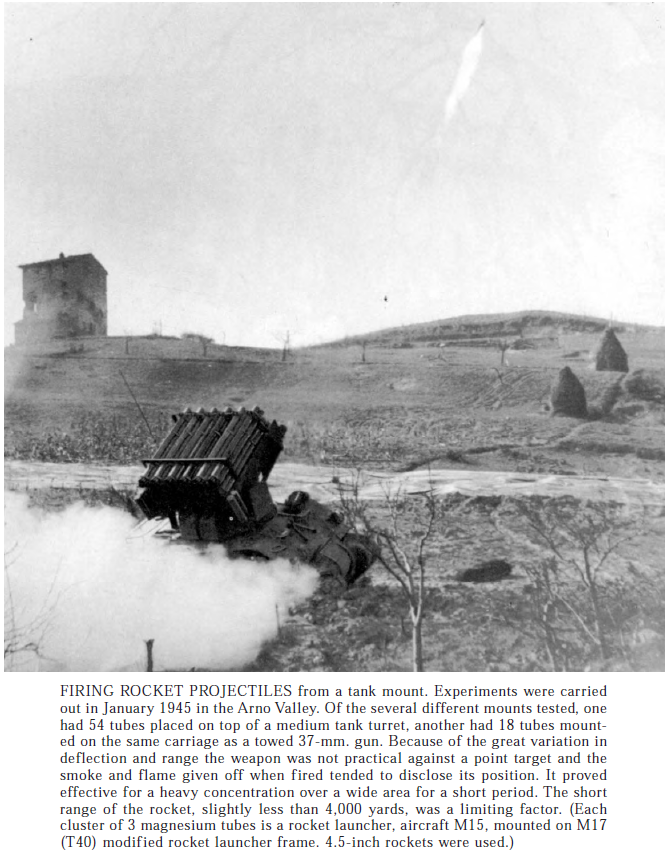
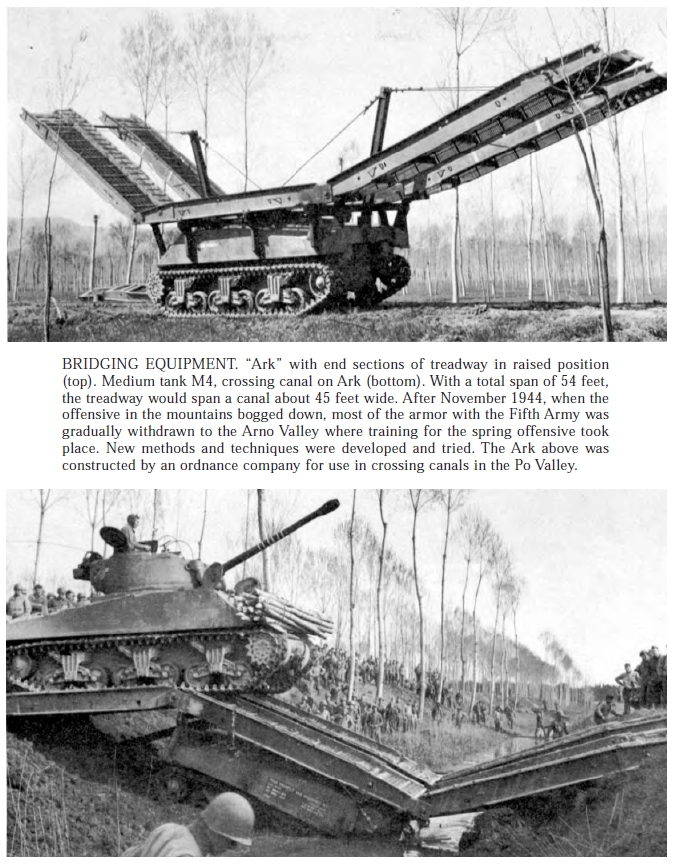
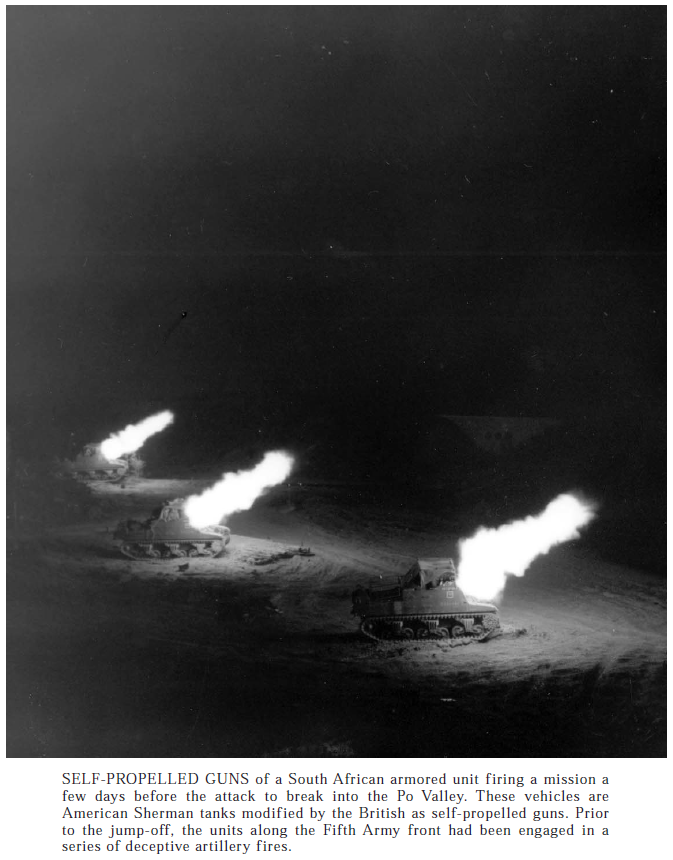
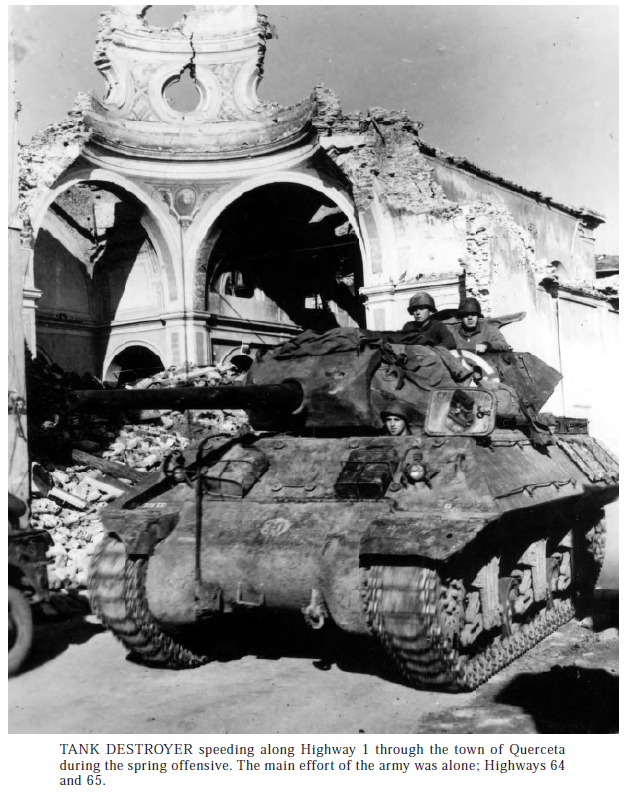
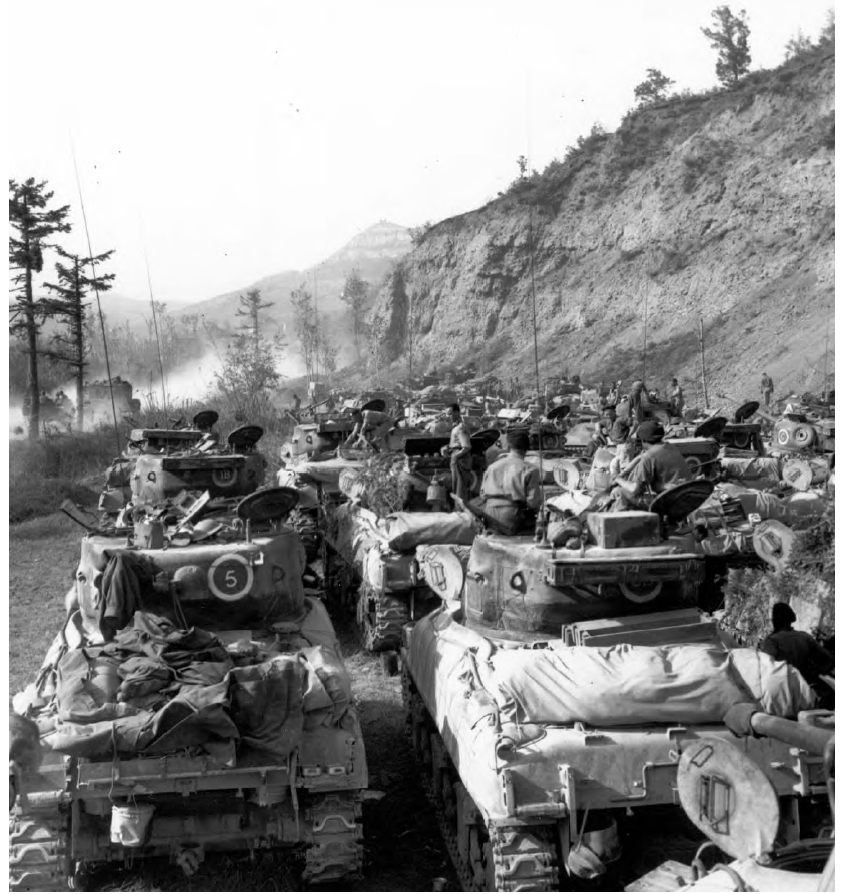
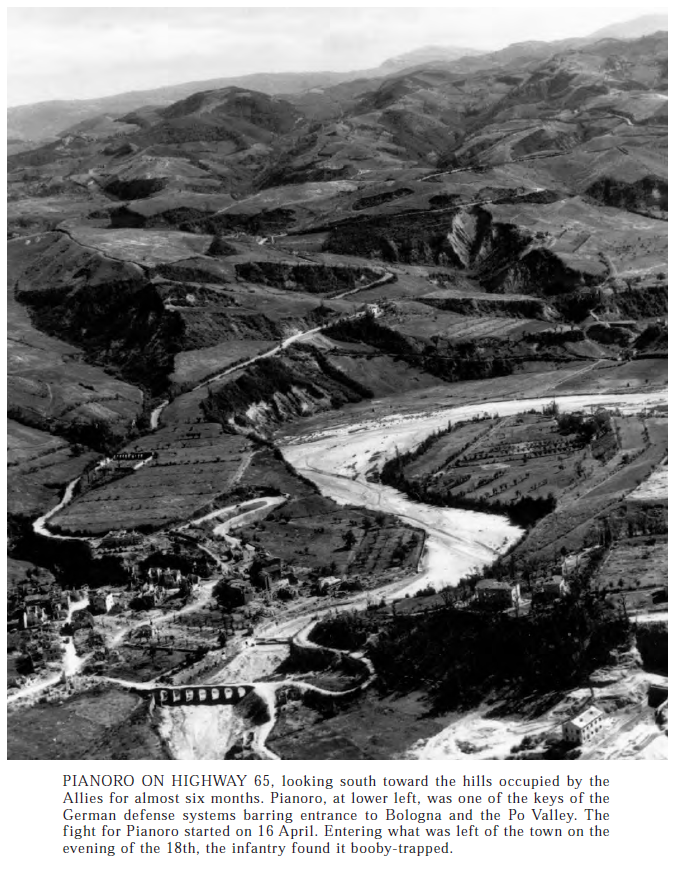
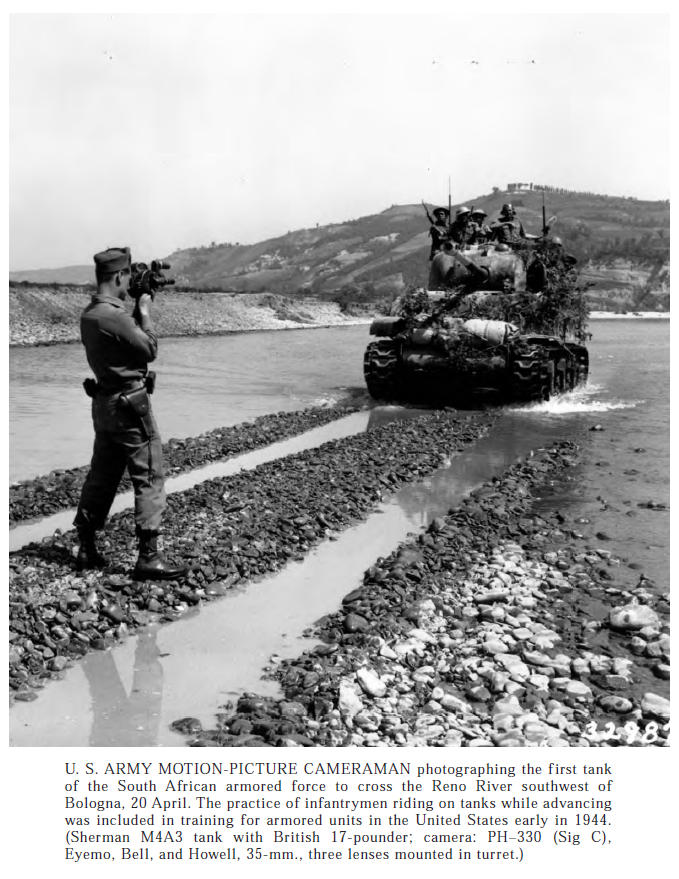
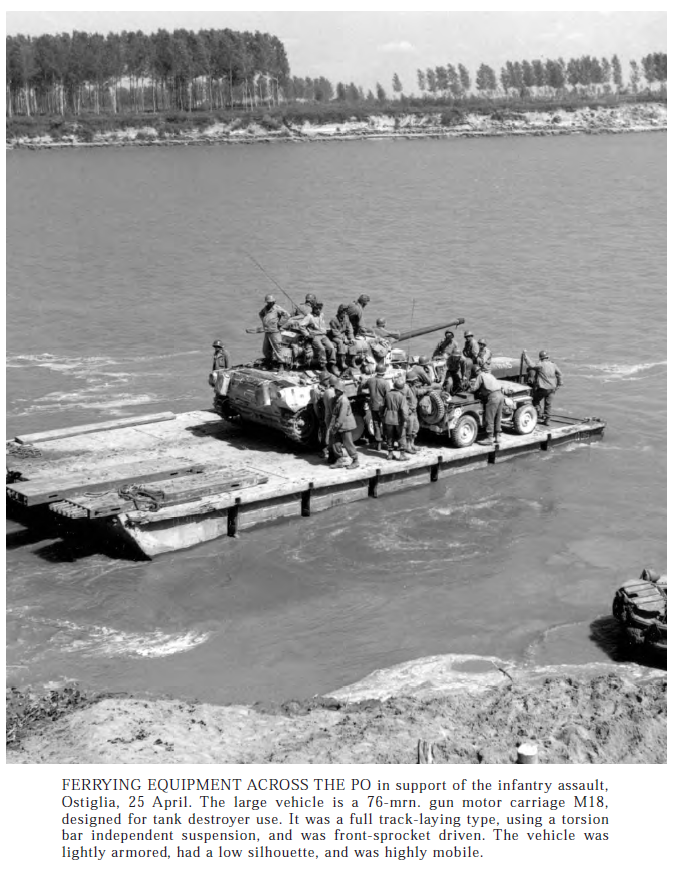
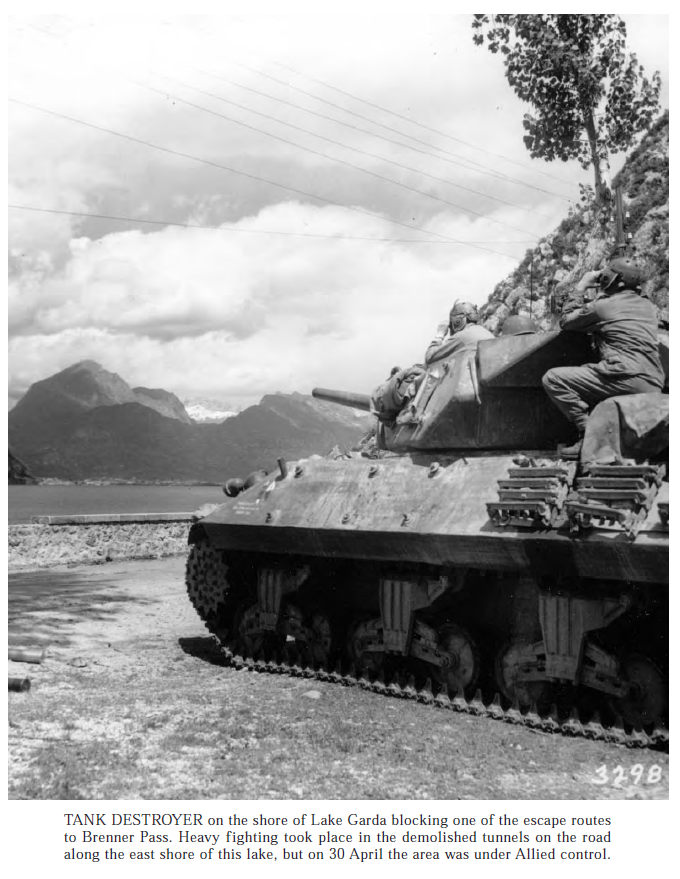
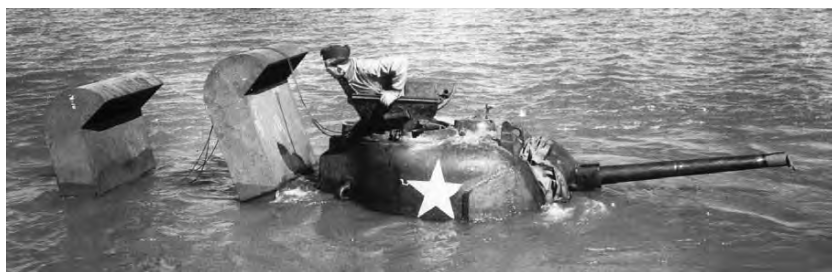
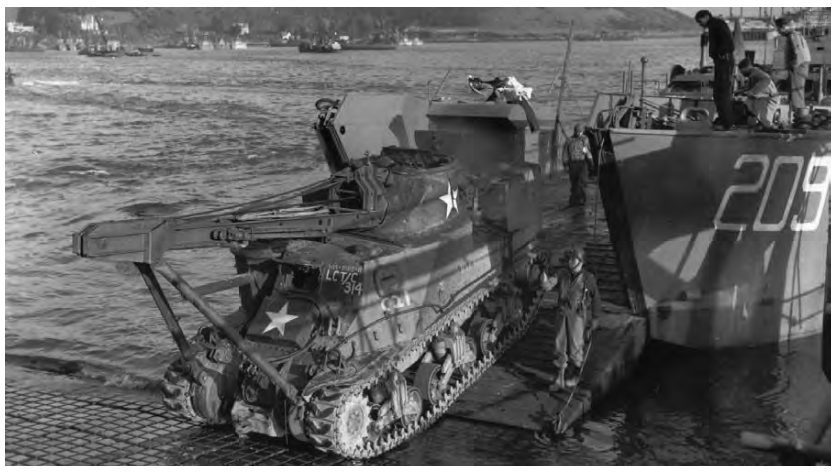
This is an interesting image, and the caption doesn’t say it, but that’s the R975 that powered many Sherman models they are looking over. I would love to get my hands on a high resolution version of this photo.Lee tanks being readied by UK Troops.I just thought this was to interesting of a photo to not include just because no Sherman, was in it.US Radar aimed spotlights.A M3 Lee Crew having some chow. I do not agree with the caption, the Lee was not obsolete yet, and was still capable of knocking out all German Armor. The US Army got a bloody nose at Kasserine Pass because of bad leadership, and tactics, along with green troops.An M4A1 towing a Halftrack. The location, Sidi Bou Zid, was the location of a big battle where most of a battalion got knocked out.In the top photo is an M6 37mm GMC, a rare and short lived Tank Destroyer. They were phased out during the fighting and replaced with 75mm M3 GMC, a 75mm gun mounted on an halftrack. This was replaced by the M10 in time for the Sicily invasion. The M10 would be the first TD to be successful and they were popular with their crews. An M4A1 hauling ass about 60 kilometers from Tunis. An M4A1 being used to test deep wading gear. This doesn’t look like factory produced wading gear to me, but its hard to tell with the shot quality. Most people assume the trunks were the only parts needed for it to work. It took hours of labor to prepare the whole tank for deep wading. The Shermans hull was not designed to be watertight, so all the joints had to be filled with a special tar, and it had to be applied in a ton of places requiring the removal of interior racks to get to the nooks and crannies during the process. Without the waterproofing, as soon as the tops of the suspension and the bottom of the hull got submerged water would begin coming in. The Shermans slip ring for the turrets electric power was mounted under the on the hull floor. As soon as this touched water, it shorted the tanks eletrical system out. I didn’t know we had given the French any P-38s, but we did, enough for one squadron or so. The Sherman has to be an M4, M4A4 or M4A2. I lean towards the M4A4 since the wheels are spaced so far apart, though, the suspension is at full droop, I don’t think they would get that much closer together. The way they have it rigged is interesting, they are not using the hull lift rings, and seem to have tied into the suspension bogies, with the worn wire ropes.I thought this was interesting, how many people know we shipped supplies and tanks through Iran into Russia and the middle eas? I wonder what kind of security these trains had? I would love to get a high res version of the train photo, the tanks are Shermans, but there is no telling the vintage. This is another photo that made it in because it’s cool. This LST could be full of tanks, they would jus tbe inside the LST on the main deck. These vehicles are all light enough for the roof. The LST was designed for these kinds of loads, and had a ramp that could be raised and lowered to get the vehicles up there. The LST was a really interesting ship design. Check out this post for more info.This is a Lima built M4A1. There is a larger version of this photo on the Sherman Minutia site, in there how to identify Lima Locomotive Shermans!No tanks in this image, but the subject is interesting, and not often covered. The mosquito was an enemy to both sides, spreading several diseases, the most troubling Malaria. The US Military used pesticides to combat it, I had never heard of Paris Green before, but it’s a oldschool, fairly toxic pesticide, and they sprayed it all over the med to prevent mosquitoes. This was important, the losses through malaria can get out of hand fast if you don’t have the meds to counter it, and spraying for them is a great way to keep the risk down. In the Pacific, they sprayed a lot of DDT. Another LST image, this one showing the floating pontoon sections used to get vehicles ashore when the slope of the beach was not ideal for getting the LST in close enough to drive right out its built in ramp. Beaches of that type were fairly rare. This post reminded me we have a holiday coming. Christmas overseas at war was a tough burden on US Troops. The US Military does is hardest to get these men a turkey dinner like these doughs are enjoying. Merry Christmas everyone!An M4 Sherman getting a new set of tracks installed. The caption mentions armor had not seen a lot of use, and that partially true. Many tank battalions would be used as artillery and would be on call when needed. That’s not really seeing action, but it’s still combat, counter battery fire wouldn’t be unheard of. You can see an M10 GMC in the background, this looks like a repair depot. See the image caption for location info.This is a great image, I really wish I had a high res version of it. Here we have a practically invisible M10 tank destroyer. From a distance this TD would be very hard to spot. This looks like another LLW M4A1, it has a siren that looks like the Mars brand type they used. The Inflatable Shermans are interesting. Up close they are clearly fake, but from 50 yards or from a low flying plane it would be very hard to tell a real Sherman from an inflatable. A pair of photos of M31 ARVs doing ARV things. If a tank really gets stuck, falls into a ditch, collapses a bridge, since in deep mud, it might take two or even three ARVs or Tanks or a combo of both with a lot of towing cable to free the tank. Getting a tank stuck like that would make the driver notorious, and not in good way.An M5 light and M4 medium in the town of Coreno Ausonio Italy, from an unknown unit, supporting the French Army. An M31 moving a German portable Pillbox. They seem like ready made coffins. They were an interesting design, and you can make out the hole where an axle was inserted, and two wheels could be fitted along with a trailer tongue, and the thing was flipped onto its wheels and towed away by a horse or small vehicle. For more info see this post on the Lone SentryA vaunted Tiger, burning, on the streets of Rome. City fighting would be hard on a tank like the tiger, with bad visibility, with known blind spots, and slow turret traverse means a few determined infantrymen could sneak up on it and kill it, unless it was heavily supported by infantry. A pair of M10s with the 5th Army entering Rome. A huge marshaling yard at the port of Naples full of vehicles waiting for the invasion of southern France. This is just a small sample of what would be used in the invasion. A US DD Sherman used in the Southern France landings. The DD used in this landing had much better results.Another burned out Tiger, the Nazi version of the Gold Plated Toilet, with a useless anti magnetic mine paste applied that only added weight to an already overweight vehicle. As far as I can tell, the neither USSR, or US or British Armies had a commonly issued magnetic mine. So yeah, the Germans wasted time and treasure on some crappy paste that did not good.These two vehicles were the true staples of the effective German armor force. The Stug III was based on the excellent panzer III, and was a way to get a nice 75mm gun onto its hull. the Stug was well liked by their crews, reliable by German standards and well suited to mobile warfare. The Panzer IV was not a great tank either, but it was the best tank Germany had, and it’s the one they should have continued to produce. Sure it had a lot of flaws, crappy suspension with no growth potential, a hull with thin armor with way to many individual plates, welds, and rivets, making it very labor intensive to build. It was also reliable by German standards, but was no Sherman. The turret was also a complicated mess of time wasting multi angle plates. Even with all these flaws, it was still a better tank than all the later German Armor because it was reliable enough to actually show up to the fight. It’s gun was good enough to deal with most of the threats it faced. It also didn’t waste huge amounts of gas because it wasn’t underpowered. Action shot of an M7 crew firing their 105mm howitzer. A pair of M4A1 75 tanks fording the Arno river near the gothic line. Note the line marker in the river, it probably gets much deeper to the tanks right side. I wanted to include some photos of the terrain. Hills and mountains are tough on tanks. All that armor generally means they are not hotrods in the first place, throw in climbing steep grades, and any automotive issues with the tank are going to come out very fast. Lucky for the US and other Allies, the Sherman was an automotive masterpiece, and was reliable enough to be used in these places and still continue to work. This type of terrain really cuts the life of a tank down, in particular if the tank is already unreliable, if you have a part know to wear out in 1500 kilometers, hilly terrain could cut that in half, or worse if the driver was bad. I thought this was an interesting shot along with a good illustration of the terrain. Those 6X6 trucks were pretty capable off road, but not as good as a tank in most cases. The caption doesn’t give us any info on how the truck got there. One thing I know from taking a Jeep out on trails like this, is pictures never show how steep a place is, like being there in person. I’ve taken pictures of places that gave me some serious pucker factor going up or down, and when you look the pictures over, they never convey the steepness like being at the top and looking down. Driving a tank on narrow dirt roads like this was probably not enjoyable at all. This is the final terrain shot, this one is long enough to give you a good idea of some of the distances involved and how tall the hills and mountains were.The most reliable version of the Panther, the Panther Casemate! Take a panther turret, slap it on a steel bunker frame that you’re put in a hole in the ground and poor in concrete! No 150 kilometer final drives, no 1500 kilometer tanny, or 1500 kilometer maybach motor. Plus you get a bunk! An US tank salvage yard. The caption of this photo said there was a M4A1 76 in it, but there are no 76mm armed Shermans in this photo. I assume the caption is accurate otherwise. Note the hilly area the tanks are in, the M4 and M4A1 would be the most difficult of the shermans to drive in this type of terrain. M10 TDs given to the South Africans as Lend Lease. They may have come directly from the US, or it may have been the Brits giving them M10s they had not converted to Achilles TDs with the 17 pounder. Another LLW M4A1 and a pair of M18s with an M4A1 76w and a regular M4A1 75 in the background. The trail they are on is much steeper than it looks. This is the type of terrain the granny gear in the Shermans transmission would come in very handy on. A pair of M32s driving through the hills of Italy in the fog. I don’t think this is a regular Callipe. I didn’t know ACME was involved in making bridging gear, and this does not seem like a very good idea. Is that a roadrunner in the corner of the top pic??!A very cool shot of an M7 SPGs battery firing at night. The caption says this was prep fire. An M10 GMC hauling ass down Highway 65.An M10 in the background of some German POWs being marched to a containment area. They would then be shipped off to camps in England or the US. The US treated POWs very well in most cases and delivered Red Cross packages without delay. A South African Tank unit with M4A1 76w tanks. The Brits were sent a fair number of these tanks through lend lease, but didn’t want them, so they gave them to the other members of the UK.Ok, so I threw in one more terrain shot, because I thought this one was interesting, this is really the last one though. This is another mis-captioned photo, at least where the Sherman is concerned. The caption says the tank is an M4A3 with 17 pounder. I can’t say there was never a M4A3 with a 17 pounder gun, because the US did have some 75mm Shermans converted, even though they were never issued, one at least was probably an M4A3. The British did not receive any M4A3 tanks for their own use. The image looks like an M4 composite hull Firefly, a very common version of the firefly based on the M4 composite hull tank. I assume the rest of the caption info is correct though. An M18 getting a ride on a makeshift ferry. An M10 TD waiting for some action near Lake Garda.
This concludes the photos I found relevant from CMH 12-2. The book is packed with a lot of other photos of things not Sherman related, and since you can download them for free, if you are interested in WWII history, download them and have a look. I found many of these images I had not seen before.
Sherman Tanks of the US Army Official History books: The “Green Books”, had three picture editions! Part 1
The United States Army isn’t all about fighting and defending the country, they also try and document their own history. That’s where the US Army Center of Military History comes in. It is an actual place, located at Fort McNair in washington DC, with a library and Archive. If you would like to visit, check out the website first, because they have a ton of info online and you might not have to make the trip to find what you are looking for. One of the things one the website is an online library that contains the whole set US Army Official History books, known as the “Green Books” in PDF format.
The Website has a lot of depth, and I still have not found everything of interest. Just poking around on it today I found an index of all the History PDFs they have up. If you are interested in US history, give the Army’s history website a serious look. In some cases this just links to a page listing info about a book they have, but no PDF. Or in other cases links to a store where the book is on sale and or a combo of these. Look carefully, most seem to be available for free even if there is a pay version.
Of interest to this site are the books in the Pictorial Record section, on the Green Jacket books. It contains three books, The War against Japan,The war against Germany and Italy: Mediterranean and adjacent areas, and The War Against Germany: Europe and Adjacent Areas. These books are picture books spanning the whole war, in the area the book’s title mentions.
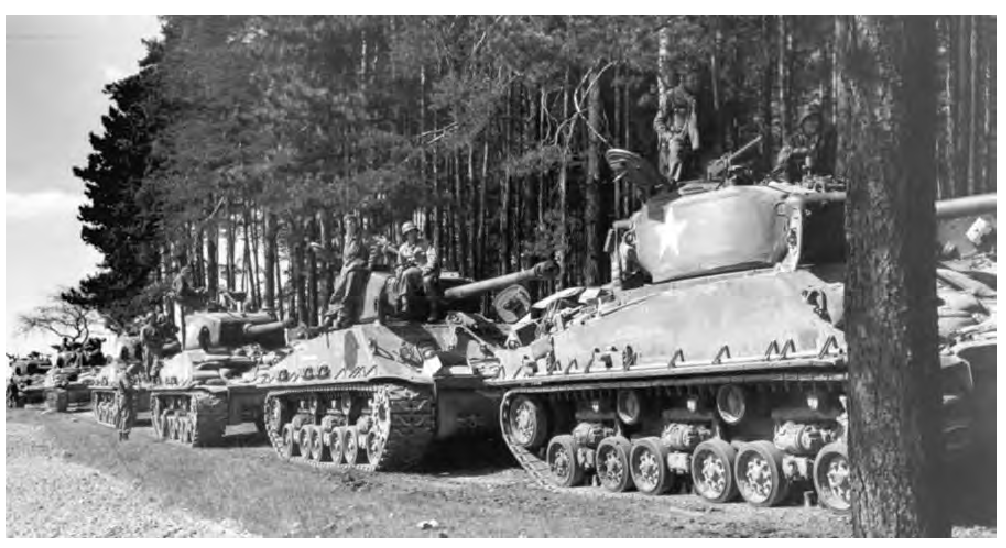
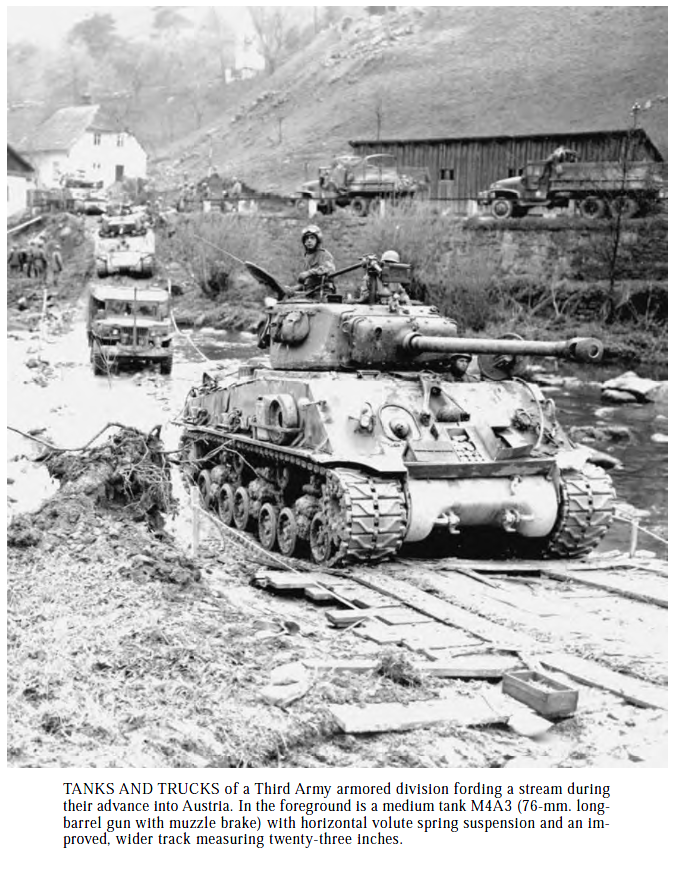
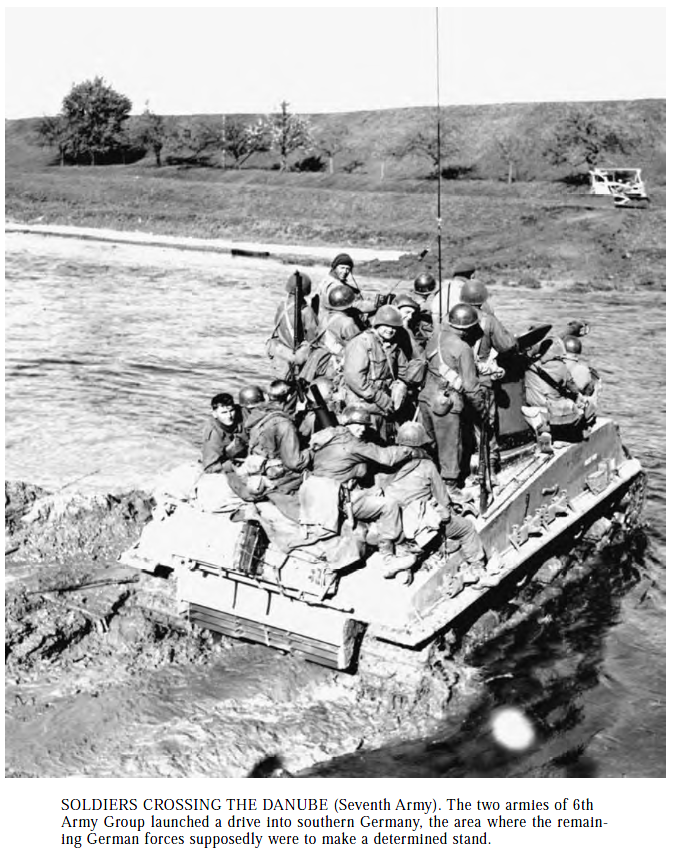
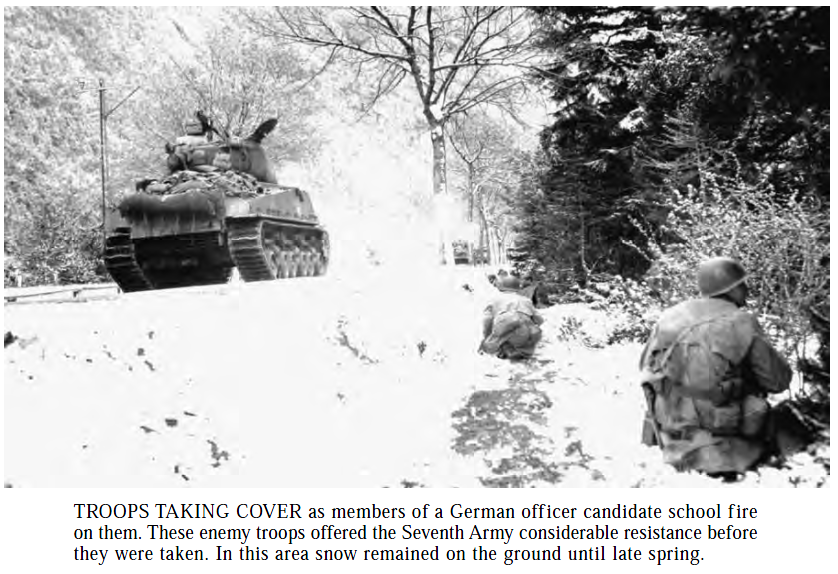
In part one, we are going to look at The War Against Germany: EUrope and Adjacent Areas, because I figured this one would have the most Sherman photos, and I was right, there are a lot. Not as many as I though were already up on the site, and in most cases I left those out since I have better version up. These images are not great quality, but also not horrible, and it varies a little up and down, but they are interesting.
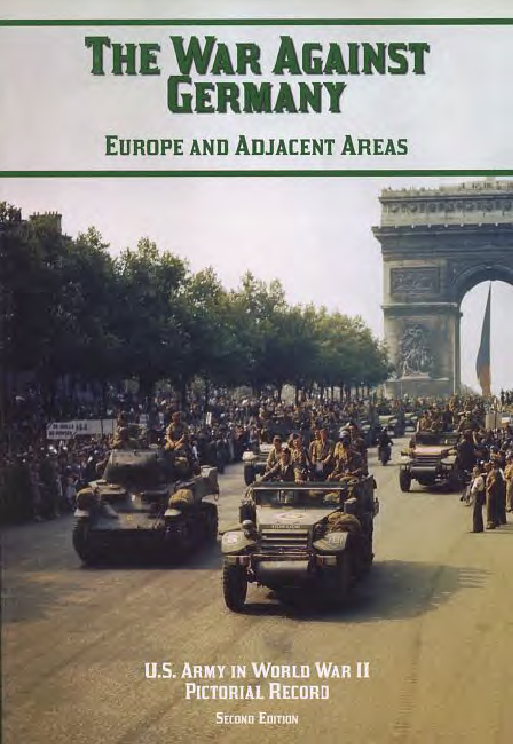
The book’s cover, if you had a paper copy.
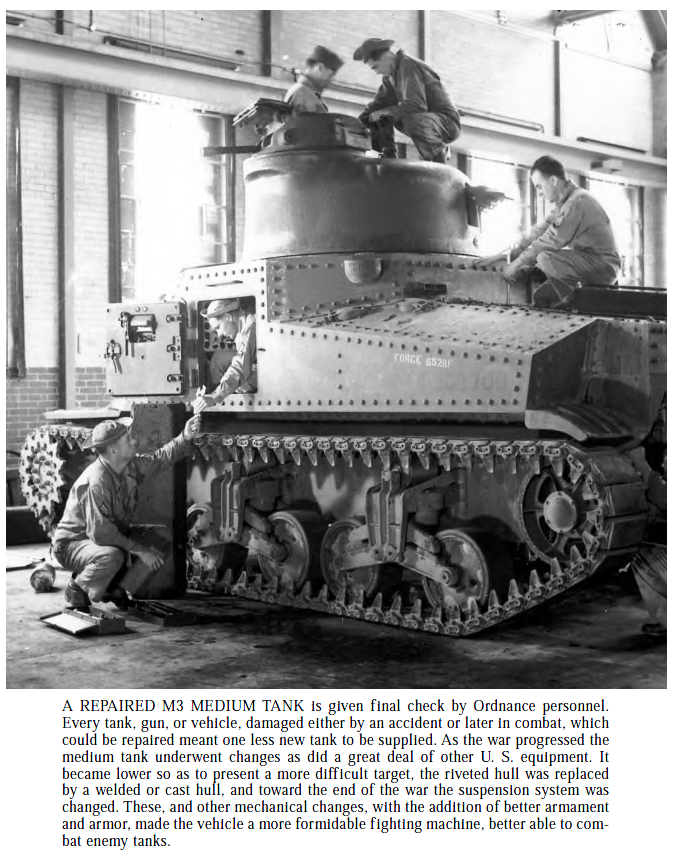
I thought this image was interesting, there are so many men on it, they all have the same hat. I’ve always like the Lee.
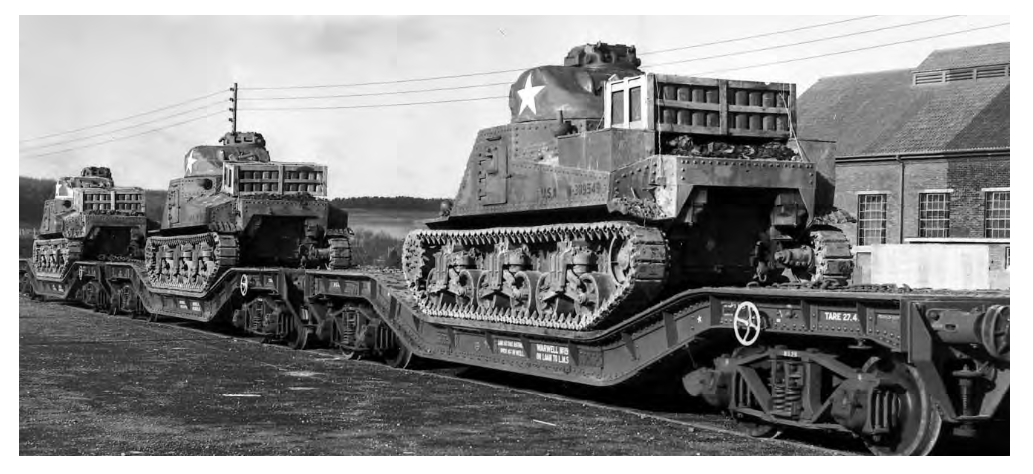
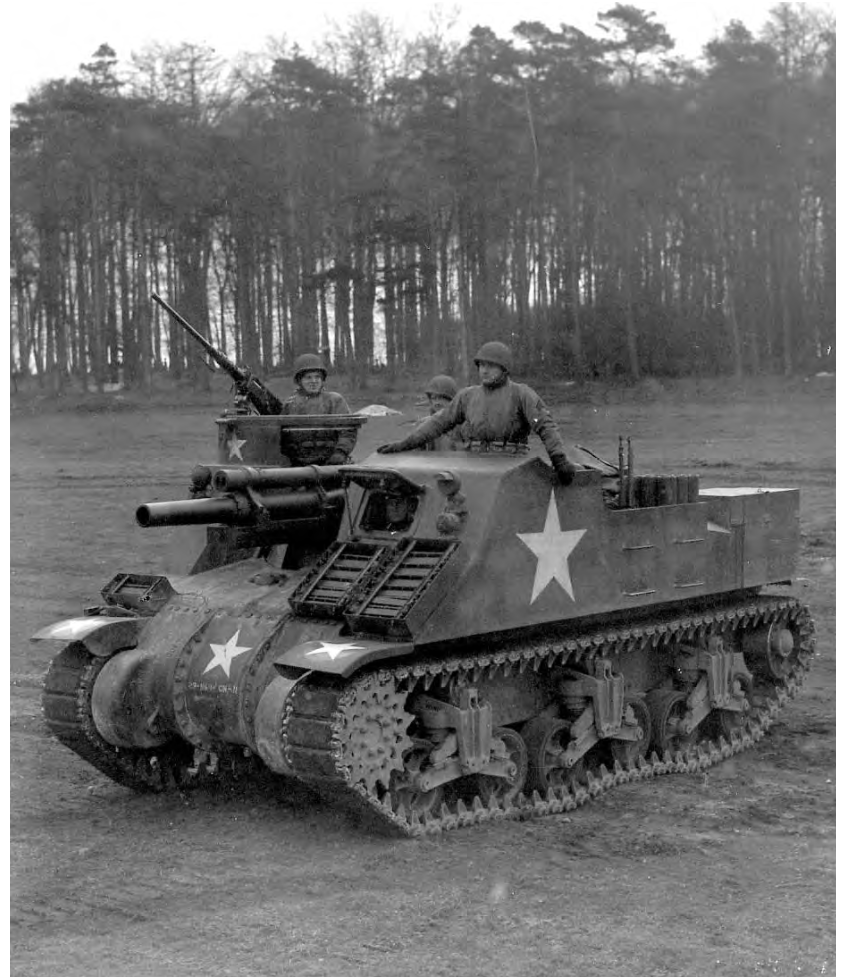
One aspect of tanks people rarely think about is moving them. As reliable as a Sherman or Lee was, driving them long distances would be a waste of resources, cause to much wear and tear, and be slow. So when moving tanks like these, probably on the way to a shipyard, for transport to Africa, over very long distances, trains, trucks, or boats are all faster.This is a nice shot of an early M7 Priest 105mm self propelled artillery.
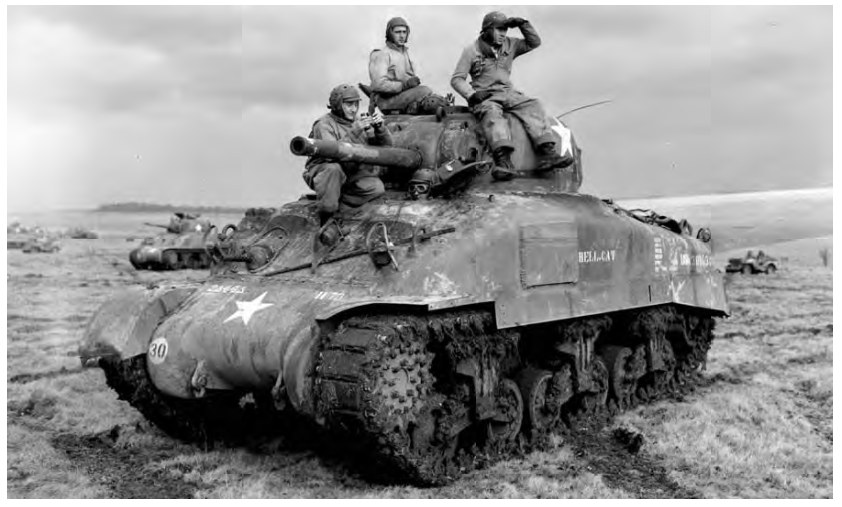
This is an early bug not super early production M4A1 75 tank. Note the cast tranny housing, but the M34 gun mount with shorty mantlet on the turret.
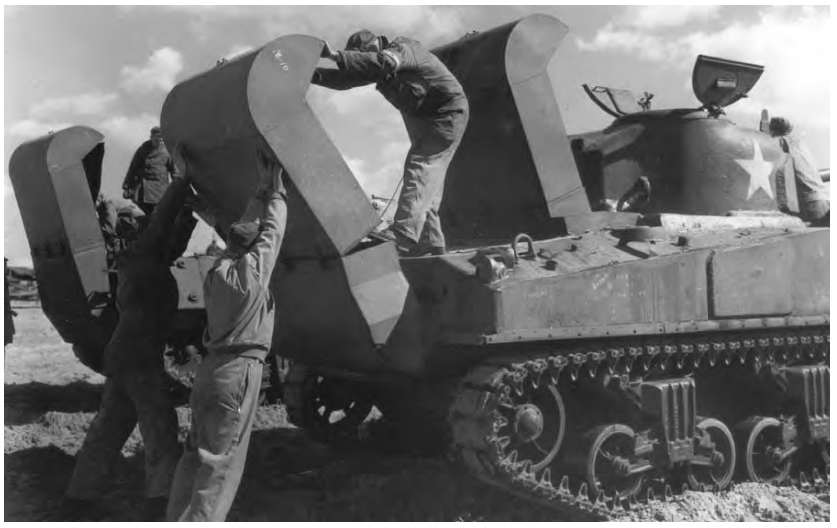
A nice photo of an M4 tank with the quick fix add ons, being fitted with wading trunks. These trunks, along with sealing all the other small openings in the hull and installing a special seal for the turret ring, these tanks could leave an LST, LCT or LCM in water almost up to the gun. These were not universally issued, and the Marines had to come up with their own versions.Look at that, an M4 Sherman in water almost up to its gun. I wonder if the driver could see anything through his periscope? Fish maybe? These wading trunks had a quick release mechanism.
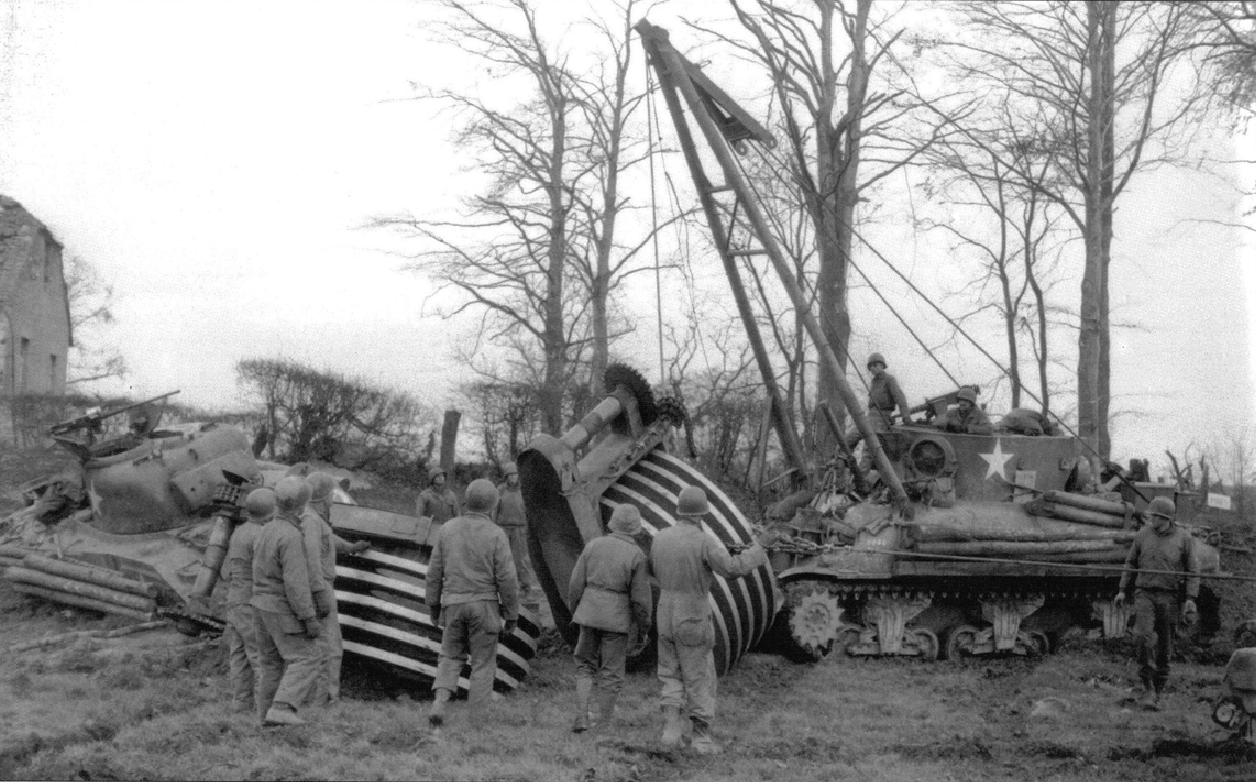
The final use of many M3 Lee tanks, conversion into the M31 ARV. How cool is an ARV with a fake 75mm gun, that’s mounted on door leading into the vehicle?
This is a nice shot of an M4A1 76w tank, the type issued for operation Cobra. It has a hedgerow cutter installed, and probably lacks a ventilator on the back of the turret. These would be the first 76mm tanks to go into combat in US hands.
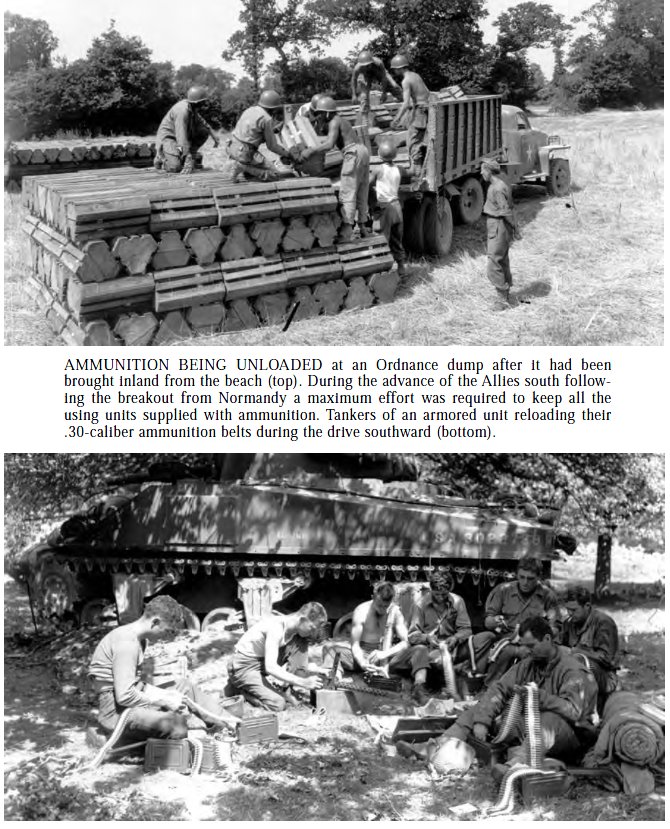
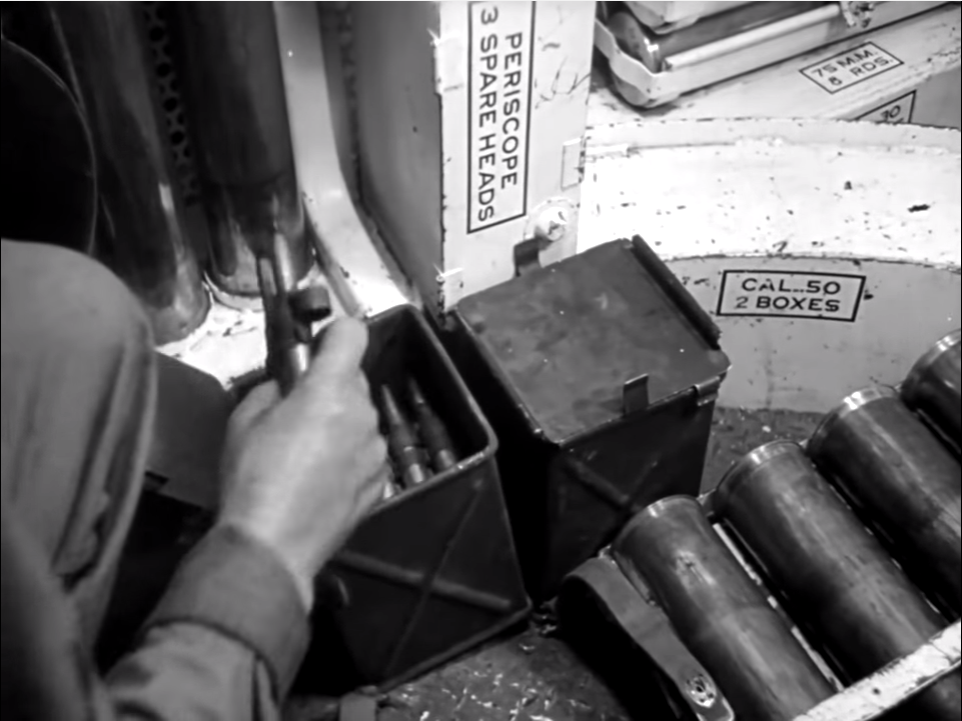
Two shots in one, a pile of tank ammo, and a crew cleaning their MGs and reloading ammo cans.
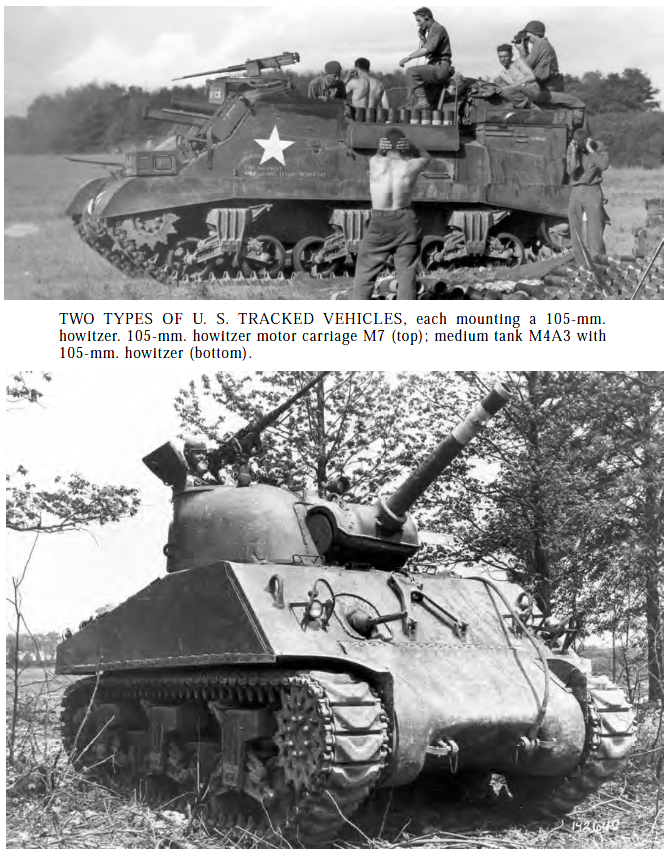
This is another early M4A1 76w tank. It’s already lost a fender on one side. The caption info with the picture is from the book. Rarely does it have detailed info about the tanks.This page shows an M7, and the tank that was designed to replace it The M4 105, partially. In that the 105mm armed Sherman was designed to replace the M7 in the HQ sections of Armor battalions and companies. I do not think they planned on replacing the M7s in Armored Artillery battalions in Armored Divisions.
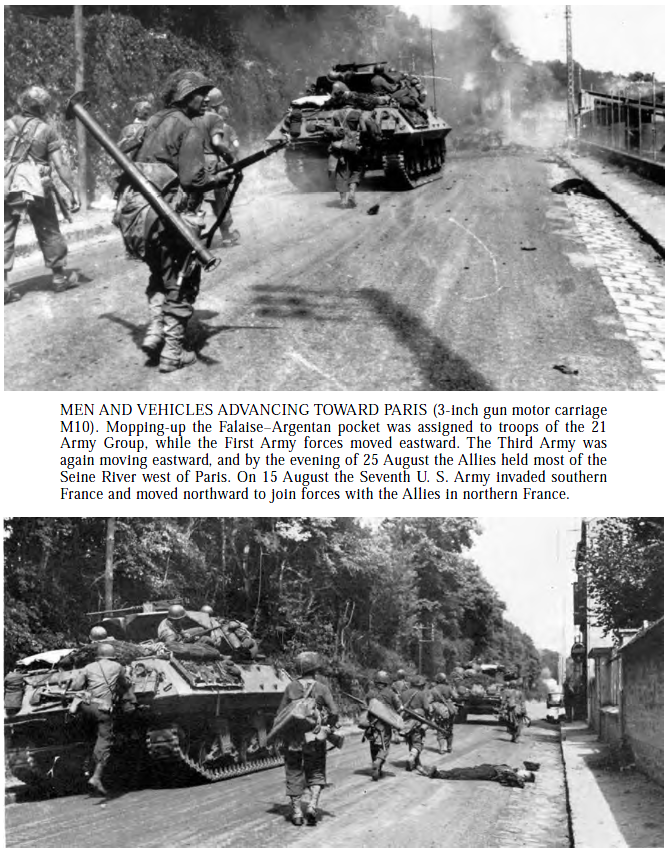
Another dual shot showing an M10 moving down a street with supporting doughs.
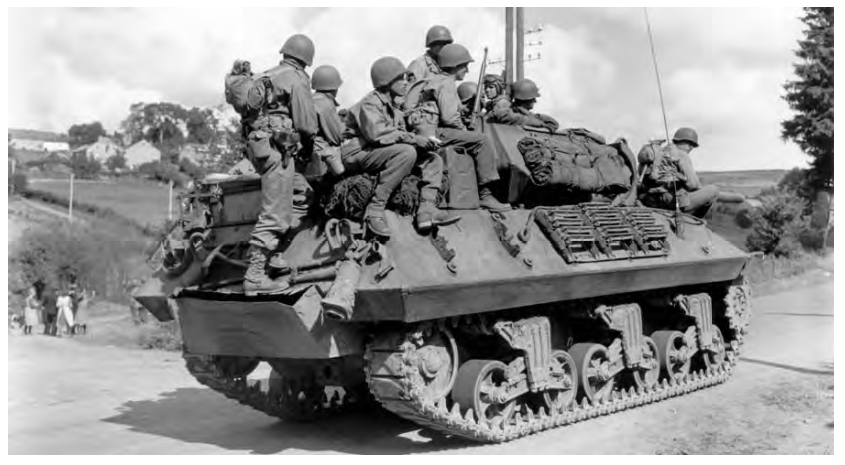
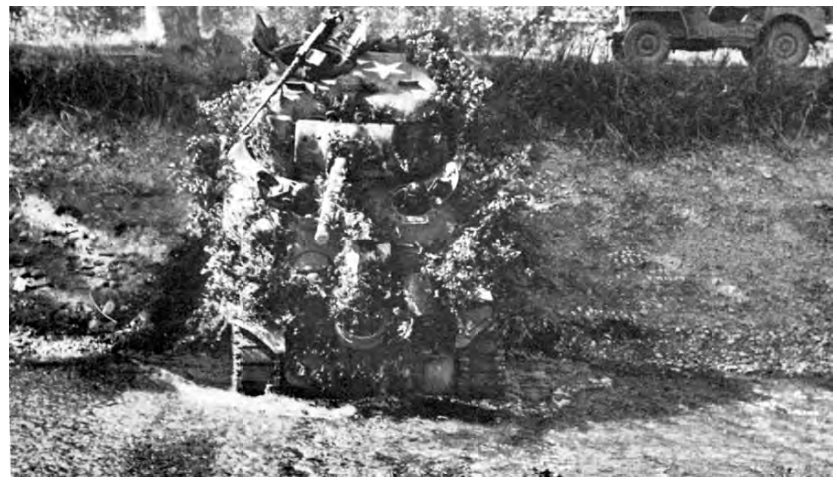
Another early M4A1 76w tank, note the loaders split hatch, and how the doors only open to the straight up position, a problem only found on early versions of this tank.An M10 supporting the first Army with some hitchhikers. Note, it once had a deep wading kit, and how well worn those tracks are.An Invisible M4A1 75 Sherman!
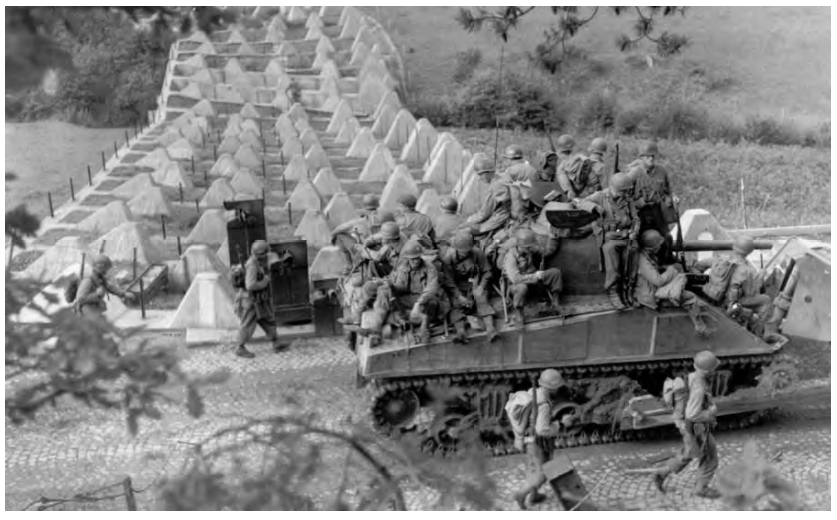
Pretty sure this is a duplicate, but if not, here is a shot of an M4 with doughs hitching a ride passing through the Siegfried Line
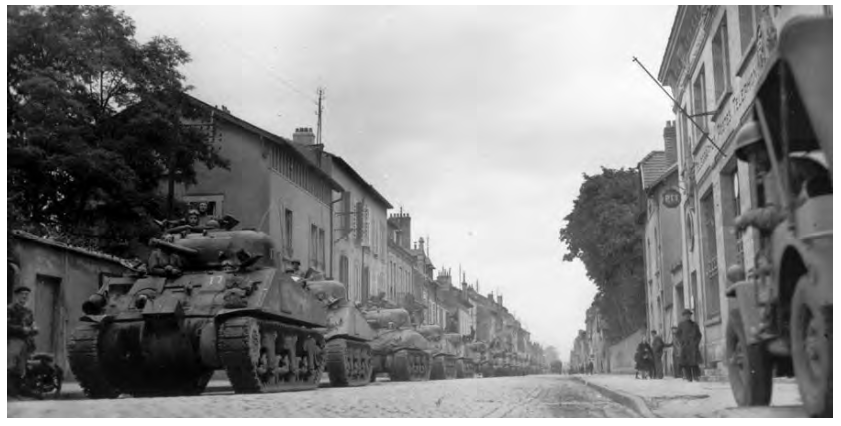
M4s waiting for the call to action near Luneville.
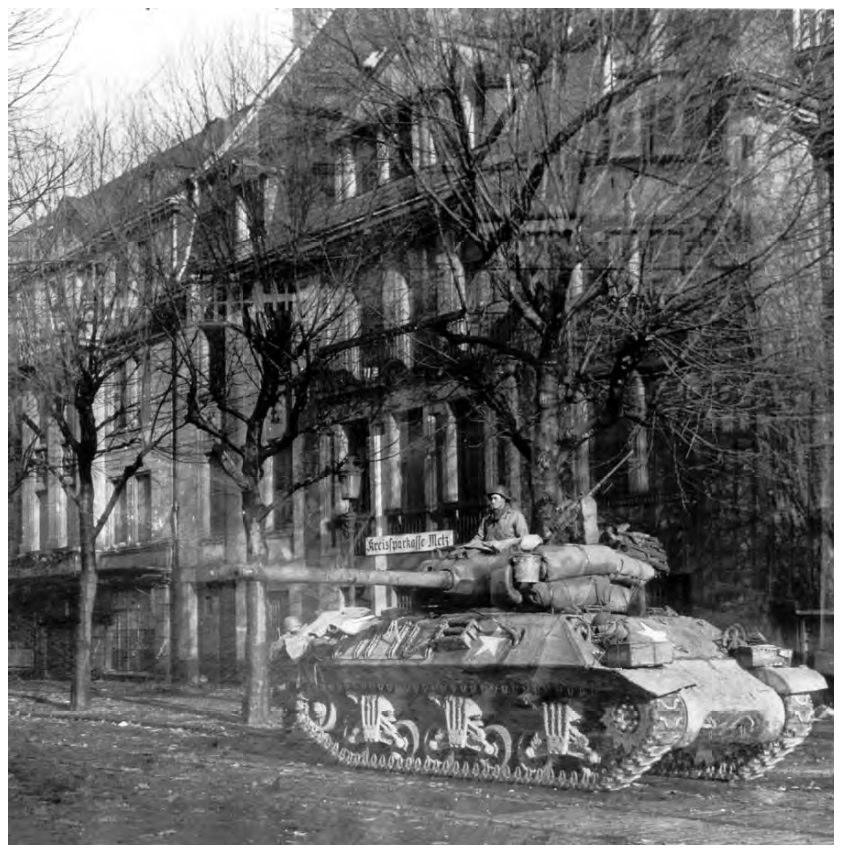
M36 GMC 90mm Tank destroyer.
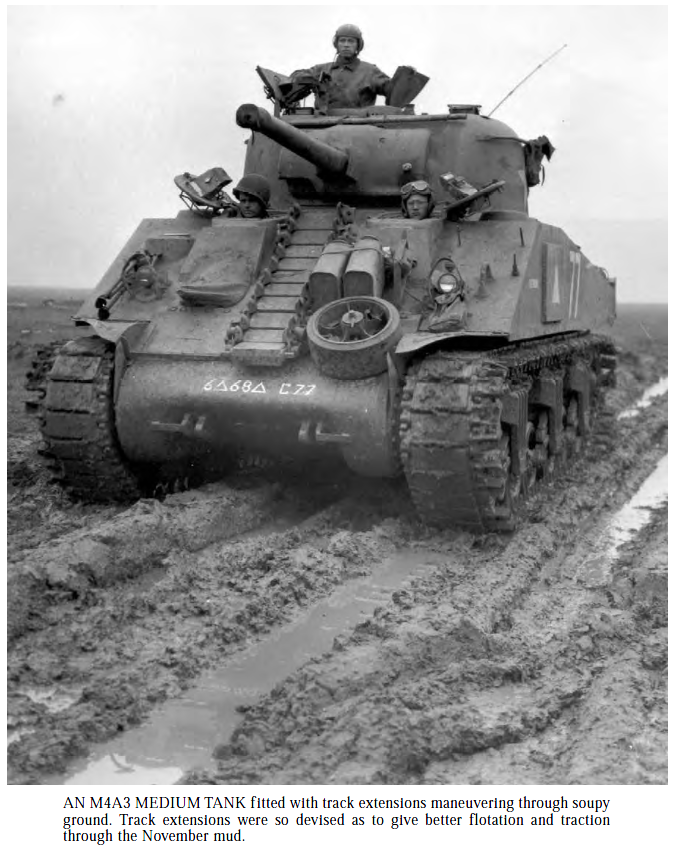
M4 getting duckbills
An M4 with the 6th AD, 68th Battalion, Company C, with duckbills, driving in mud.
Shermans acting as artillery, and an SPG based on the Sherman/Lee. The M12 155mm GMC.
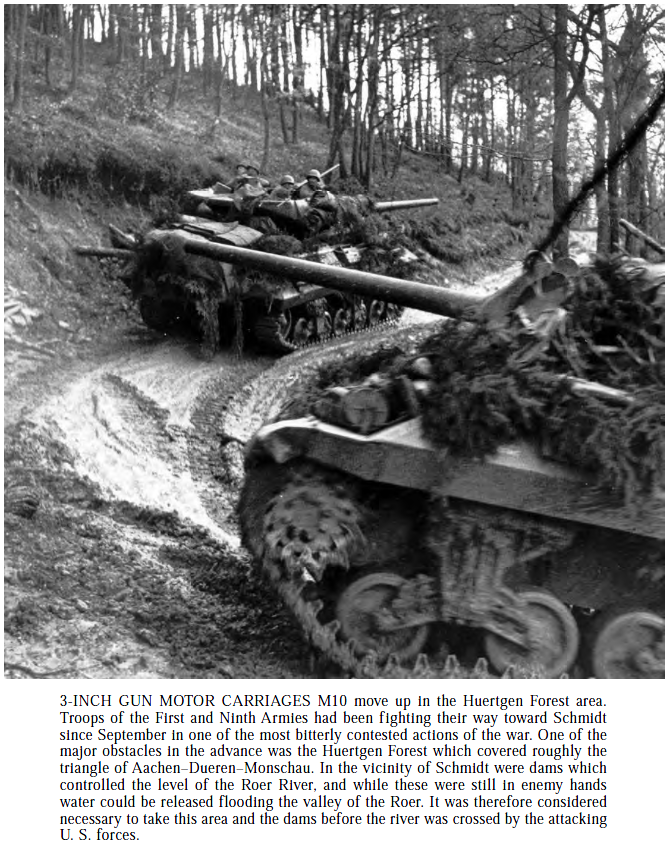
M10s in the Huertgen Forest, late model versions based on the lead tanks turret.
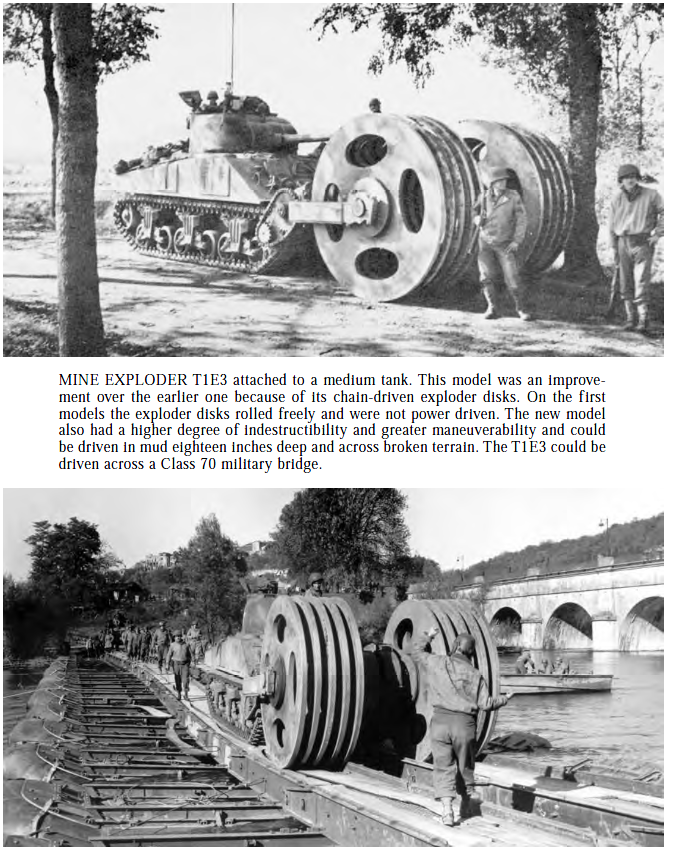
An M4 pushing an T1E3 mine exploder.
An M4A1 with the 7th Army fording the Moselle river.
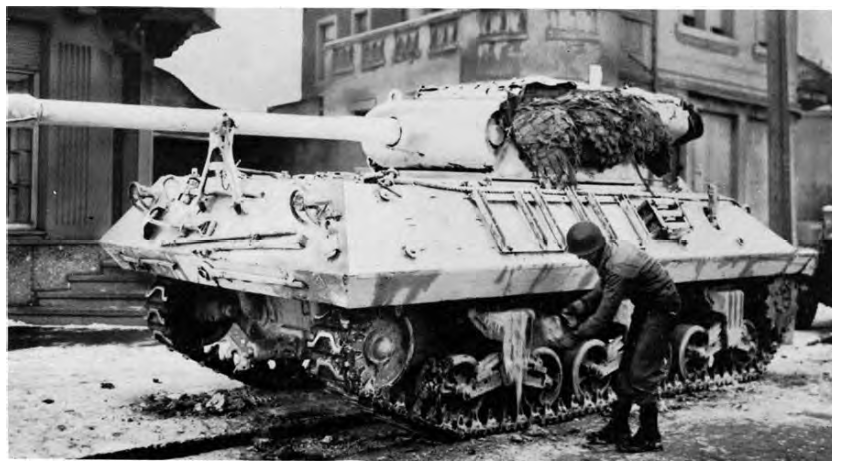
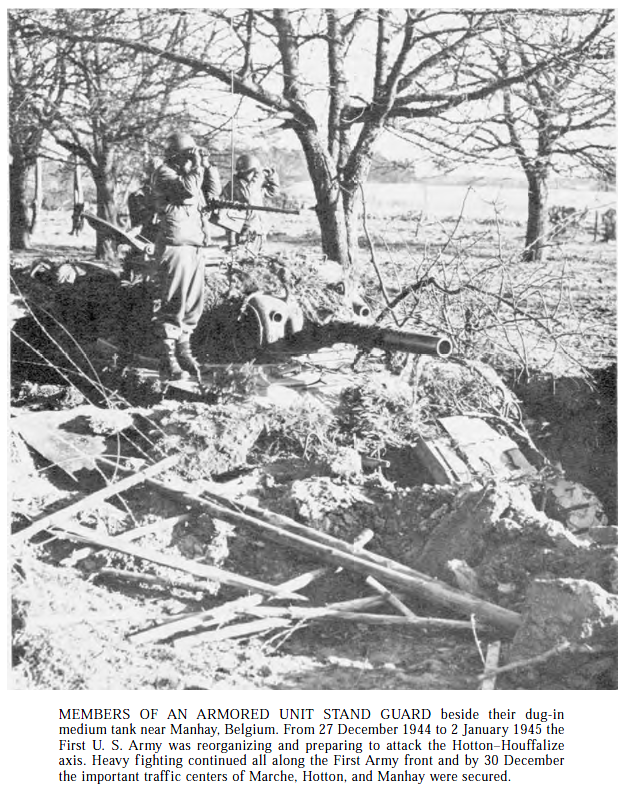
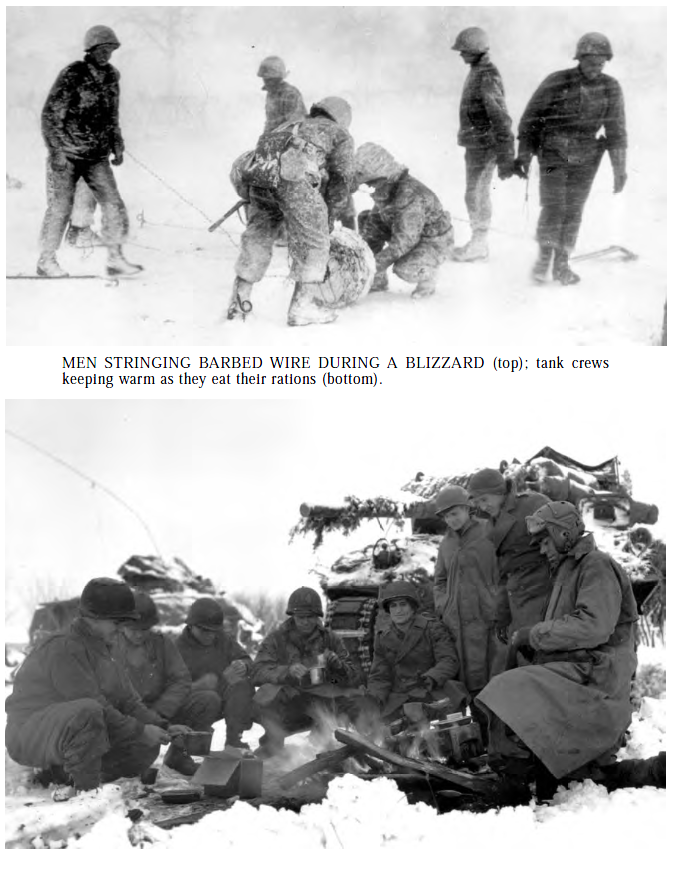
M36 GMC being whitewashed for the 1944/45 winterA M4 105, well dog in and camouflaged. It could be an M4A3 105, hard to tell.Another double shot, this one shows Doughs string barbed wire, and a M10 crew eating some chow.
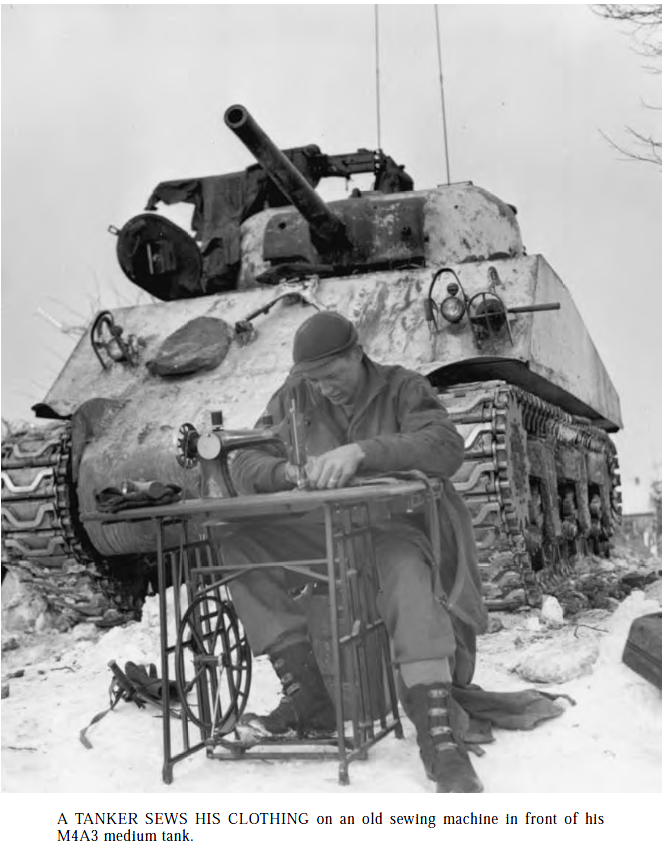
A decent photo of an M4A3 crewman working on an old sewing machine.
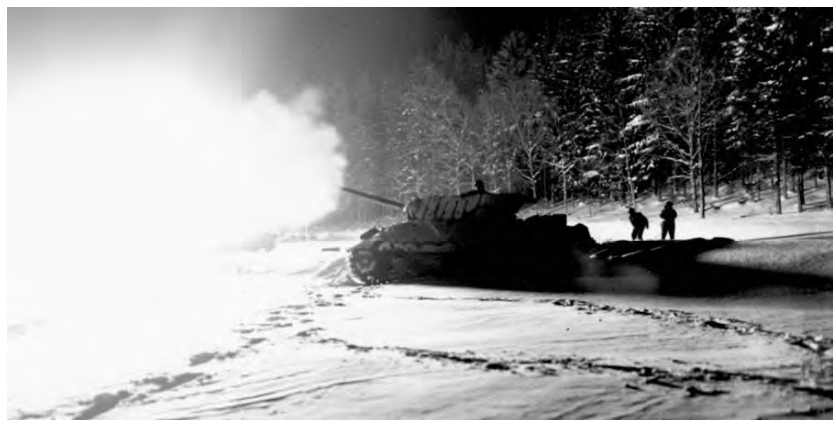
An M10 firing at night.
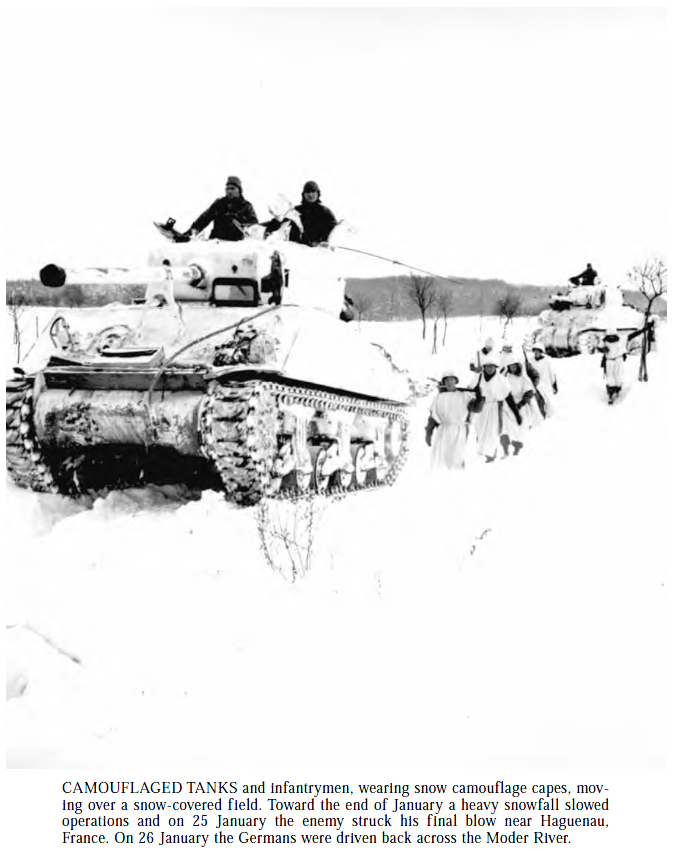
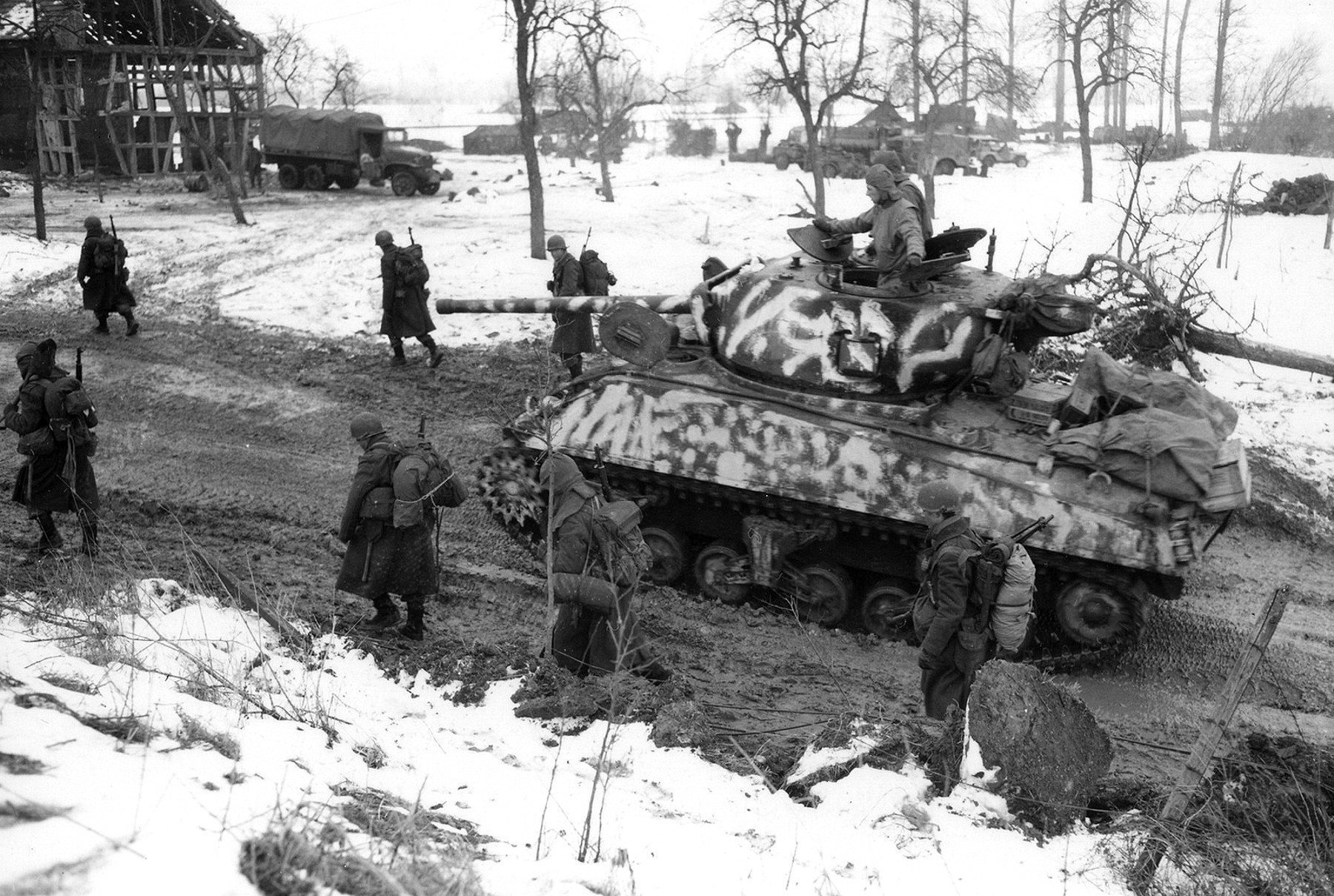
An M4A3 76W tank leading some doughs and an M4 75 in the snow.
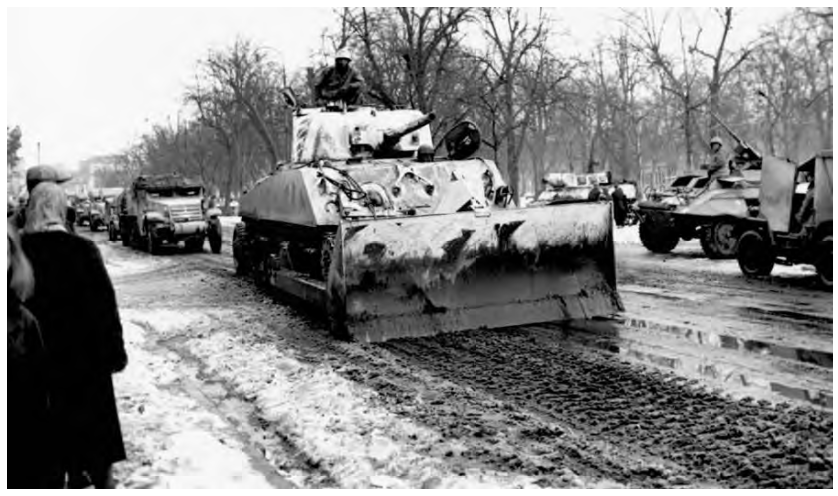
M4A3 dozer tank. This image was taken near Colmar.
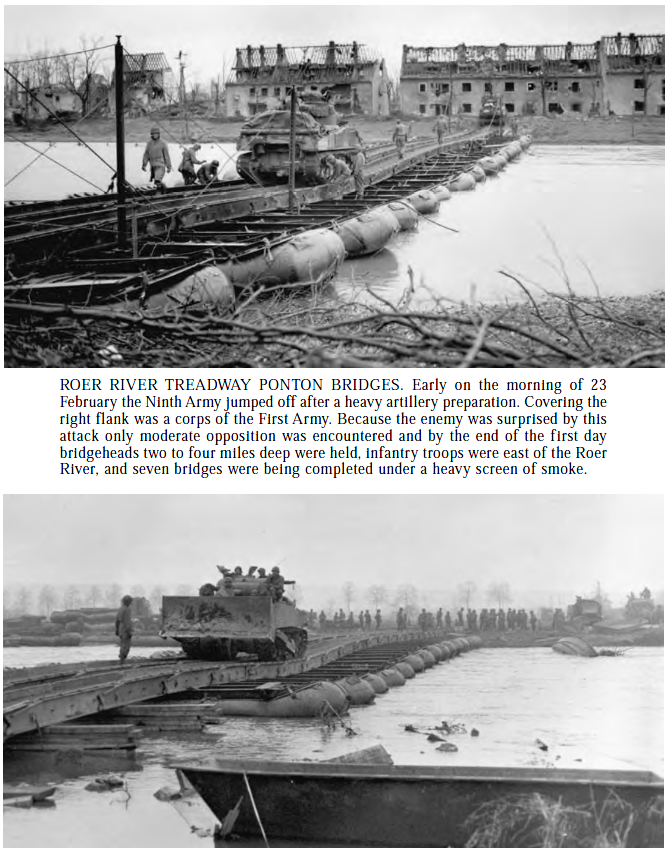
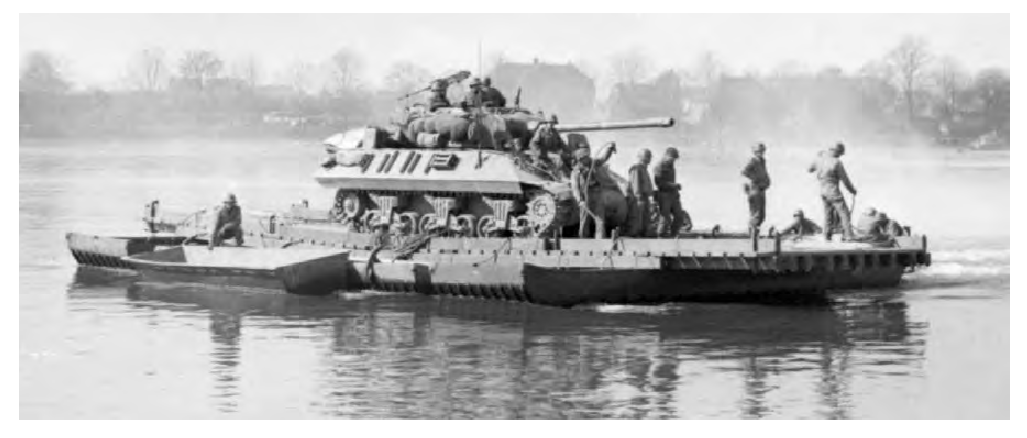
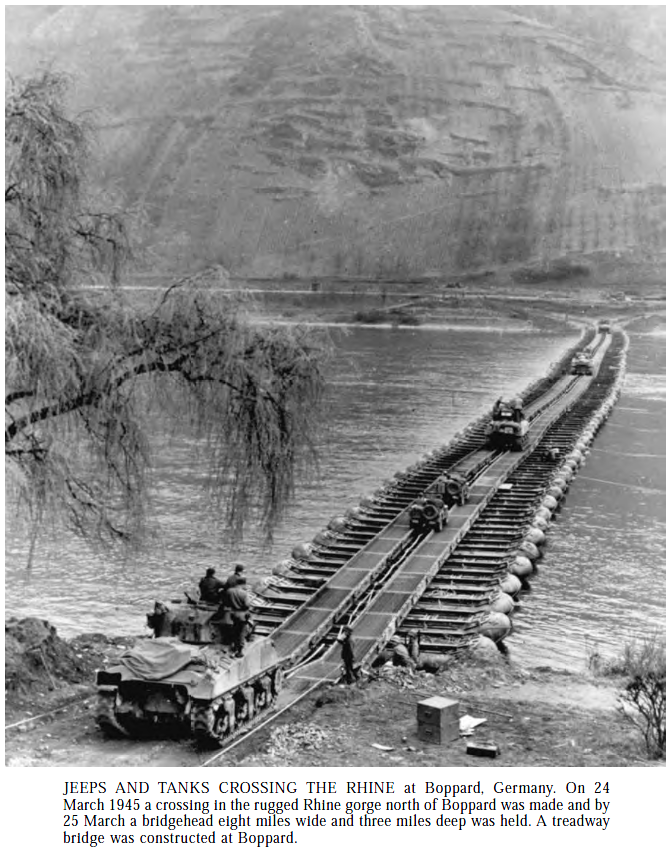
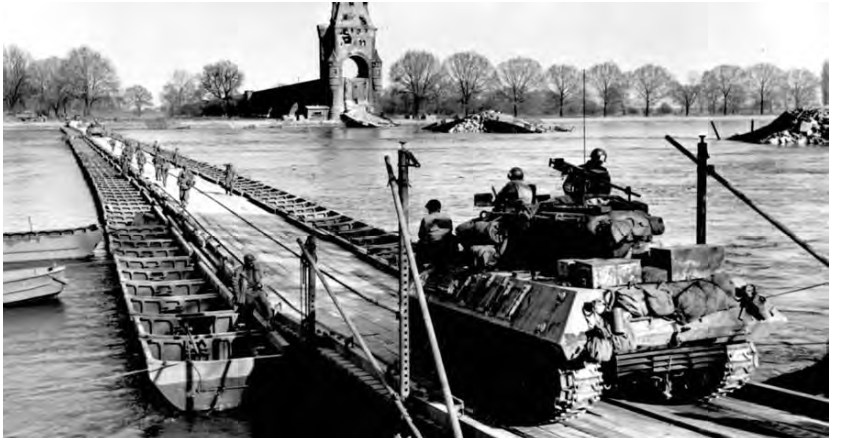
Shermans on floating pontoon bridges.
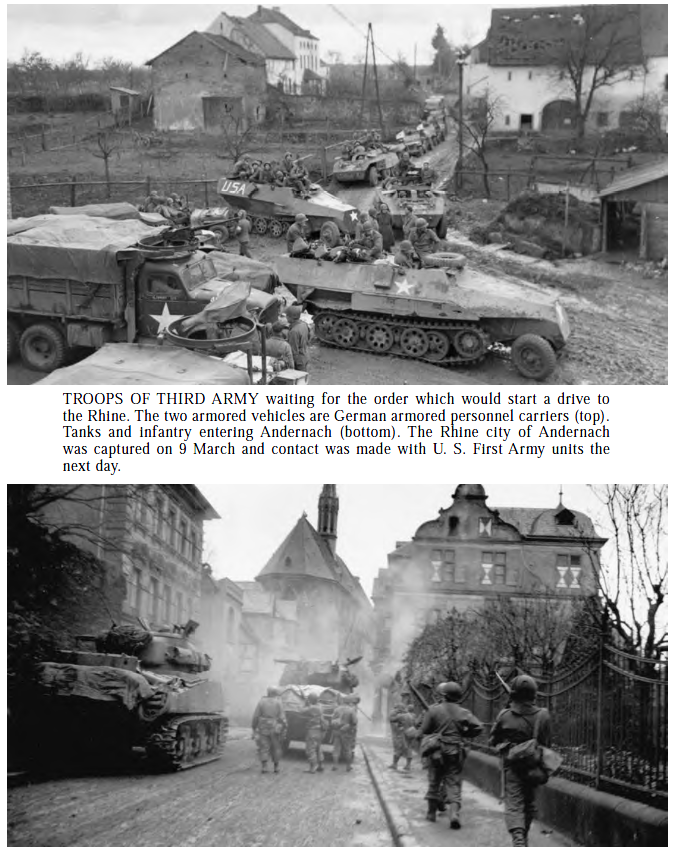
The US using German Halftracks and some Shermans, a 75 and 76 job.
An M4 tank being ferried across the Moselle river on a very makeshift ferryboat.
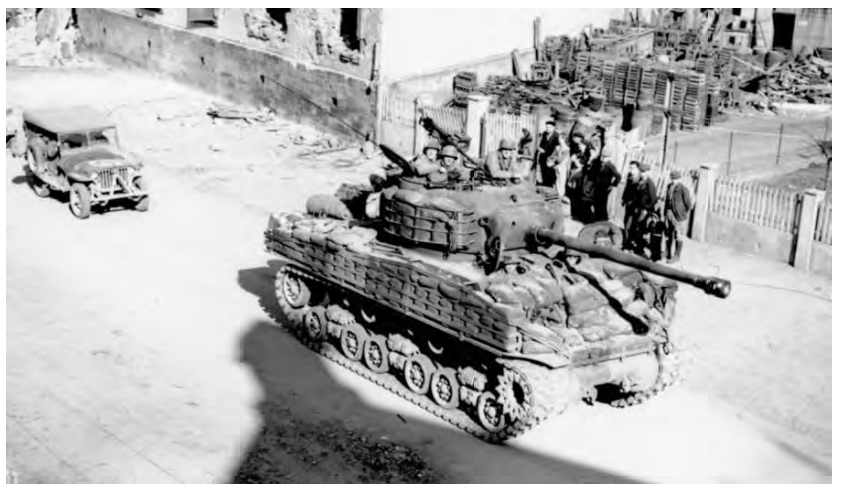
A heavily sandbagged, probably 14th AD M4A3 76w Easy 8 tank.
An M36 on a makeshift ferry.
Several types of Sherman crossing a very long pontoon bridge across the Rhine.
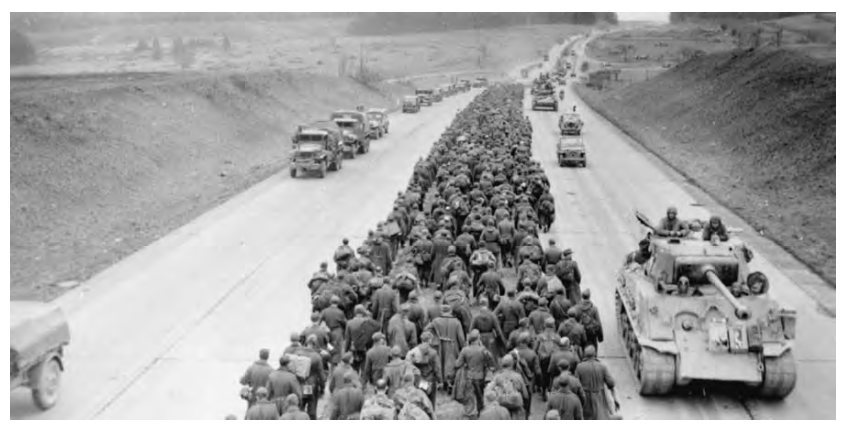
An up armored E8 passing a huge column of German POWs.
An M36 crossing the Rhine on another long pontoon bridge.The DD Sherman, the craziest way to get ashore in a tank.
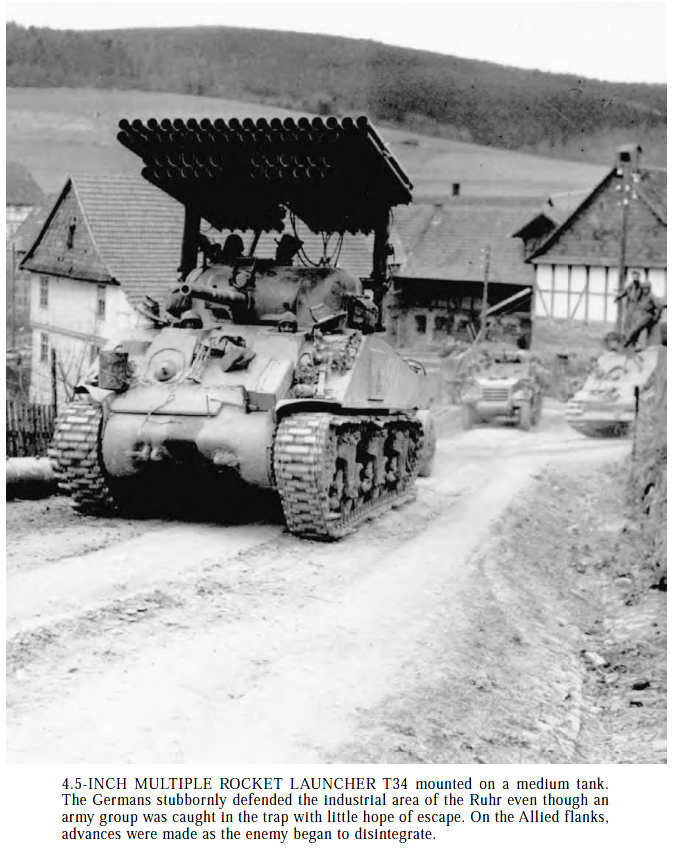
M4 Sherman, plus large rocket rack, equals awesome.
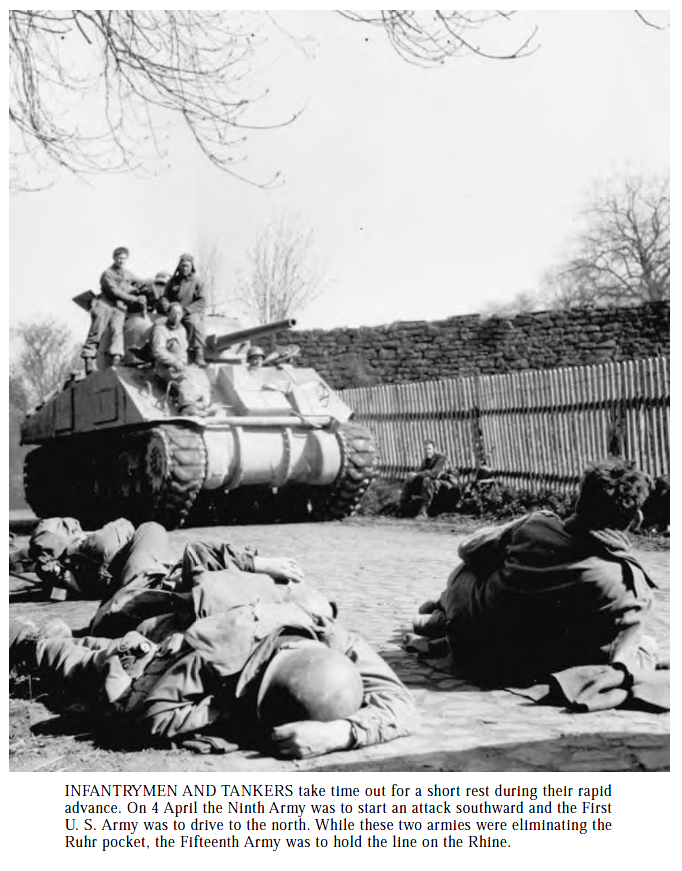
An M4 crew watches doughs sleep on a stone road.
The Sherman is an M4A3 76w with a split loaders hatch.
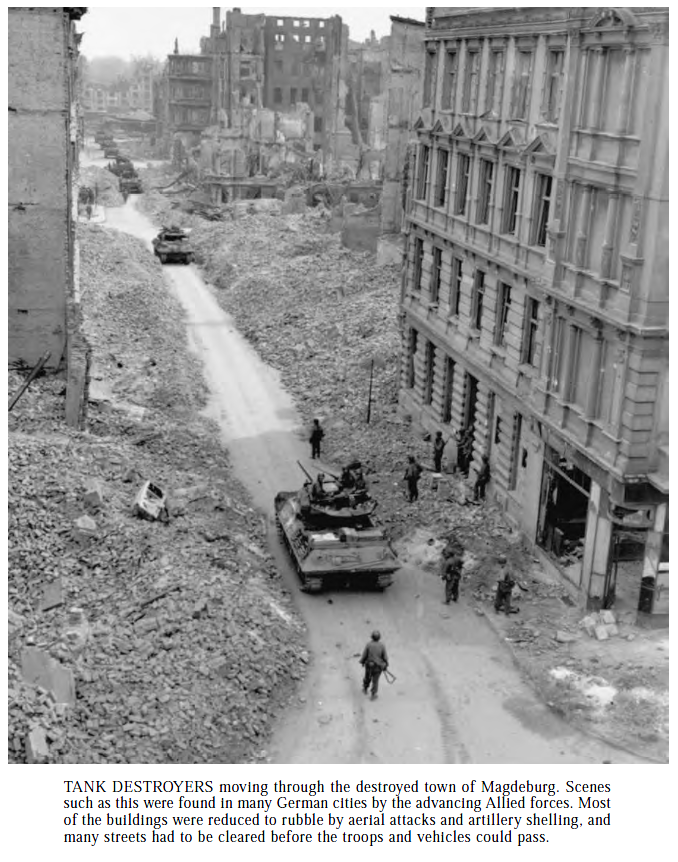
M10 TDs move through the ruins of Magdeburg.
A row of M4A3 76w HVSS tanks late in the war near Nuernberg.
An M4A3 76w HVSS tank
An Easy 8 acting as a ferry for some doughs.
M4A3 76w HVSS tank
That’s all folks, these images were all taken by the Army during the war and the books sold by the government originally and now are all up for free and used images that would all be public domain anyway, these images all should be public domain.
The book covers the History of the Shermans use by Egypt’s Military, and has many images I have never seen before, and I’ve seen a lot of Sherman pics! Most of these images are black and white, but there are a few color photos mixed in.
Egypt never had a huge number of Sherman tanks, probably less than 150 total spanning their whole use, but they had a very interesting variant, and did use them in combat.
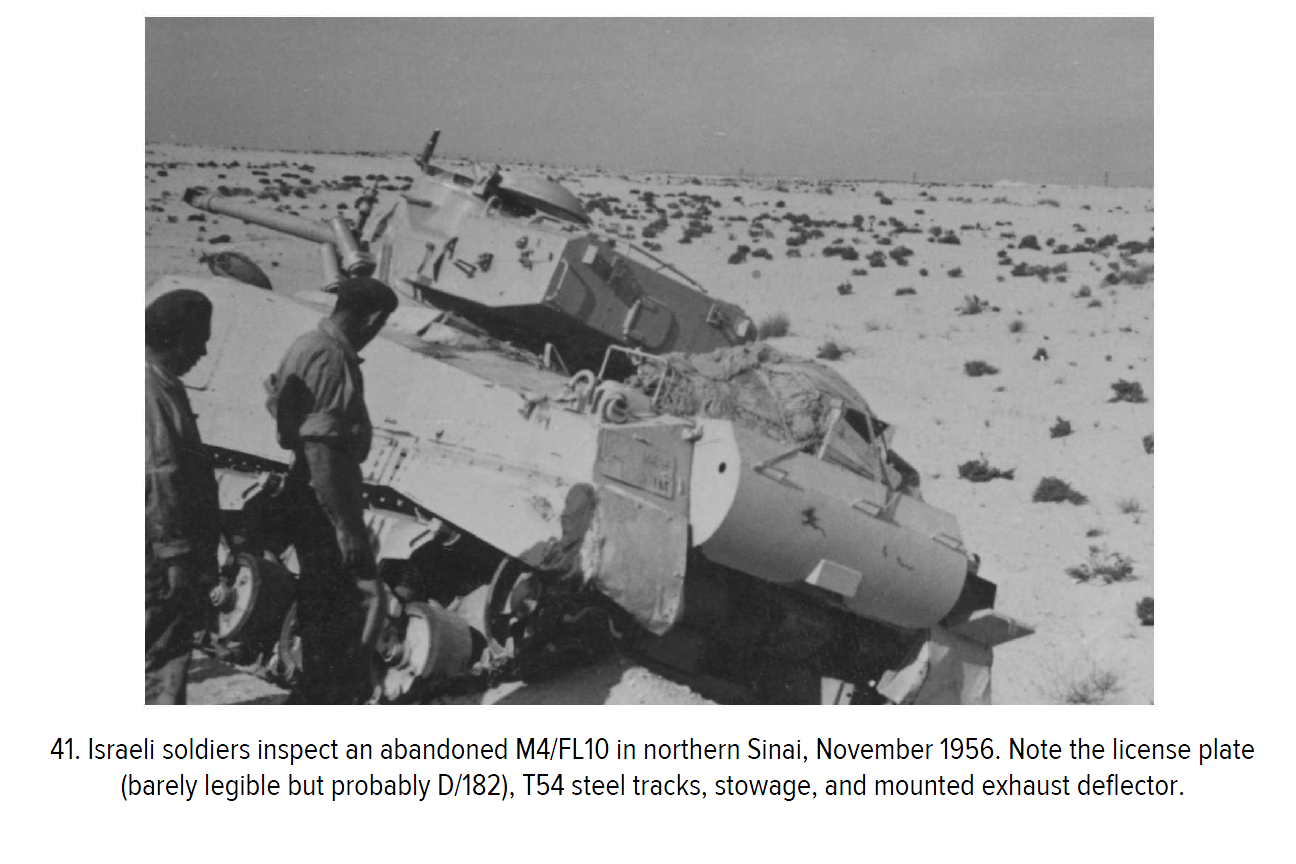
Most of the Shermans they acquired were M4A4s, leftovers from the Brits. The images show many of these tanks had none of the quick fix upgrades either. Many of the tanks still have the extra Brit storage boxes too. Another interesting thing about the images is there are shots of a rare, and odd looking rounded exhaust deflector, in the raised position. I’ve only seen something like it in one other place, and this book has several. They also got ahold of some M4A2 models, and re-engined some of the A4s to A2s.
M4/FL10 in Egyptian service, this image is from the book, and used with the authors permission. Do not repost or hotlink to it please.
You can see the deflector in the image above, from the book. I think it may be what the M4A2 exhaust deflector looks like, folded up, the M4A3 version looks very different folded. You can also see the very interesting AMX 13 turret on this M4A2. This was probably a much more comfortable way to employ an AMX 13 turret.
The book also covers unit markings, and the combat history of the Sherman tank in use by the Egyptian Military. The rare images make it worth the price alone, but there is a lot of nice text too! Blurb gives you many buying options. If you love the Sherman tank, or want to read about the Shermans use by a very interesting Nation, this is your book.
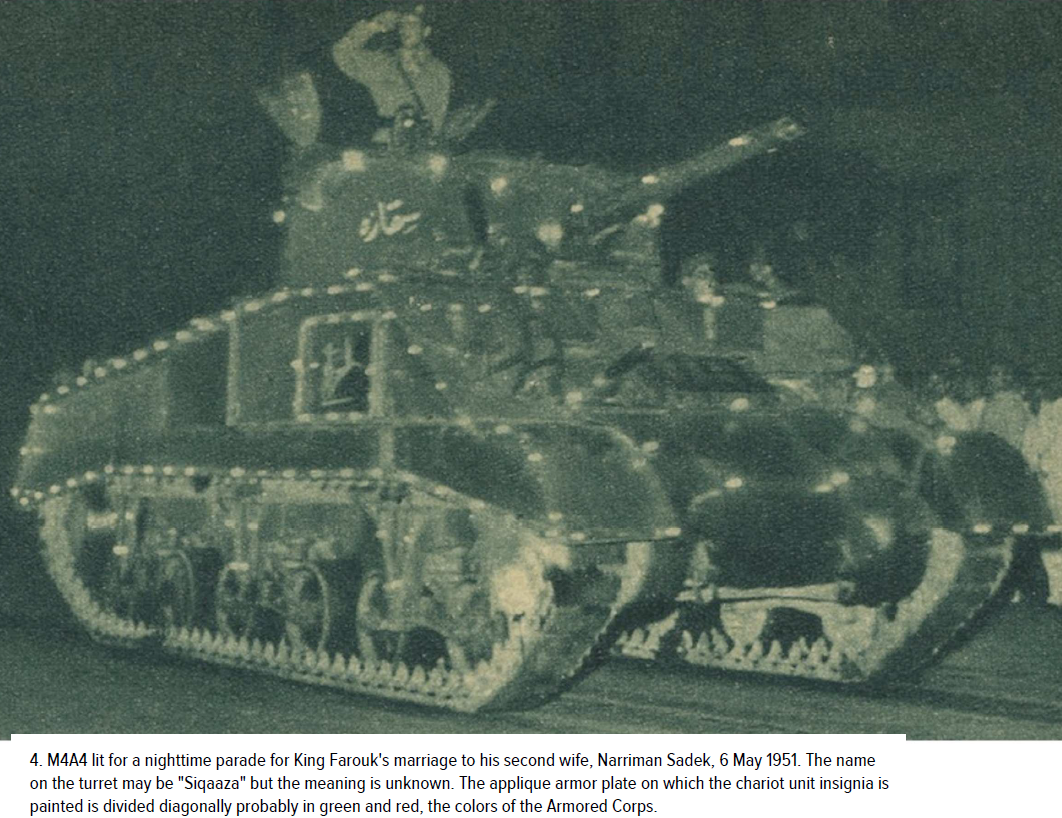
M4A4 with lights on it for a night parade. My favorite image from the book. Image from the book, used with the author’s permission, do not reproduce or hotlink it please.
Sherman Fire Control: How the Sherman aimed its Main Gun.
The Sherman tank went through a series of fire control changes each an improvement over the last. The first tanks lacked telescopic sight mounted on the gun mount. The only site was incorporated into the gunner’s periscope, and it wasn’t magnified. Since the periscopes were all interchangeable, updating the older tanks was easy at least were the periscope was concerned.
The final fire control setup the Sherman gunner had at his disposal was pretty impressive by the standards of the time. He was in a hydroelectrically driven turret that rotated fast; he had very nice periscope setup with 1x and 6x scopes hooked into the gun with strong linkage. He also had a telescopic sight to work with and the gun was stabilized. This was a vast improvement over the unmagnified reticle on the first production models.
The Lee used a unique setup; the 75mm gun was aimed with an M1 periscope, with an M21A1 periscope built into it. The 37mm was aimed with an M2 periscope with an M19A1 periscope built in. Both the 37 and 75 mounts were stabilized. The prototype M6 Sherman used its own unique sight built into the sight rotor on the top of the turret, this was only used on a small number of production Shermans tanks.
Let’s look at the various periscopes and telescopes the Sherman used through its long life. Let’s start with a look at the various versions of the periscope sights the production Sherman and the TDs based on the chassis below.
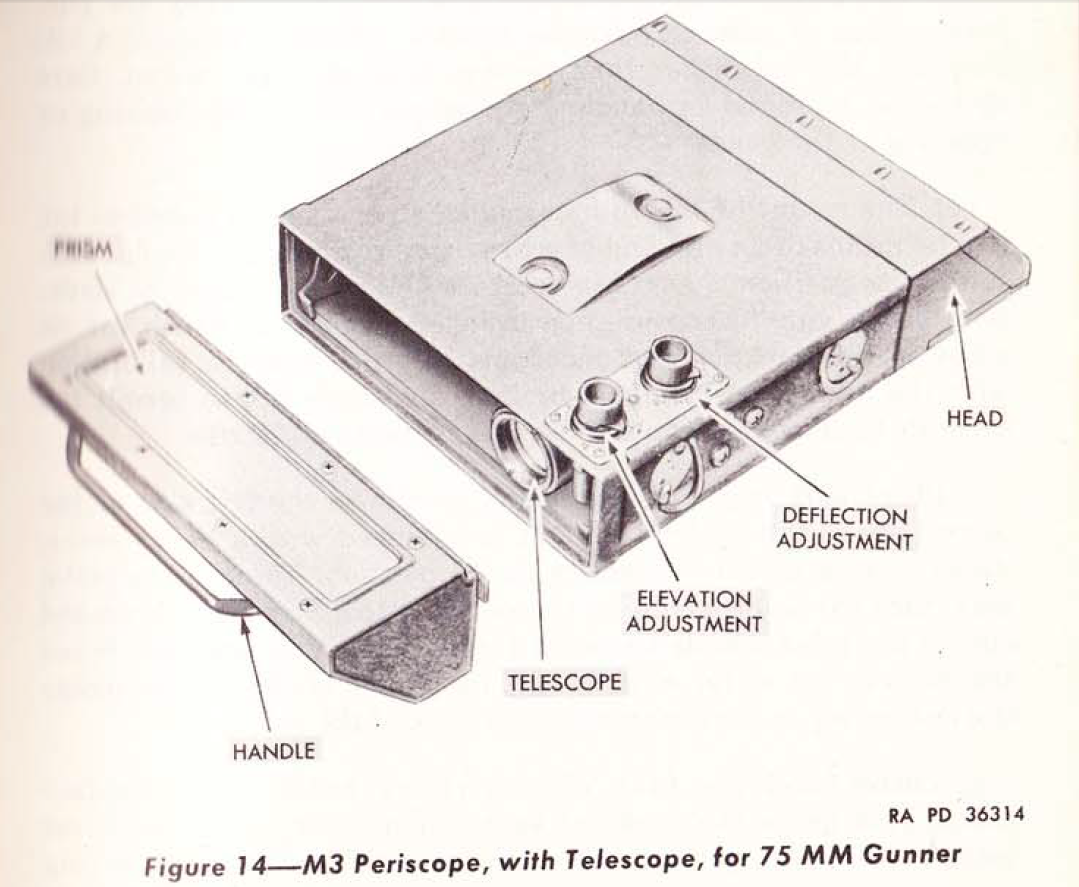
The M3 Periscope Sight
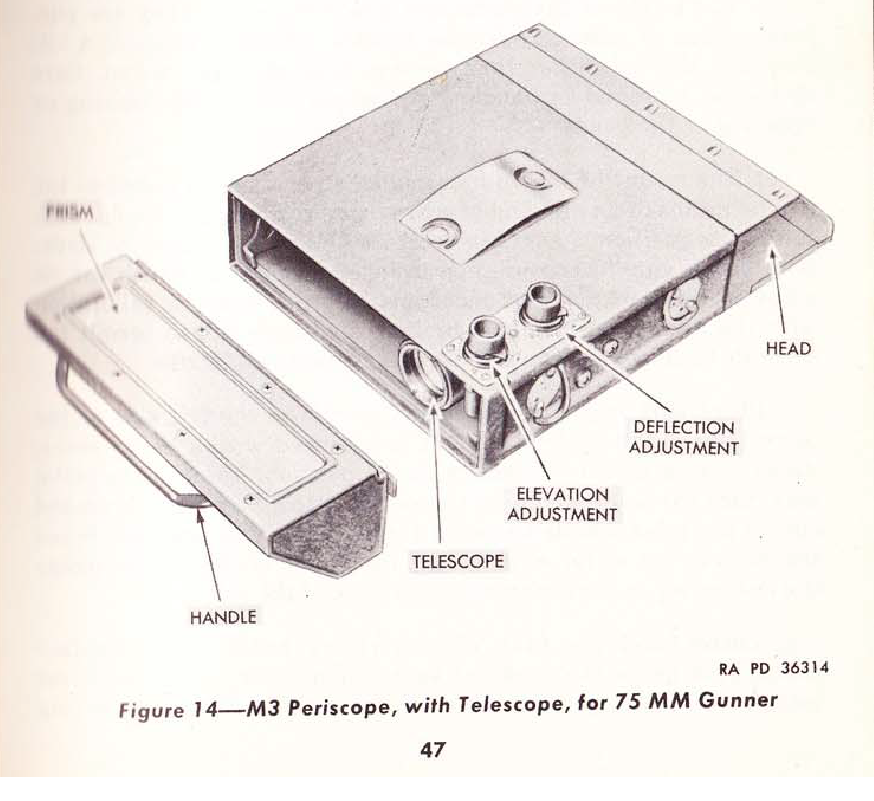
Since I just have a little info on this from TM 9-731B on the early M4A2, don’t have much to put here. Maybe this periscope is the one I’ve read about getting foggy on the inside in cold or humid locales. It was quickly replaced with the M4 detailed below. This was one of the non-magnified periscopes.
The M4 Periscope sight
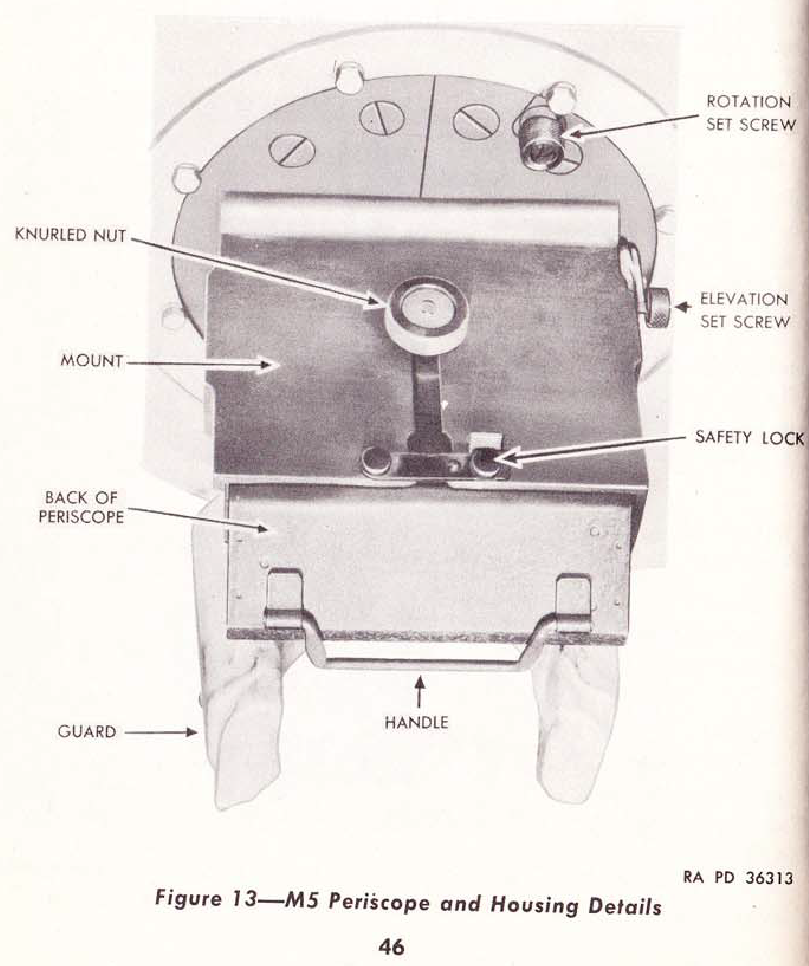
The Periscope M4; it had an M38 telescope with ballistic reticle inside, but no magnification. The M4 was not well liked, and the mount it fit in was made from sheet metal and was a little flimsy. The linkage that attacked it to the gun wasn’t very robust and could be knocked out of alignment annoyingly easily. On early Shermans, this was a big complaint, since they did not have a direct telescope yet. You couldn’t really take advantage of the M3 75mm guns range with this sight setup either since it had no magnification. The later better periscopes like the M4, M4A1 and M8 series would all fit in the old mount though.
The M4A1 Periscope Sight
Next came an improved version of the M4, the M4A1, and they came with an M38A2 telescope, this one was magnified, but not much at 1.44x, and a 9-degree field of view. Later versions of this periscope had illuminated reticles. The mount was not improved though nor was the linkage. The M4A1 periscope was changed when the 105mm and 76mm armed Shermans came online when used with these guns, they had the M47A2 for the 76 tanks, and M77C for the 105 tanks. Hunnicutt doesn’t specify if these were also 1.44X. This periscope was found on M4A1, A2, and A3 76 tanks during WWII.
The M8/M8A1 Periscope Sight
The M4A1 periscopes were replaced by the M8 and M8A1 periscopes. They were a lager tougher improvement on the M4 series, and had the M39A2 telescopic reticle for use with the 76mm gun since it had the same reticle as the M47A2 used in the M4A1 periscope. The M39A2 had 1.8x magnification and a 6-degree FOV. Even though at this point this was no longer the primary sight, the Army kept improving it. But the mount and linkage still remained an issue.
The M10 Periscope Sight
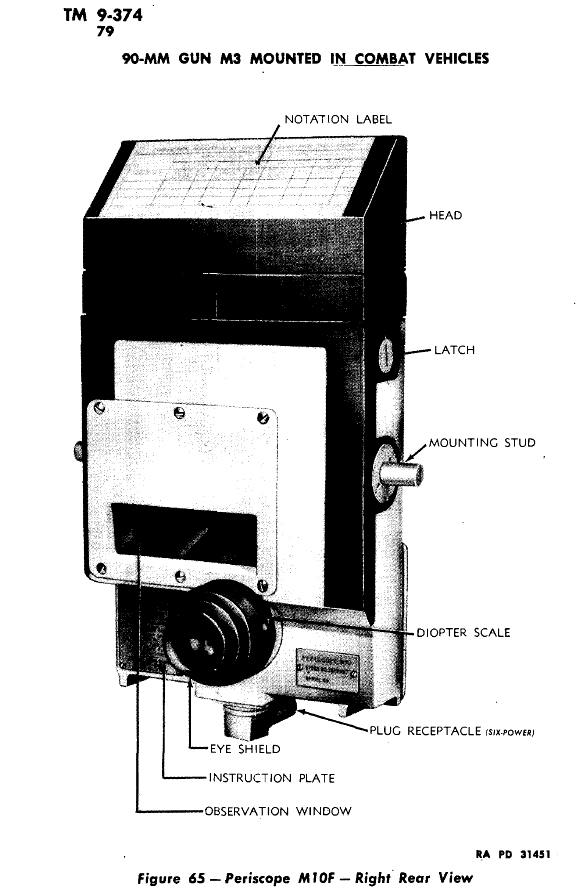
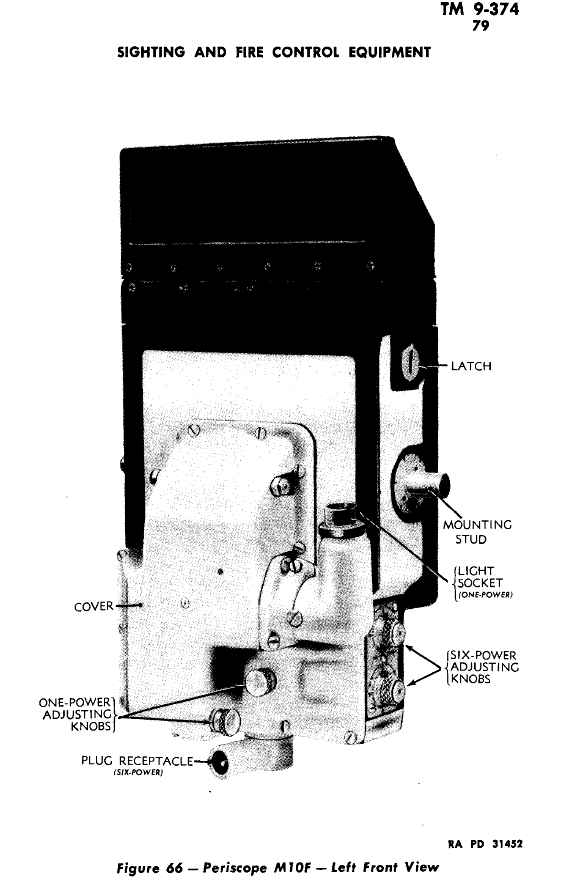
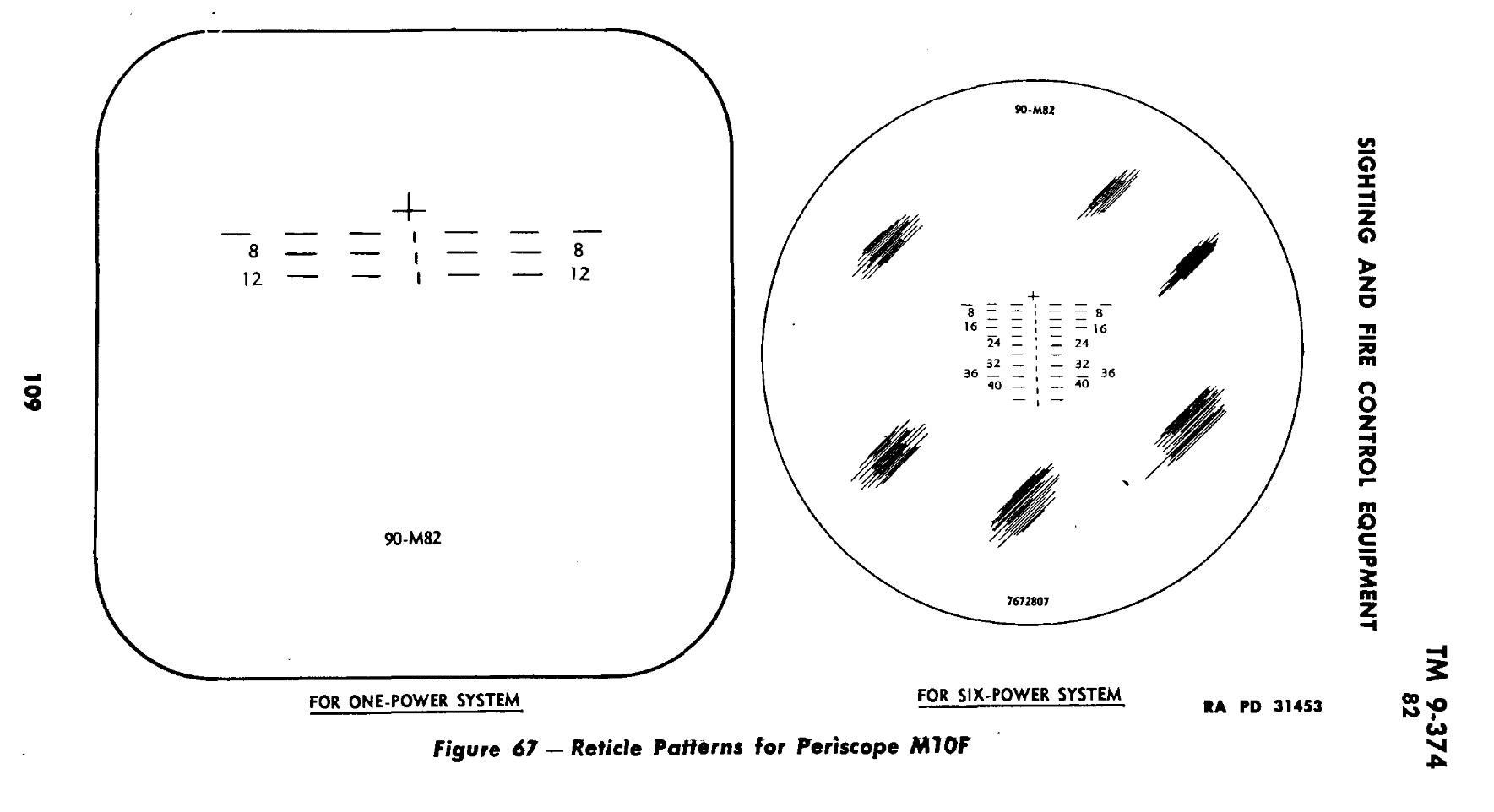
The Army came up with another new periscope sight system called the M10. They started issuing it late in the war around the same time wet tanks start appearing. This was a much-improved periscope; it incorporated two telescopes with reticles, one 1.x, with a field of view of 42 degrees, ten minutes for engaging close targets. The second periscope had a 6x telescope with an 11 degree 20-minute field of view. This periscope could be used with the 76, 75, and 105mm guns when the right reticle was fitted. There was also an M16 periscope, pretty much the same as the m10, but with a reticle adjusting system.
M10C was specific to 75mm Shermans.
M10D was used on 76mm tanks and 105 tanks.
The Periscope mount
for these periscopes were improved greatly when the 76mm gun and 105 tanks arrived, and the mount was made from a beefy casting, and all the linkage was made much stronger will ball bearing in all the pivot points. These would have shown up on M4A1 75w, M4A3 75w, M4A3 105, M4 105, and M4A3 76w, M4A2 76w and M4A1 76w tanks.
You can see the old style periscope mount in this shot.
This improved mount was also incorporated into most of the post-war rebuild and overhauls. It is very easy to spot, by the heavy cast iron hood over the periscope hole.
In this shot you can see the improved heavy duty gunners periscope mount, spikes optional.
The Telescopic sights.
The Shermans fire control system was improved further by the incorporation of a direct telescope mount to the M38A1 gun mount. This prompted the creation of the full-length gun mantlet to protect the scope. When these were retrofitted into older tanks, sometimes they would weld on armor over the scope, leaving a half armored mantlet.
The later 76mm armed tanks had the M62 mount, and it had a telescopic sight mount from the start.
The direct scopes went through their own evolution, and this information is put together from the various TMs on the tanks and Hunnicutt’s Sherman and is not complete. I will update this section as I get more info on the topic.
The M55 Telescope: The first! For the 75mm and 105
This telescope had 3x magnifications with 12 degree 19-minute FOV. This sight was also used on the early production 105 tanks and most 75mm Shermans.
The M51: Also the First, but for the 76 M1A1
The same scope as above, with the same specs, but with the reticle for the 76mm guns, and that’s all. There were complaints about the optical quality on these scopes since the clarity wasn’t optimal.
M70 Telescopic Sight
The M50 sights were replaced with the M70 Series sights, the same size, and magnification. What set them apart was there superior optical quality. The Army went on to develop many different versions of this sight. It was a 3X scope with a 12 degree 19-minute FOV.
M70F Telescopic Sight
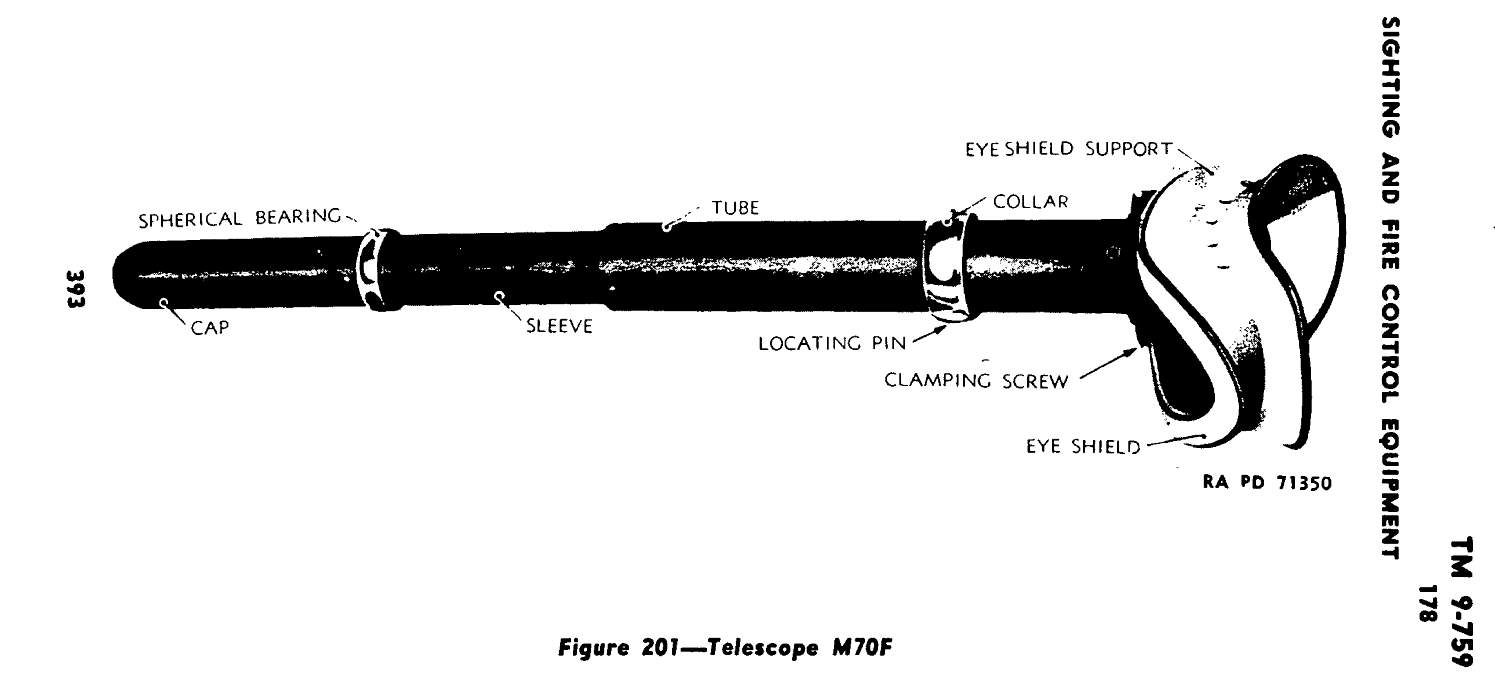
This was version used on M4A3 75W Shermans.
M70G Telescopic Sight
This sight was used on M10 GMC tank destroyers.
M70P Telescopic Sight
This sight was used on some M36 CMCs tank destroyers.
M71D Telescopic Sight
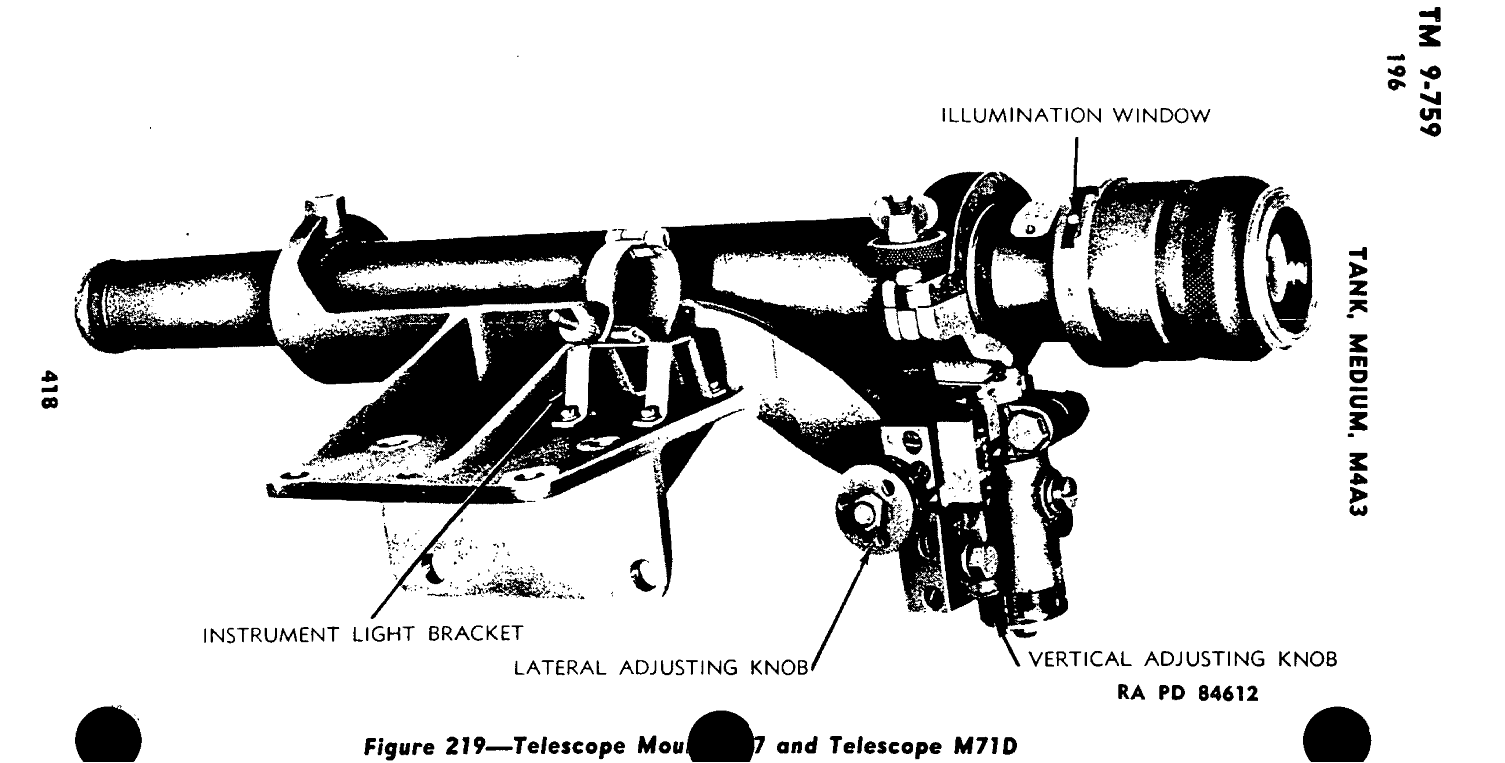
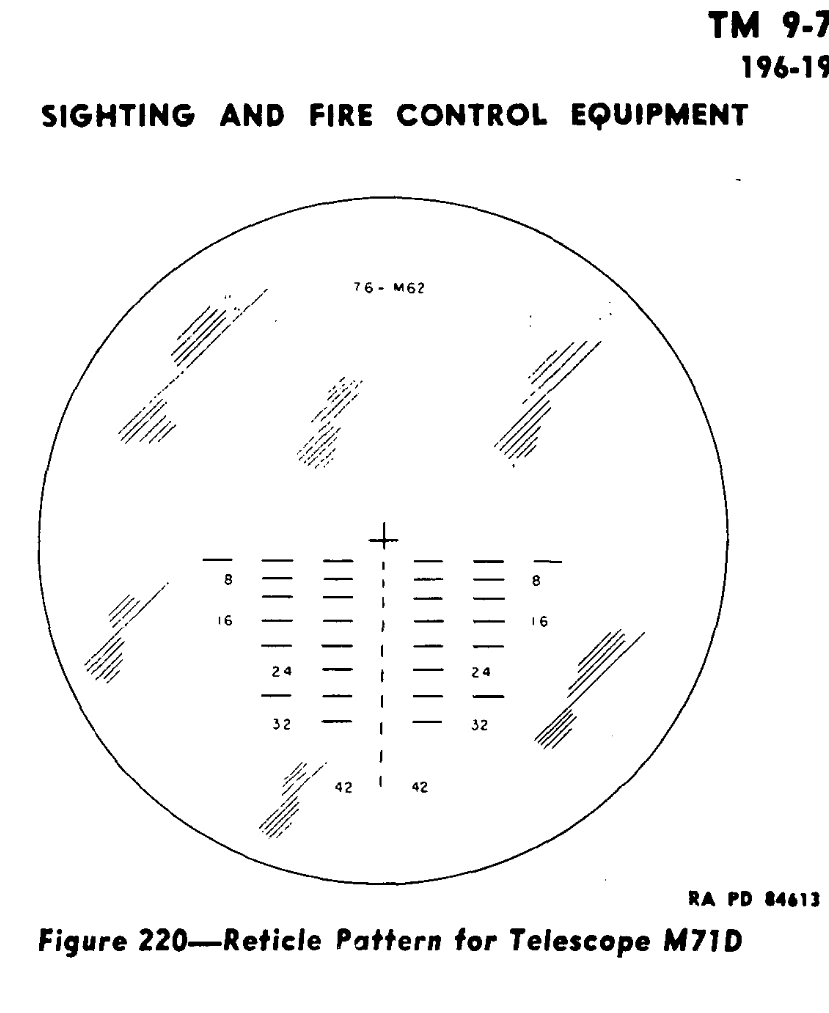
This was a 5x with a 13-degree FOV version of the scope. It had the reticle for the 76mm guns and was used on those tanks. This was the sight commonly found on M4A1 and M4A2 76 tanks.
M71G Telescopic Sight
This version of the M71 was issued with the Jumbo tanks.
M72D Telescopic Sight
This was used on the 105mm armed Shermans.
M76F/D Telescopic Sight
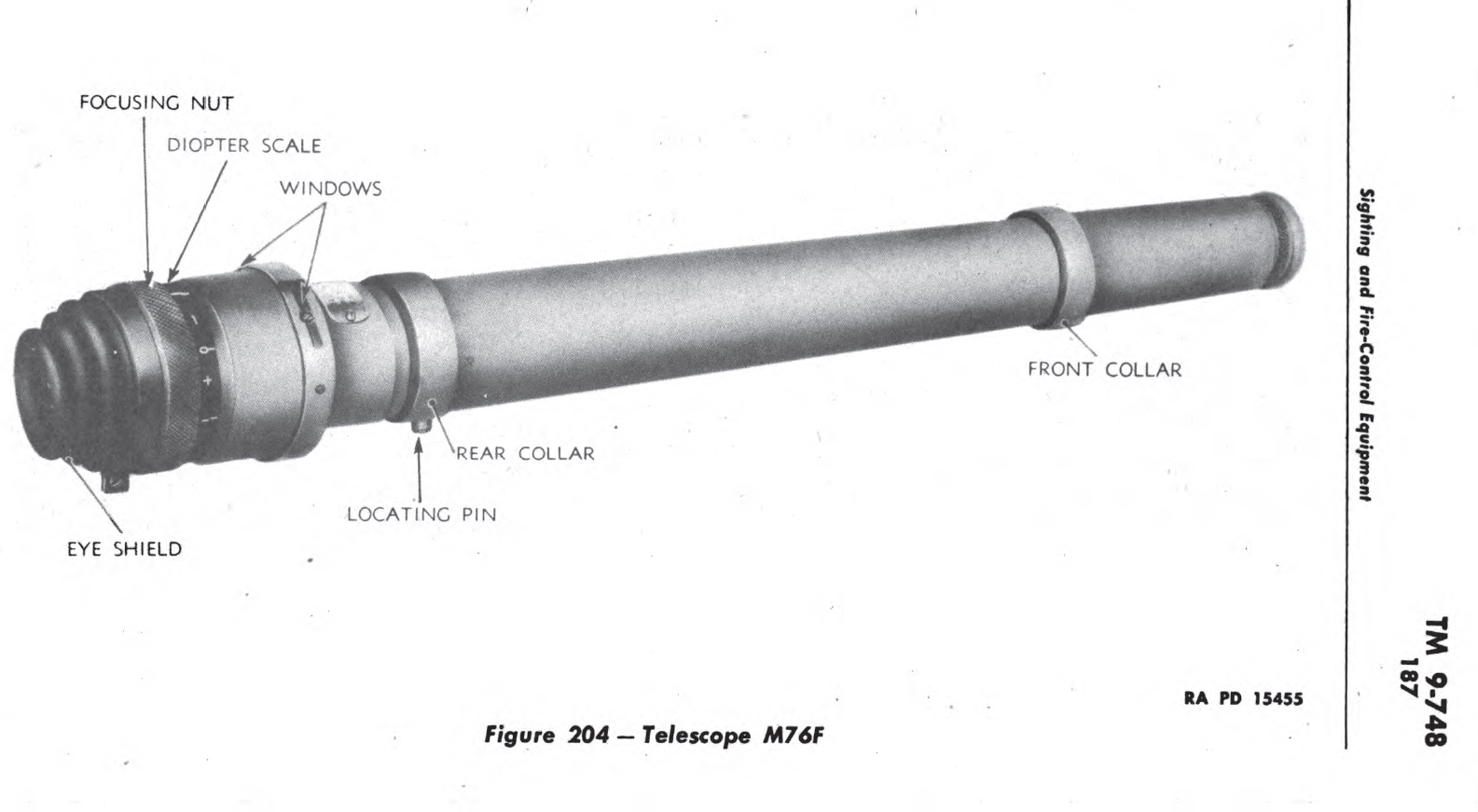
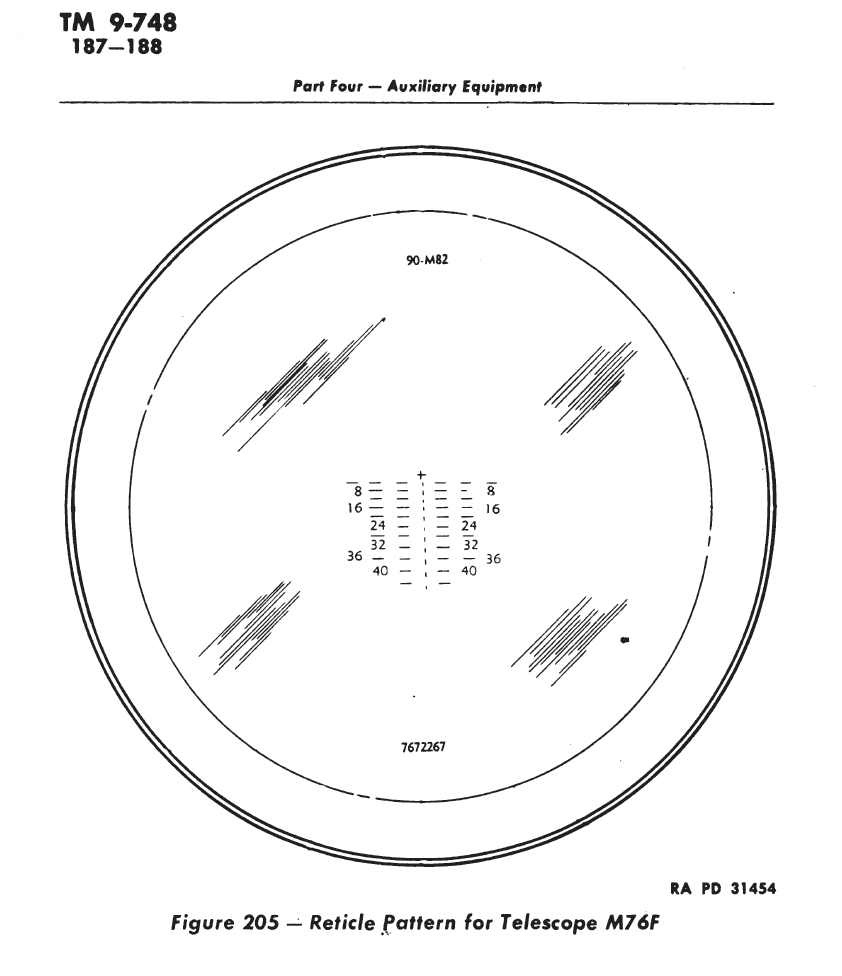
These telescopes were used on the M36 GMC tank destroyers.
M76G Telescopic Sight
This scope only had a 3x magnification, with a 21 degree, 30 minutes FOV, and was used in 105 tank applications later in the war.
M83 Veritable Power Telescopic Sight.
This scope had two settings, 4x 7 degrees, 40 minutes and 8x 4 degrees, 15 minutes, and M83D version of this sight worked with the 76mm guns when in an M62 mount. I have not seen this one mentioned anywhere but Hunnicutt’s Sherman book. That doesn’t mean it didn’t get issued as a replacement later in the war since I’m going off TM’s and spec sheets and those are a small snapshot into a tanks actual combat gear.
. . .
Indirect Fire Control Gear
You would think that would be it for fire control equipment, but it’s not because all Shermans came equipped with the equipment for their tanks to work as impromptu artillery batteries all Sherman based TDs had this gear as well. The US Army had this extra gear installed all the way up to the M60 tanks. During the war, some tank and TD battalions were very good at being artillery; other units didn’t train for it and were not good. This was a good way of keeping tanks useful in Italy, and they filled this role a lot there. I do not think this was something many other nations did with their tanks.
Azimuth Indicator M19
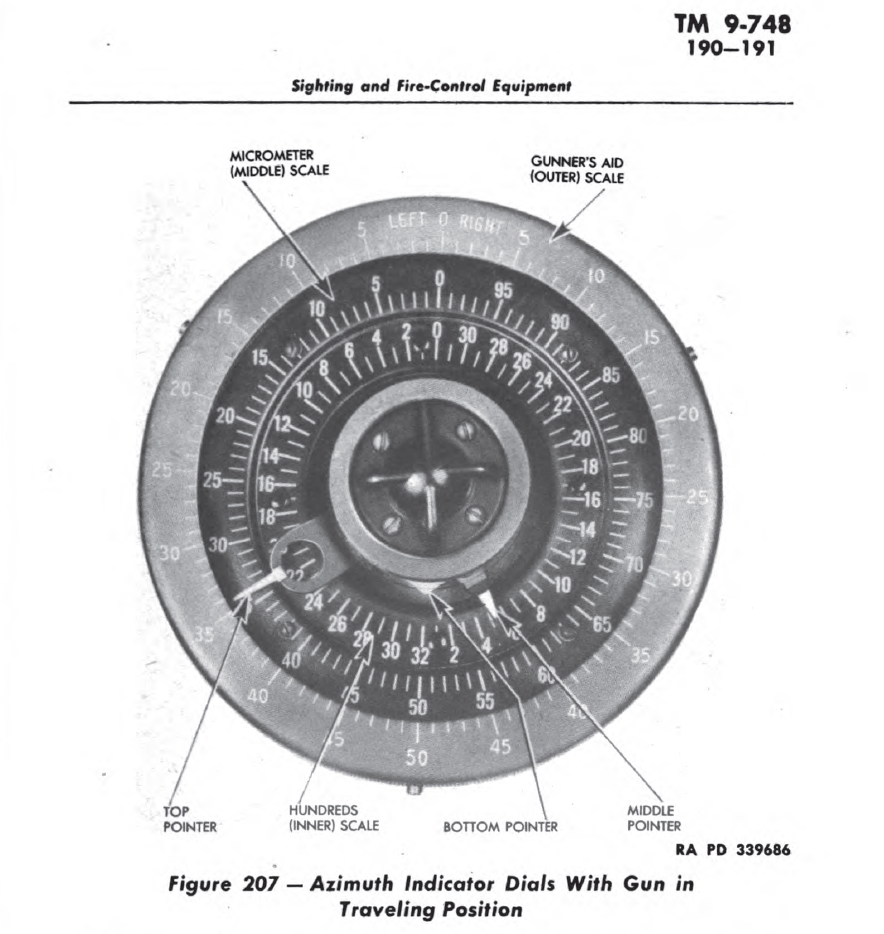
The Azimuth Indicator was mounted near the gunner, right behind the traverse control. This device was used to dial in what direction the gun needed to be pointed in to carry out the fire mission.
Gunners Quadrant M1
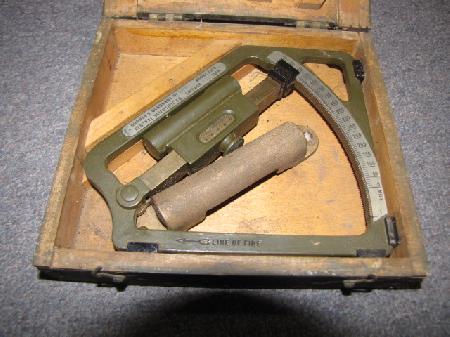
The Gunners quadrant is a portable precision instrument used for measuring the elevation or depression angles of guns and howitzers. It can also be used for checking the adjusting of elevation devices on sighting equipment furnished with a gun or howitzer. This was taken right from the Characteristics in tech manual 9-1527.
Elevation Quadrant M9
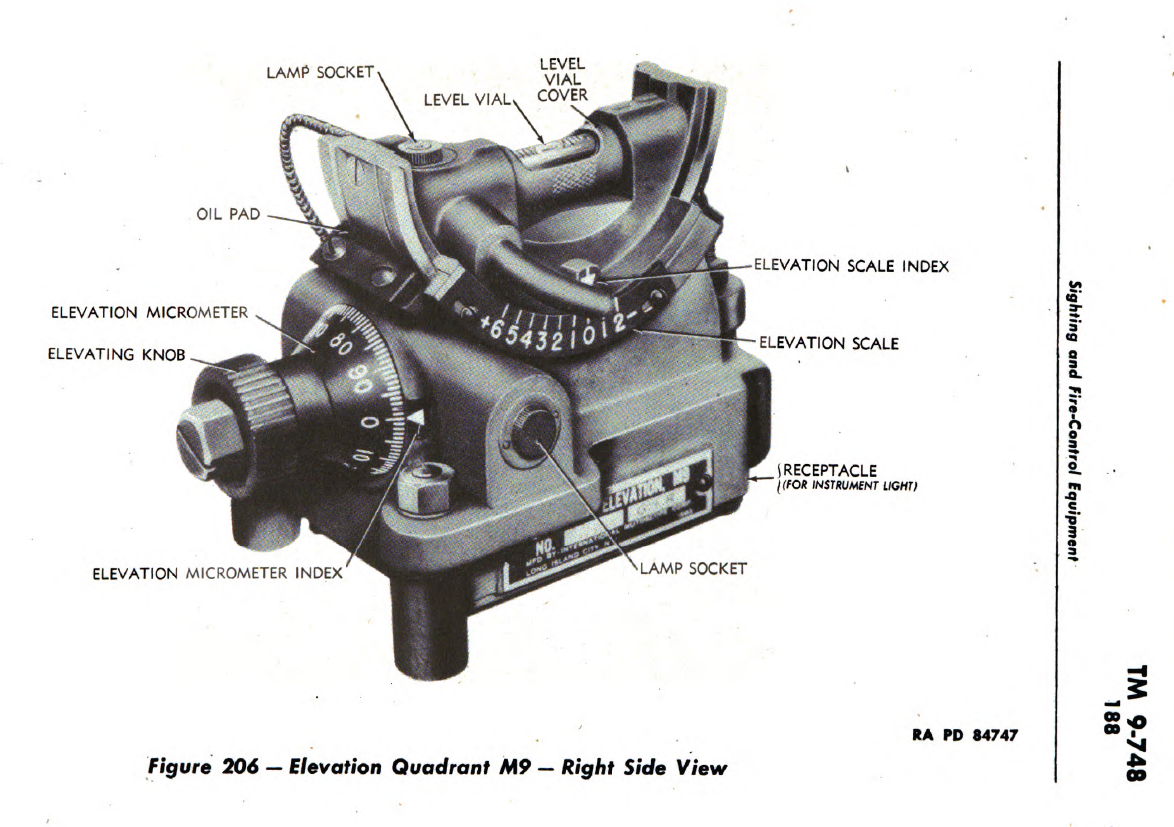
The Elevation Quadrant M9 was used to lay the tanks main gun in elevation for indirect fire. There are detailed instructions for setting it up in TM 9-748.
A Sherman unit trained in how to act as an artillery battery would probably be told they were on call when not in direct combat but close enough for the 75s to reach. They would have men manning radios in the tanks while other tasks were being done, like maintenance, personal things, and eating. When they got the call, the designated battery commander for each platoon would listen to the directions on the arty net or get in direct contact with the spotter. In many cases they would be connected to the net directly, so they wouldn’t need to worry about radio reception. They would relay the aiming information out the tanks on the radio or phone net and then they would start firing.
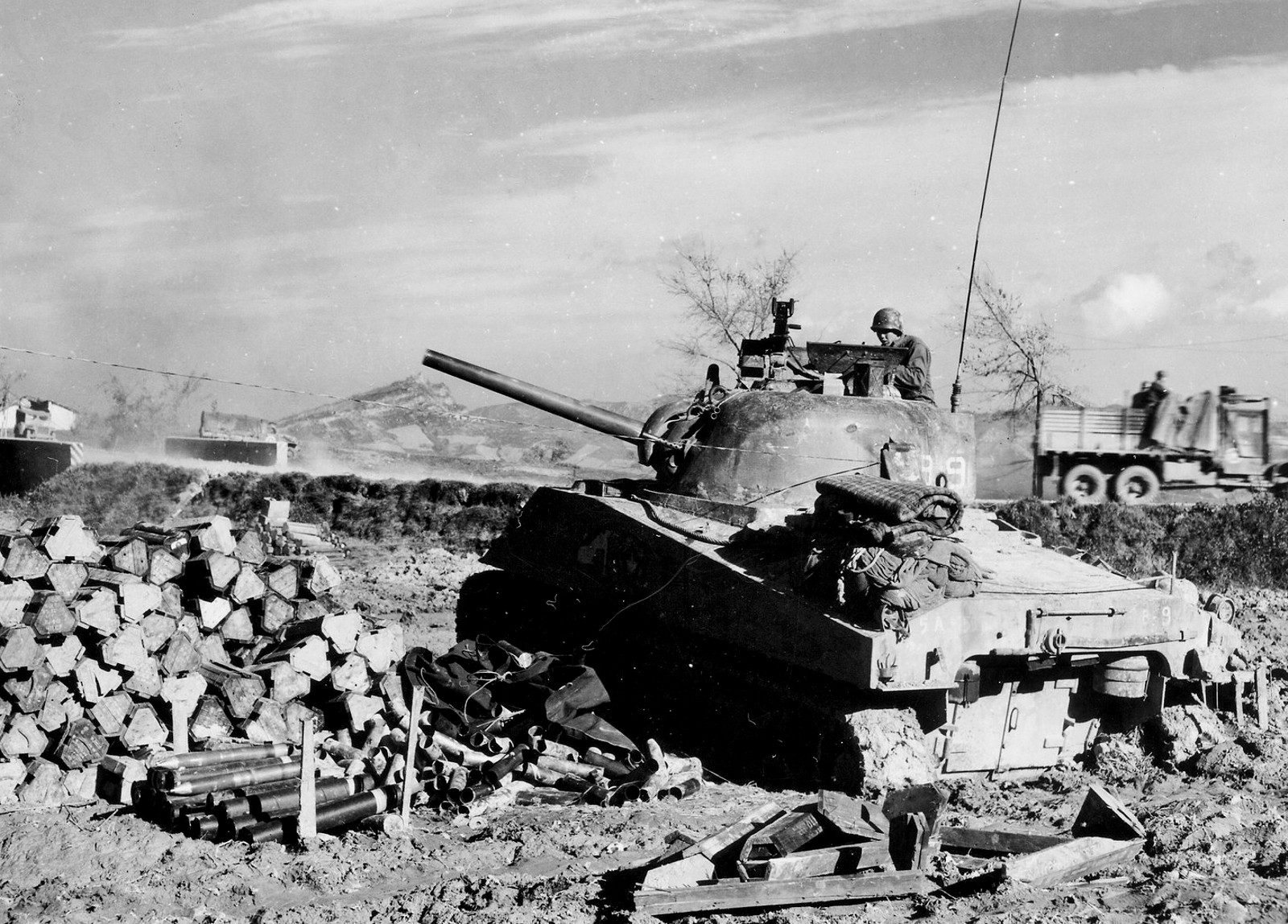
M4 being used as artillery
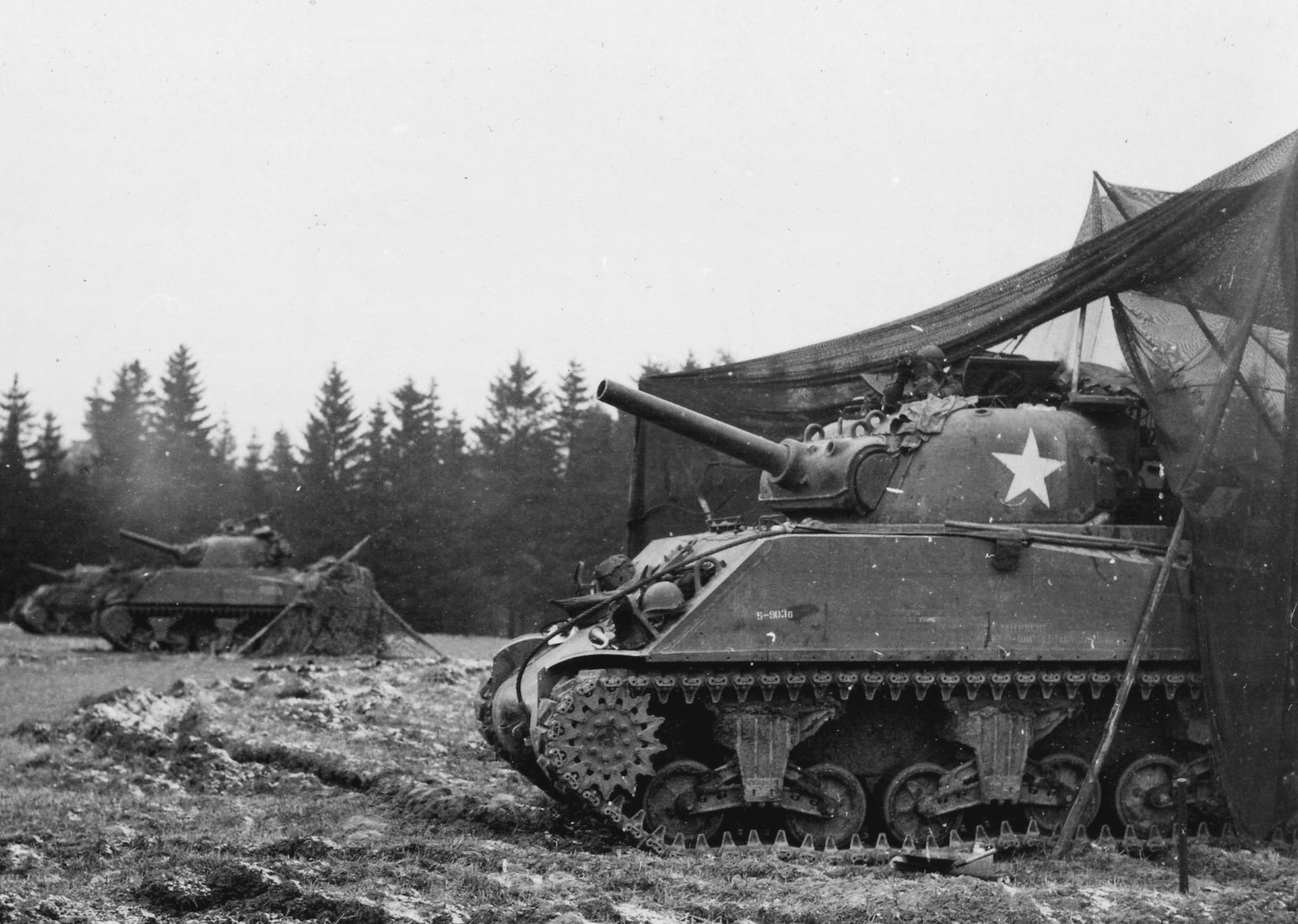
Once they started firing the whole crew would help feed the gun, and if they were doing it as a common thing they might even have large amounts of ammo unboxed outside the tank, where the driver and co-driver could feed them to the commander who then fed them to the loader. The M3 75mm gun worked well in this role since the barrel had a life in excess of 4000 rounds.
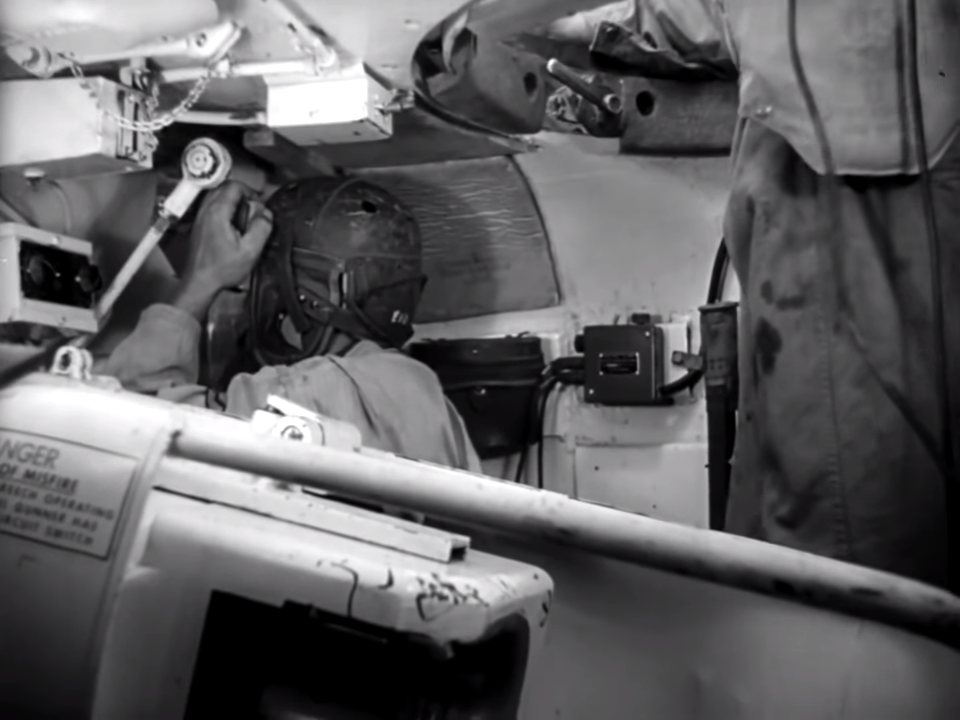
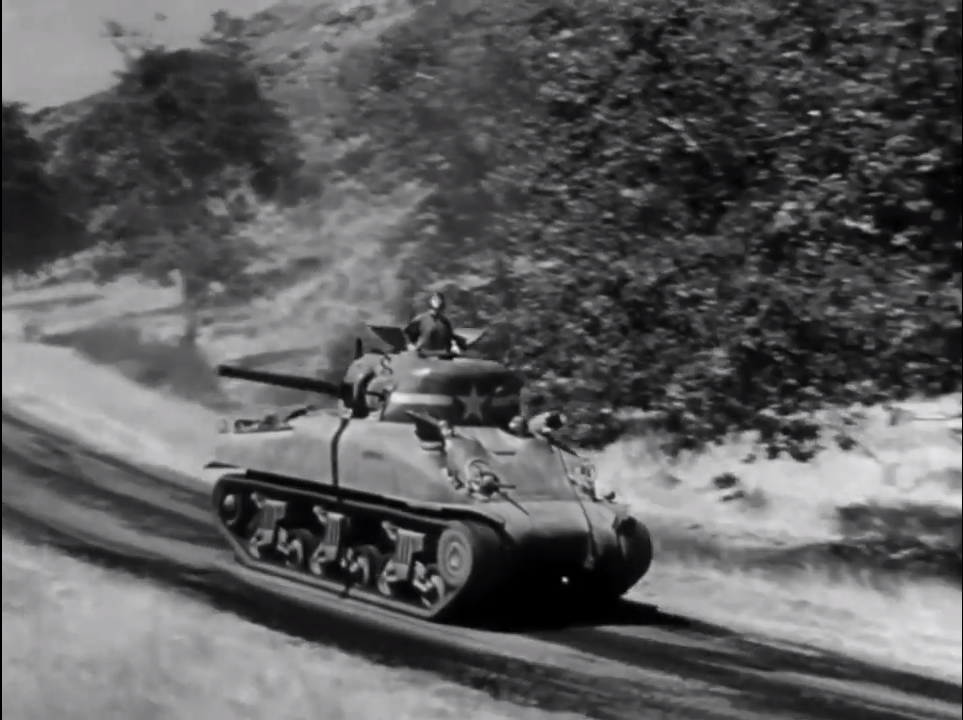
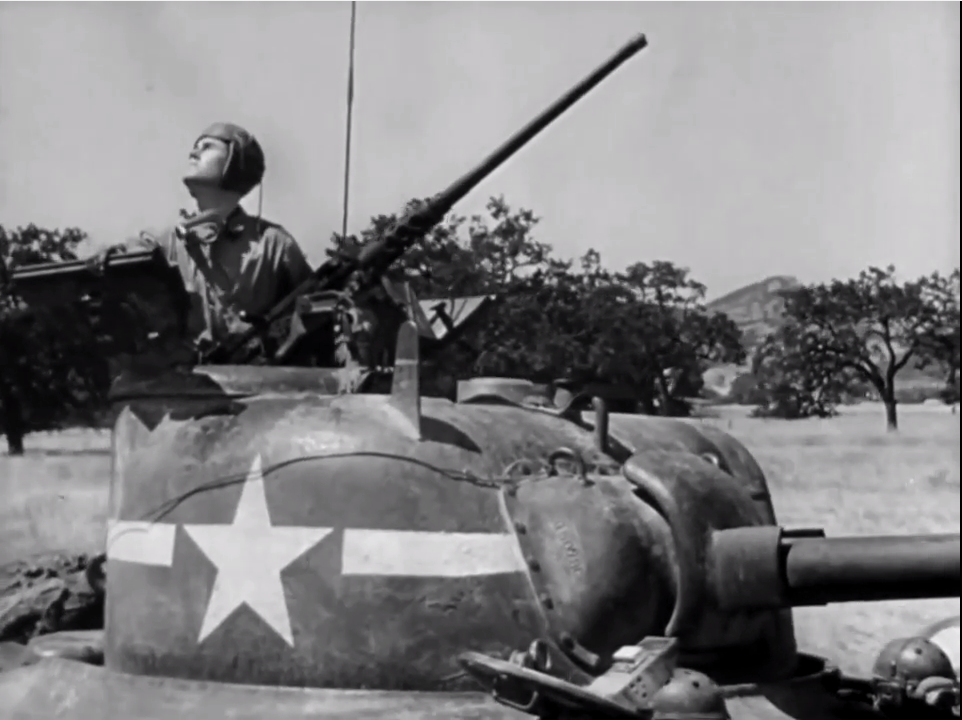
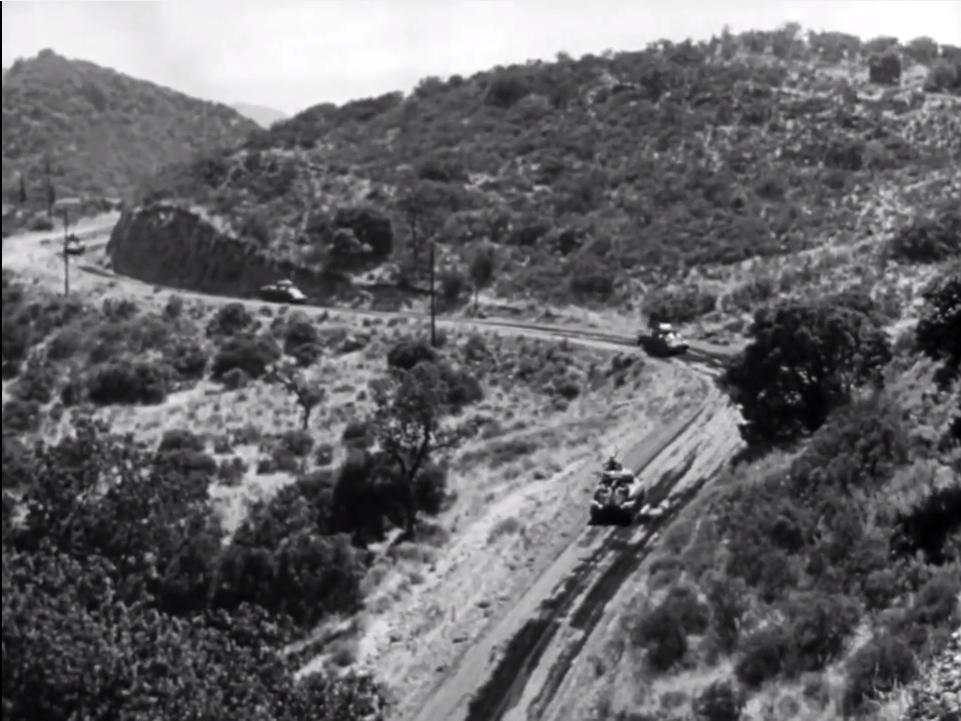
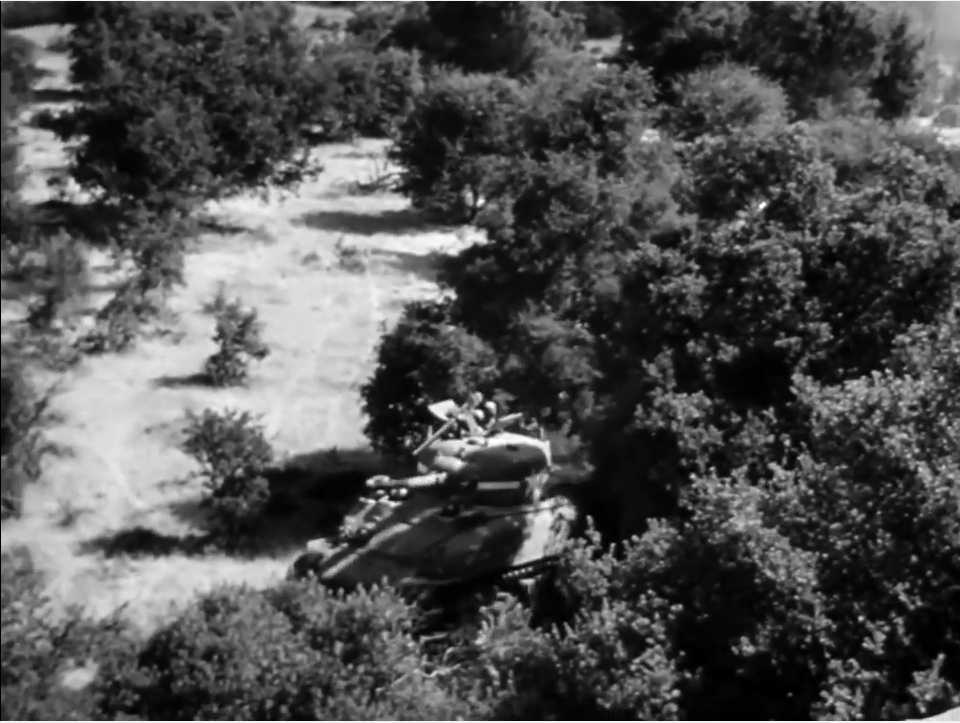
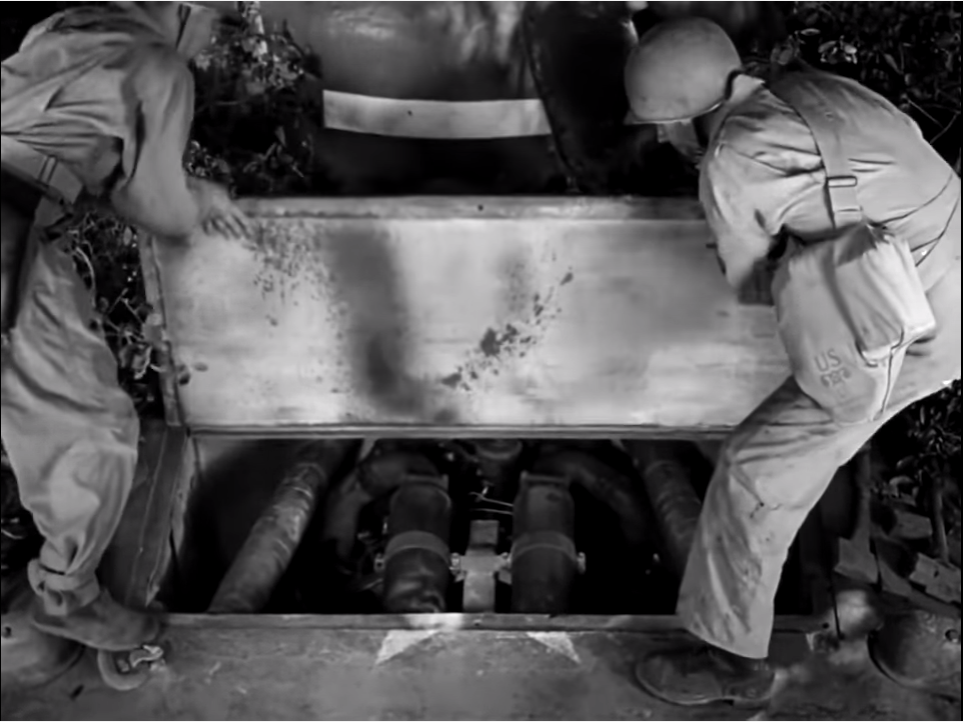
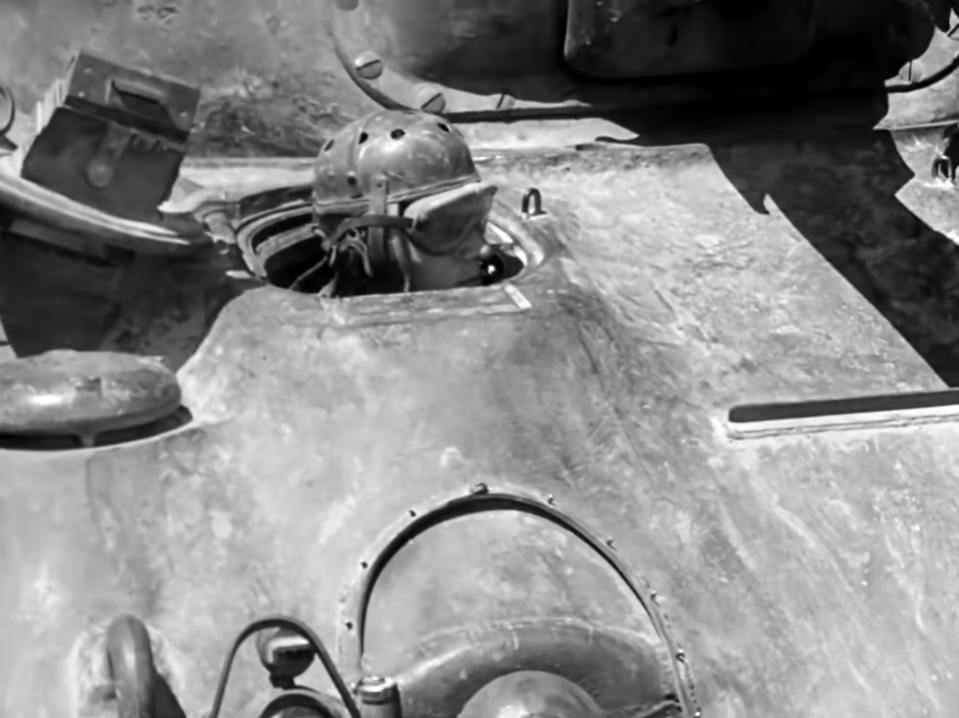
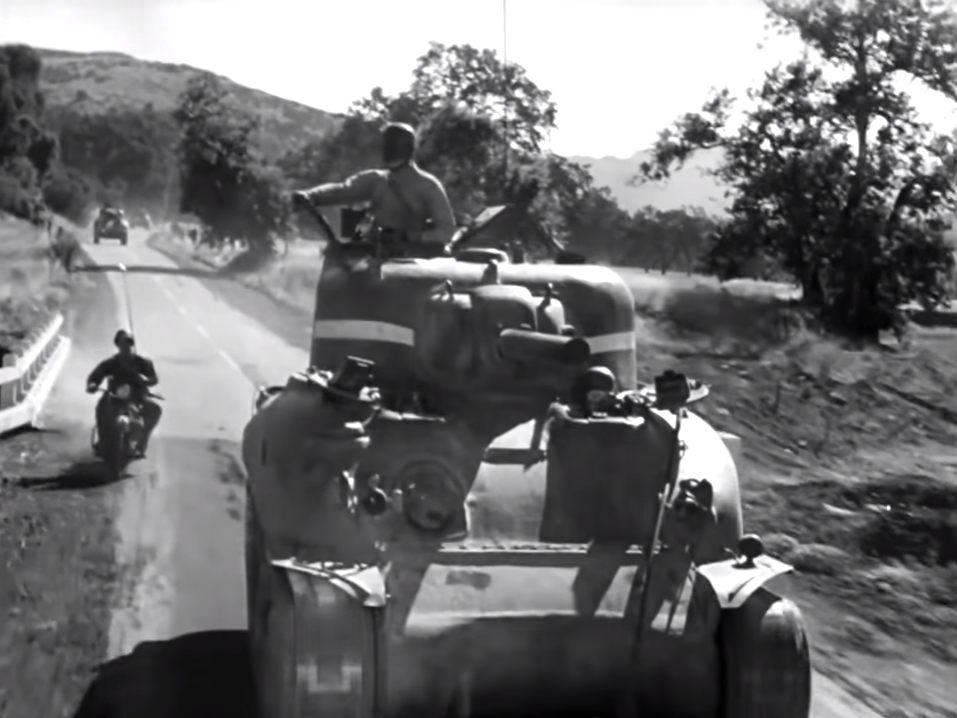
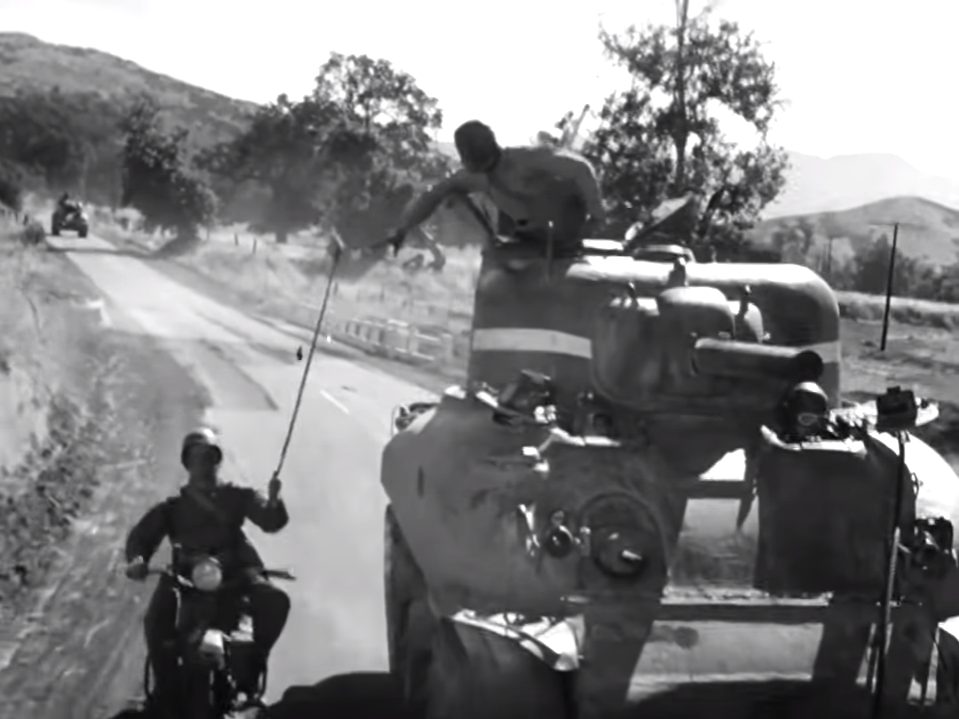
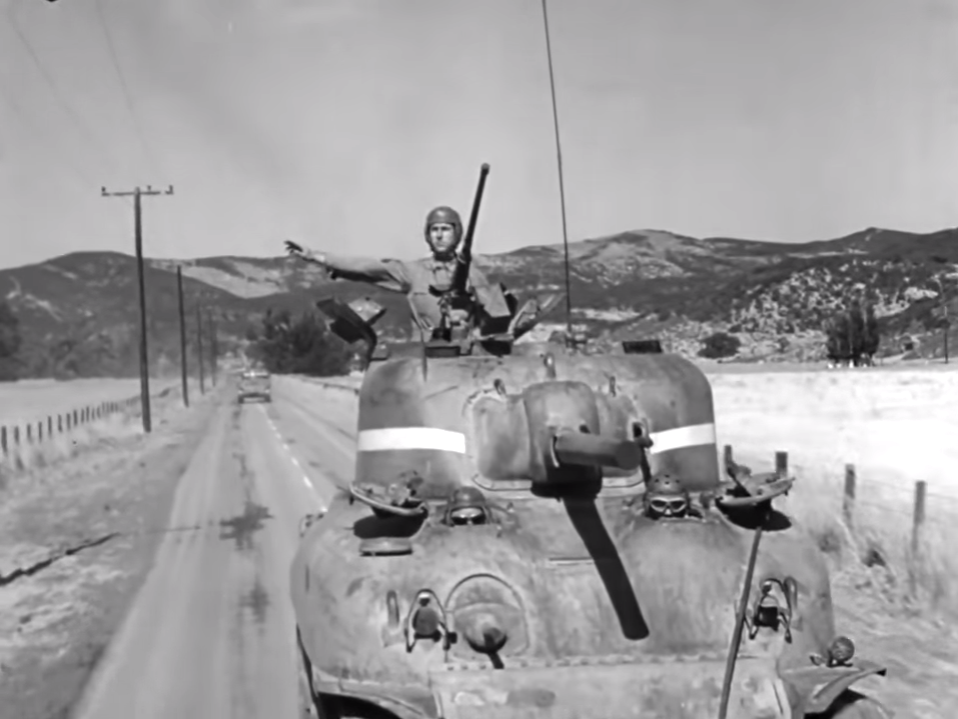
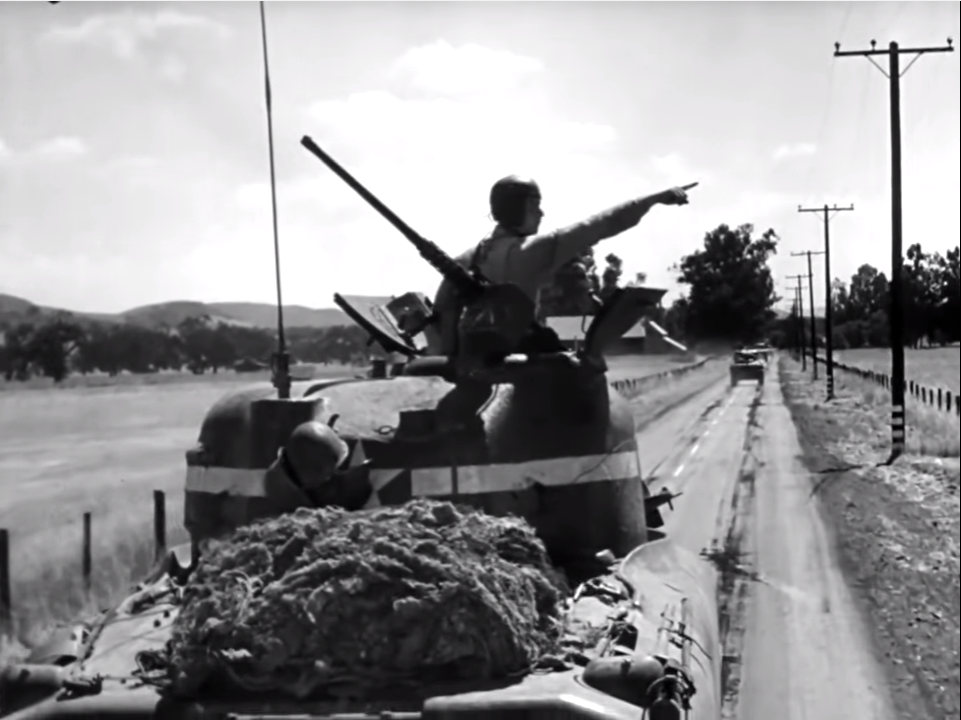
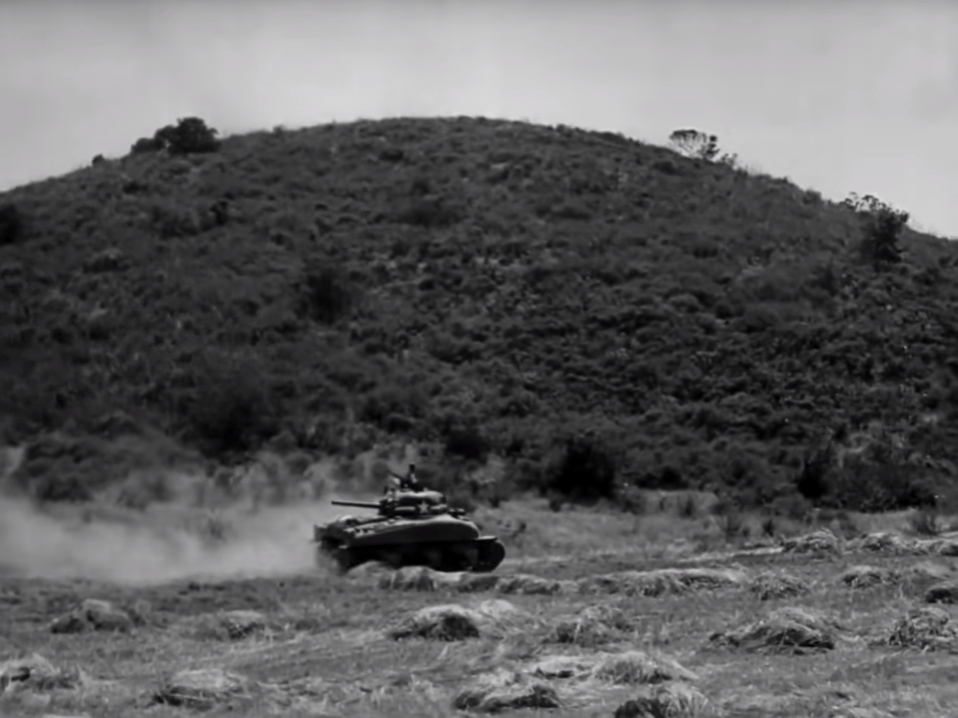
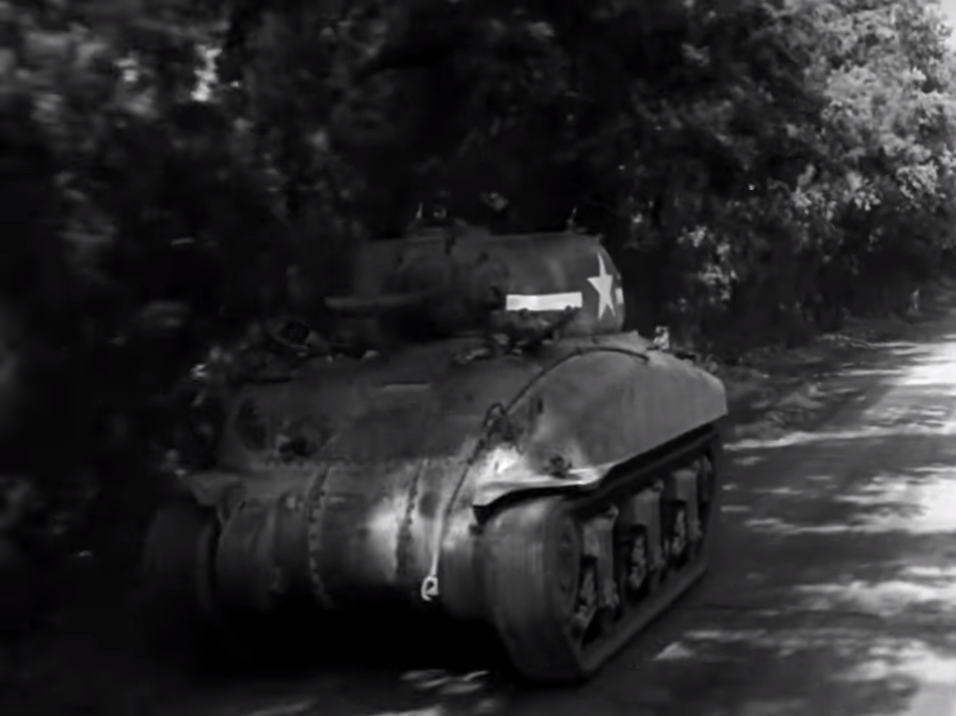
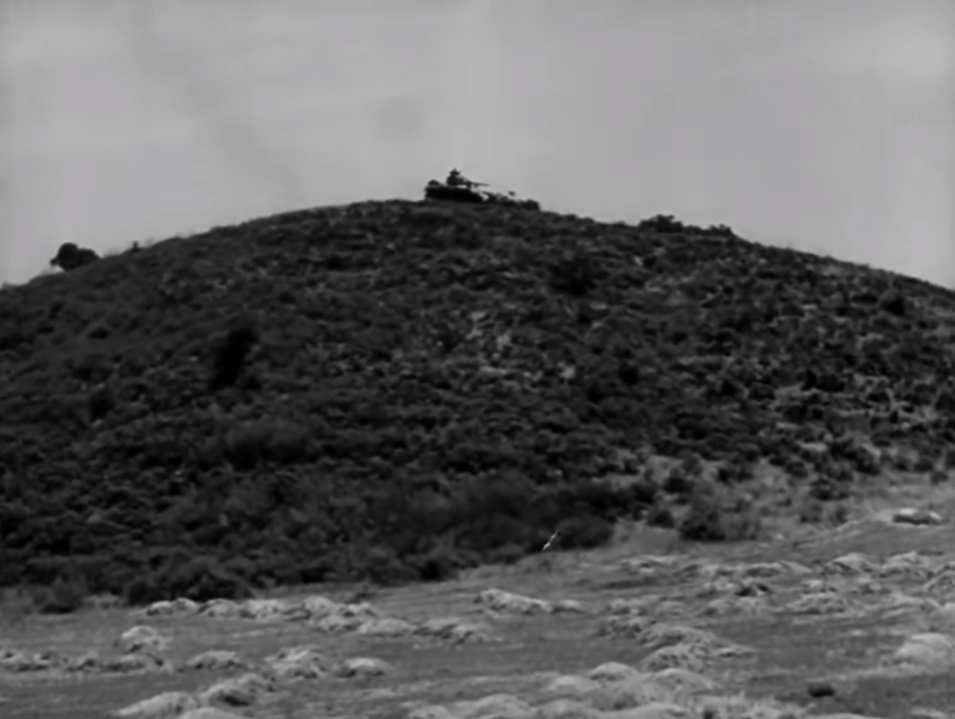
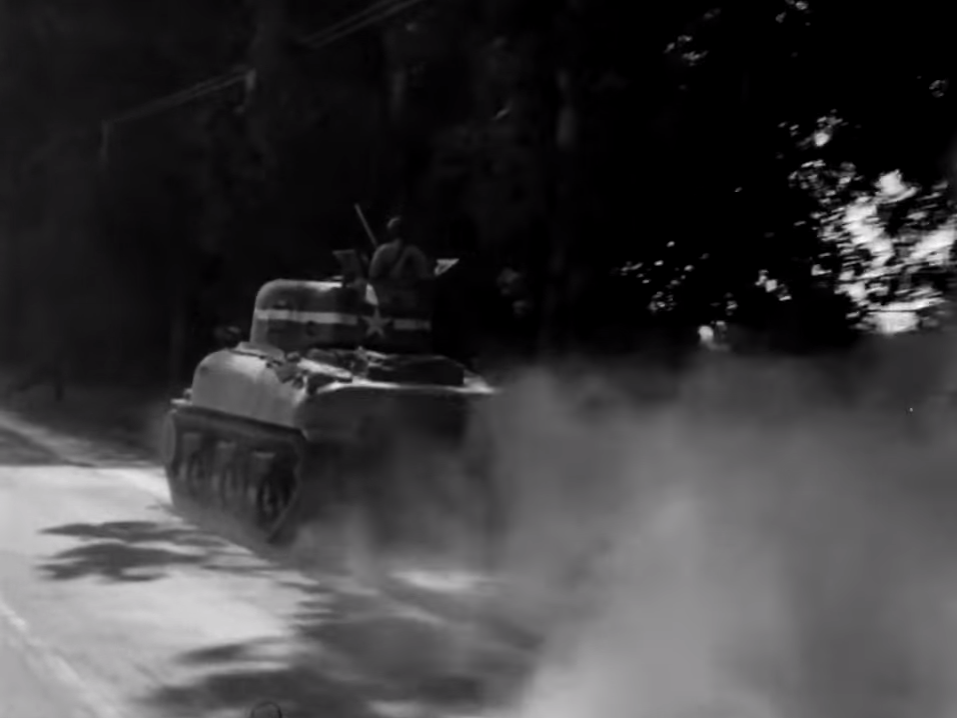
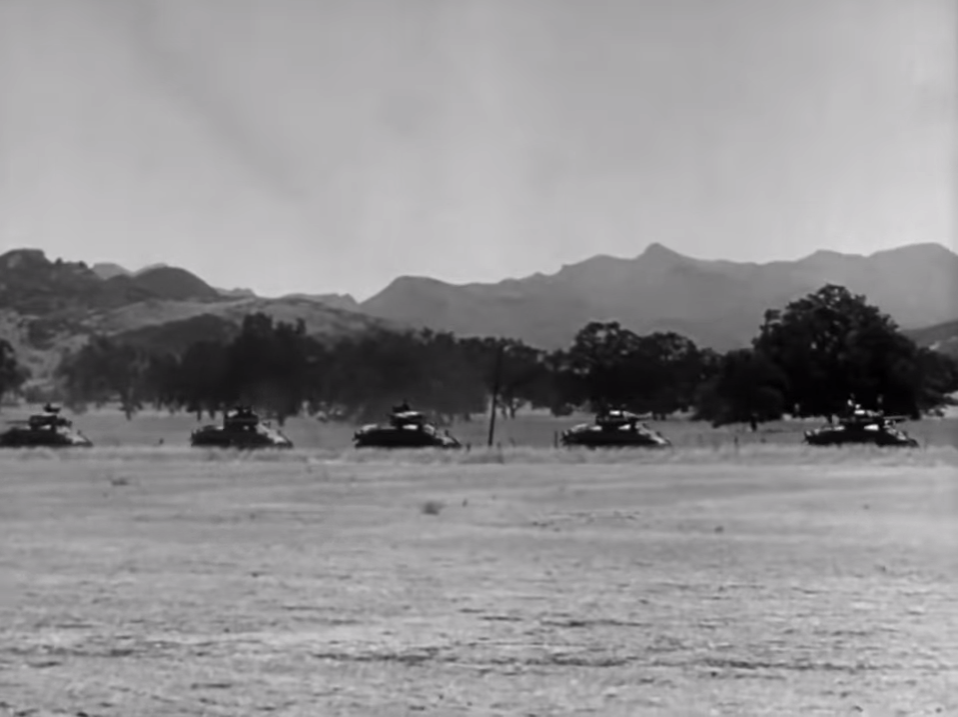
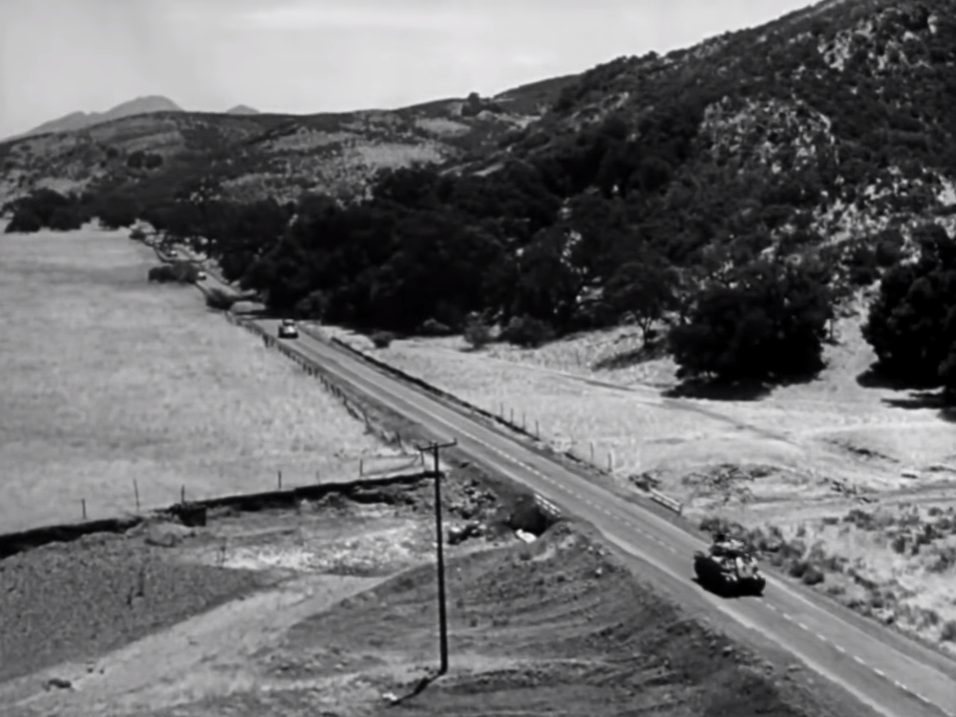
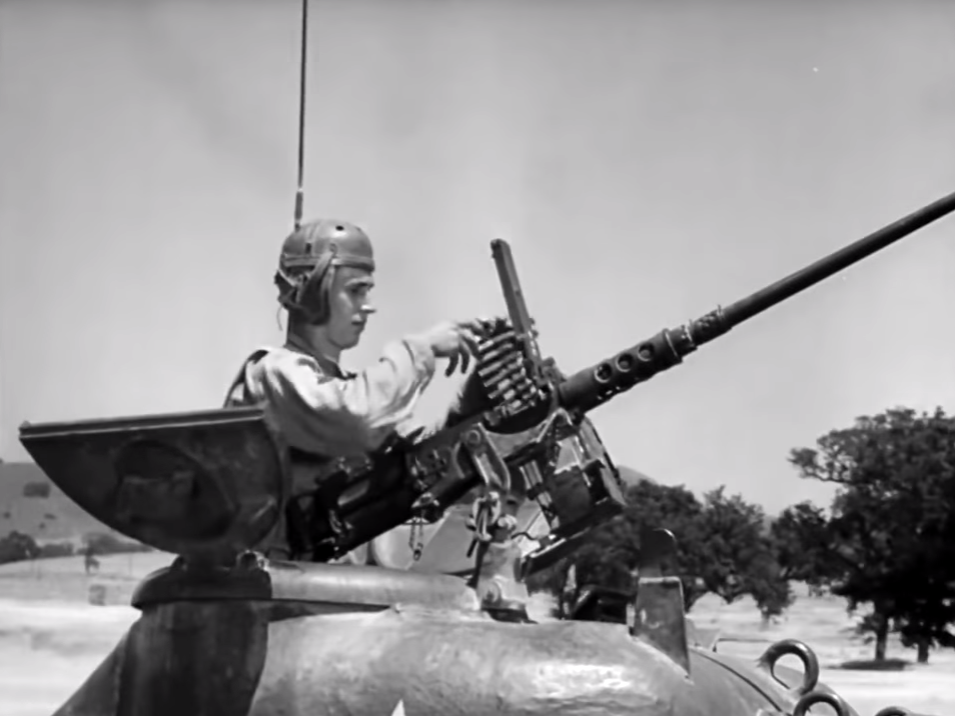
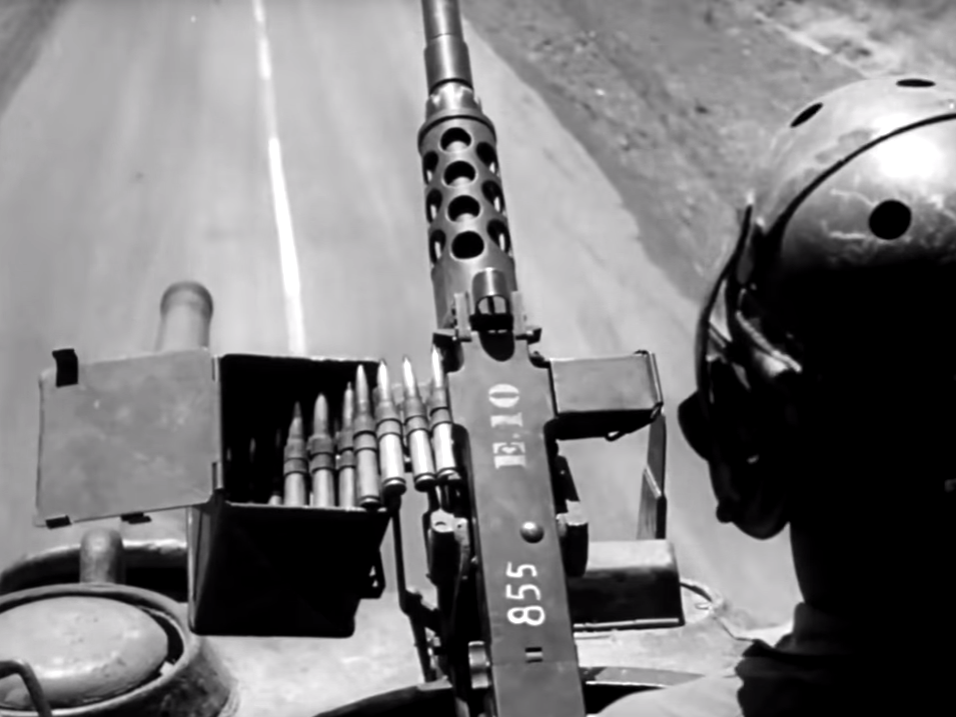
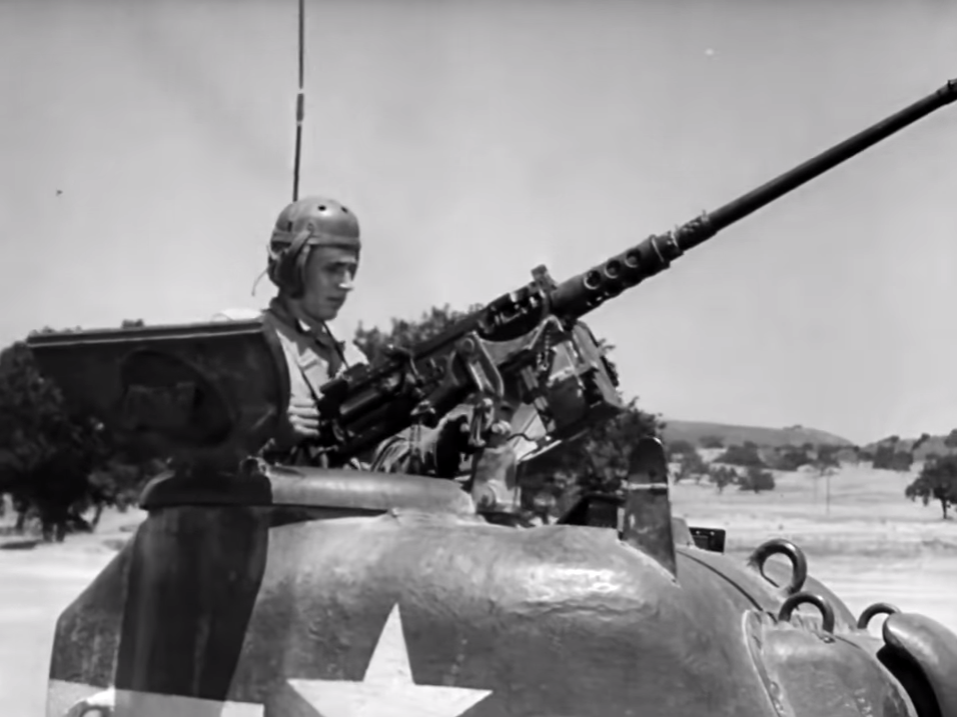
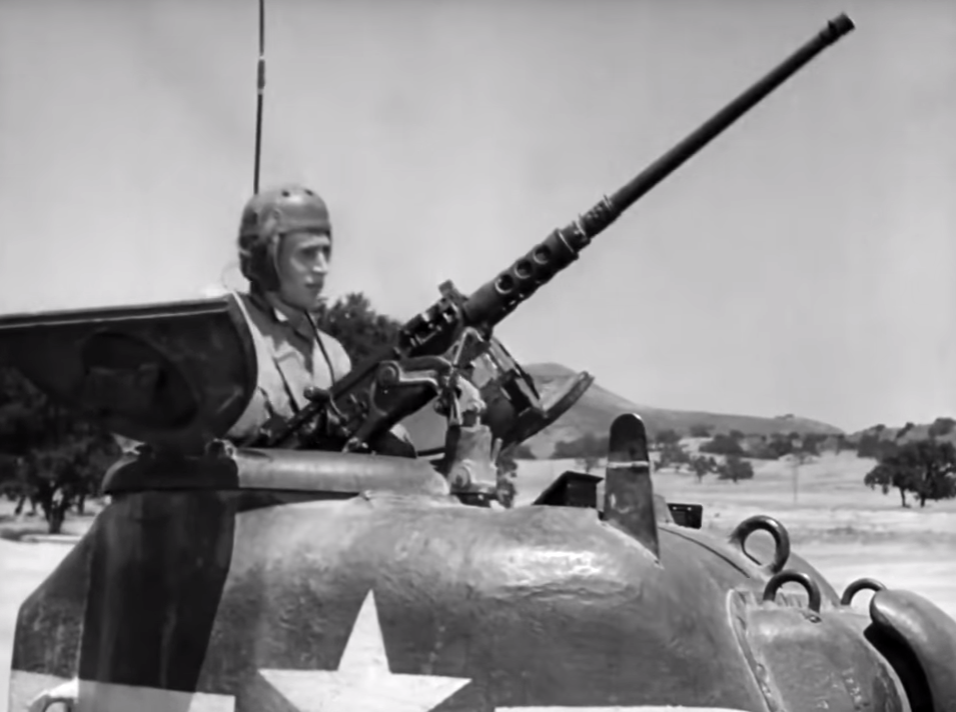
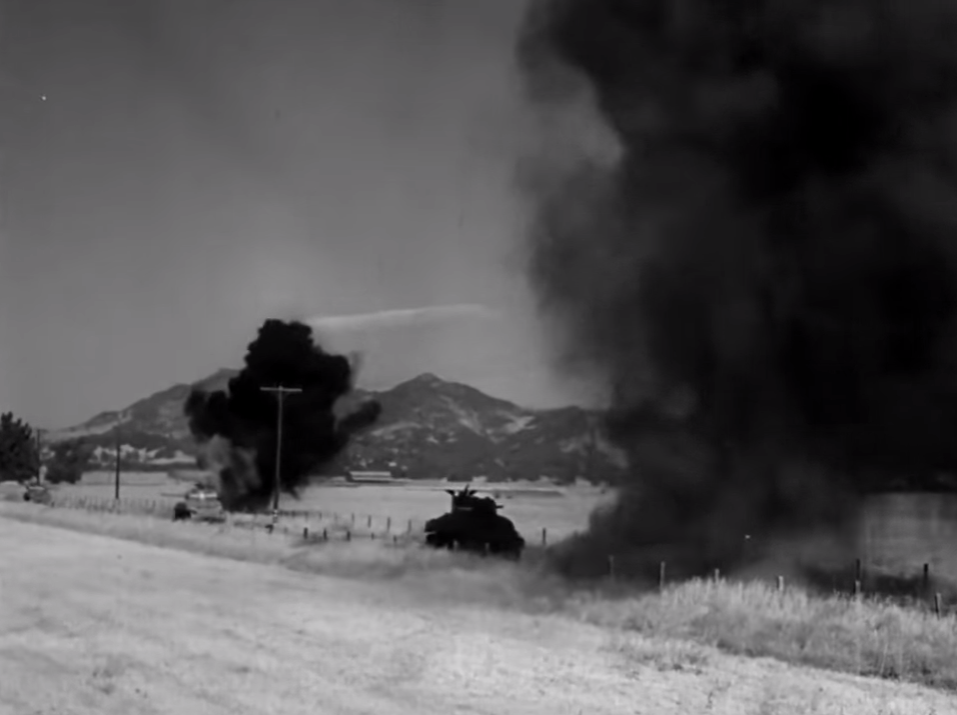
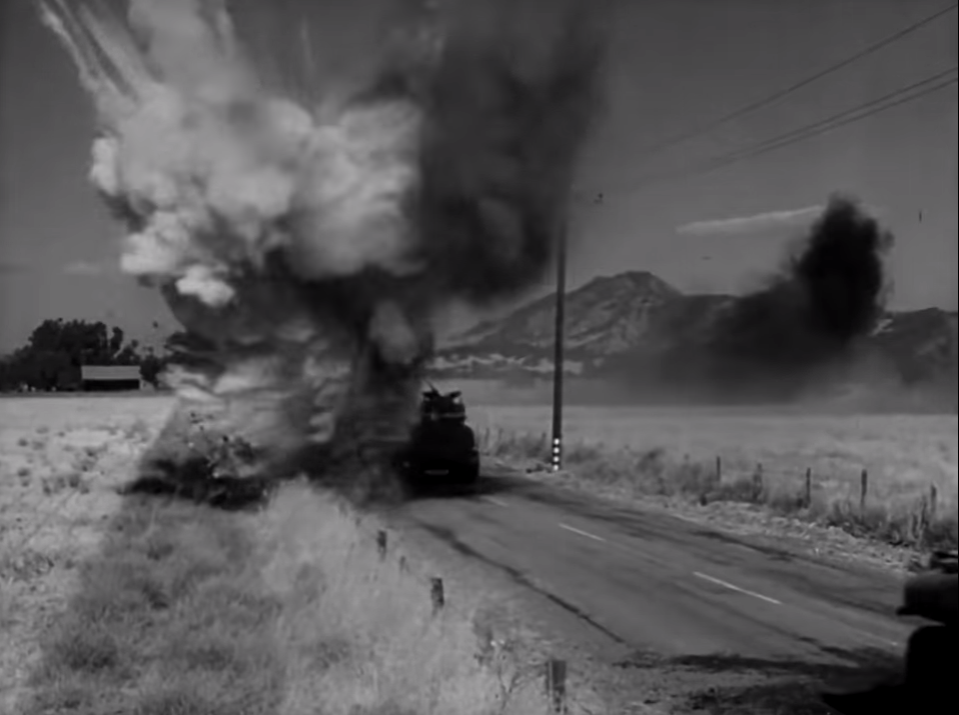
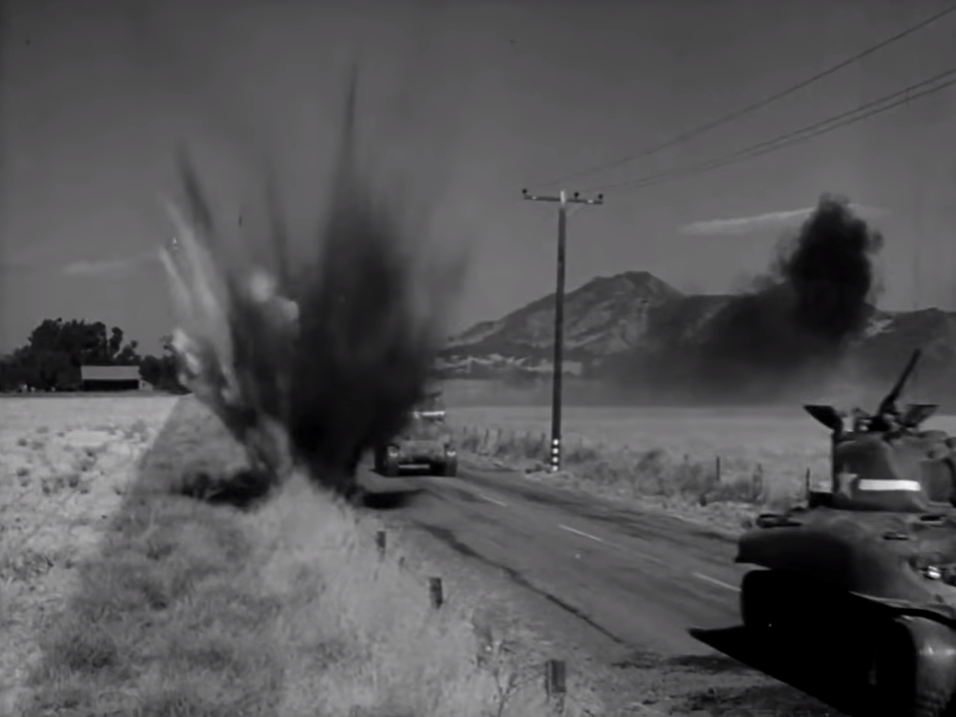
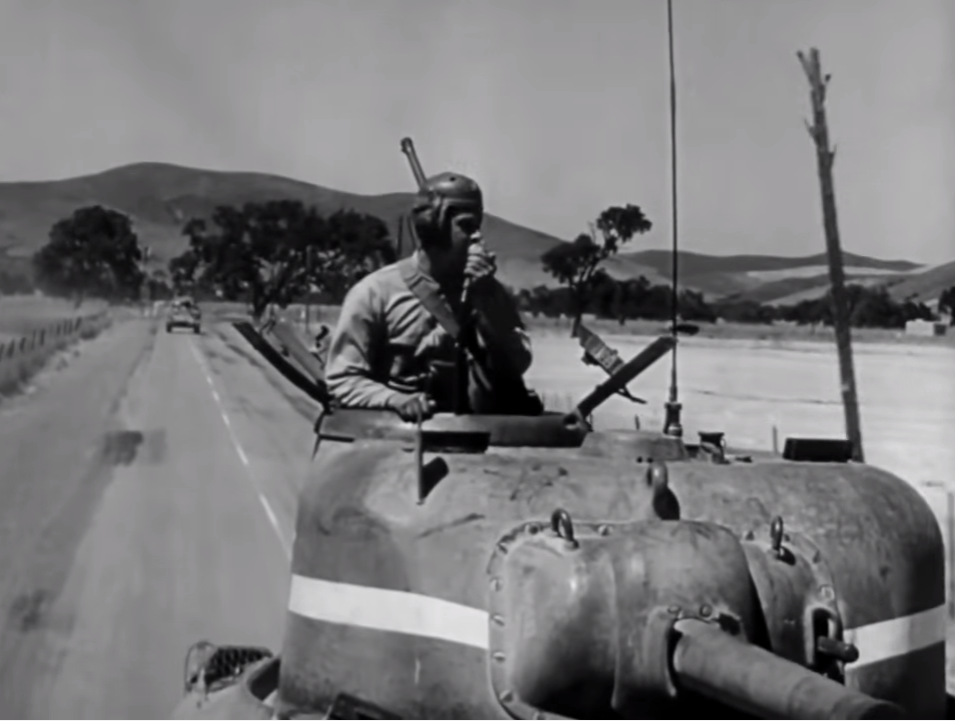
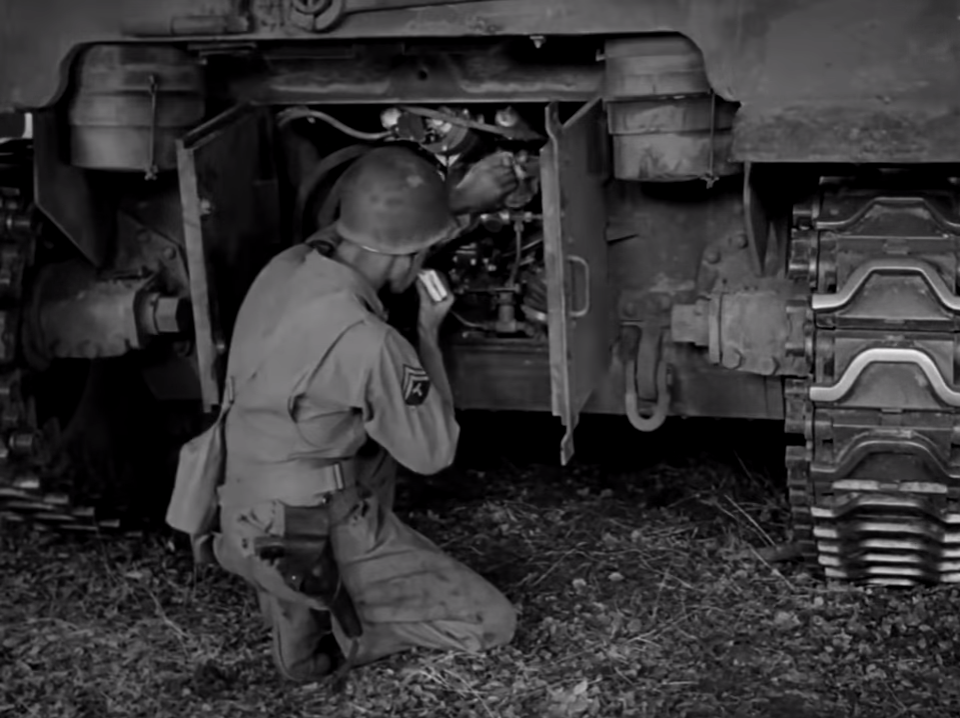
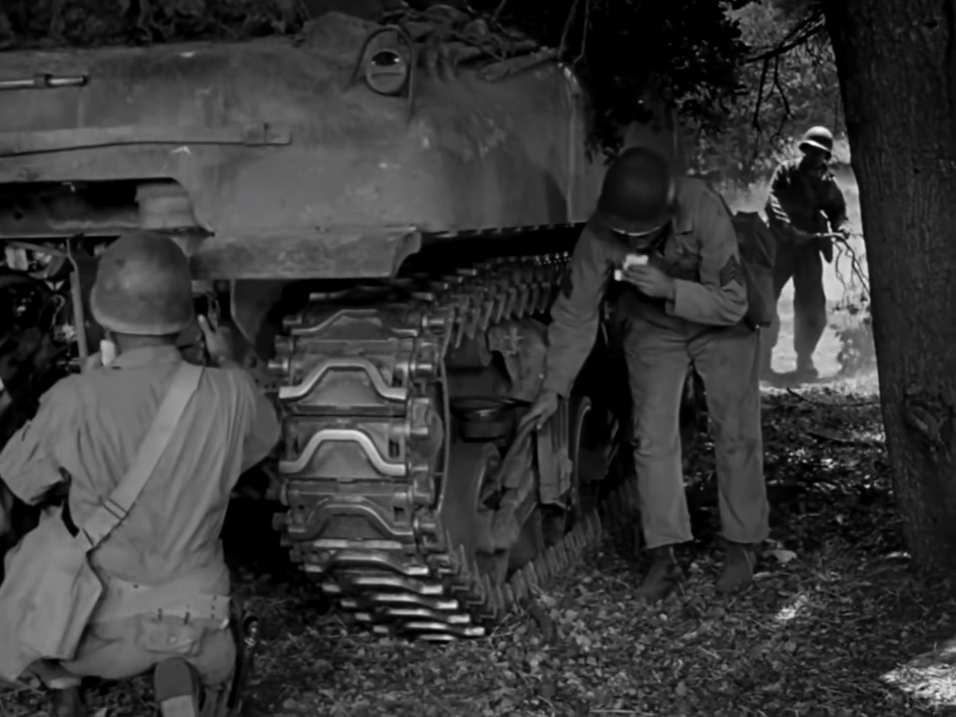
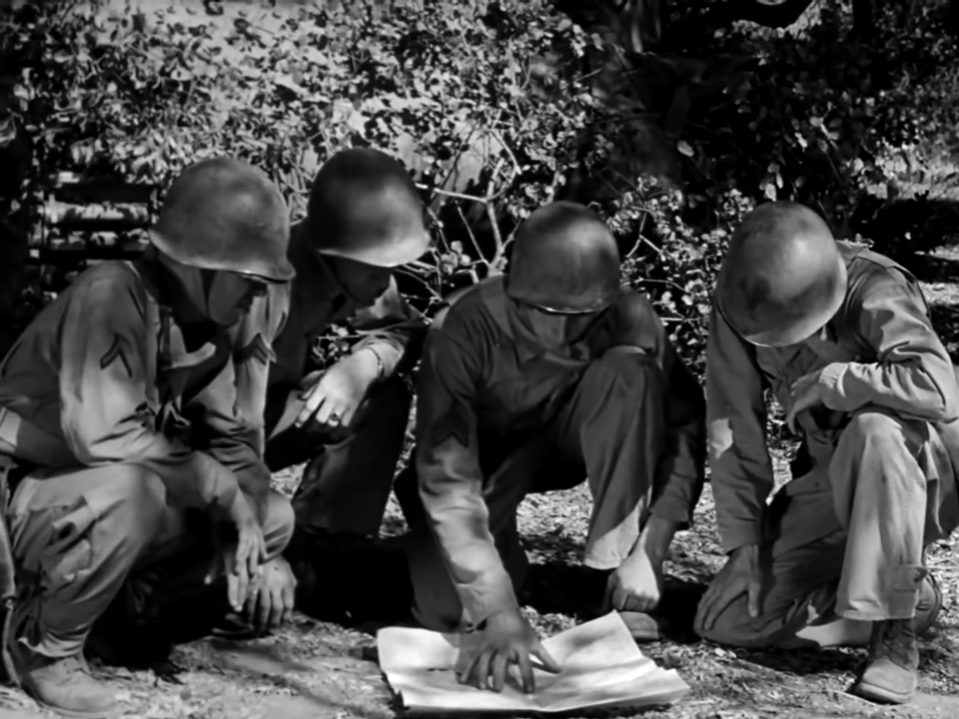
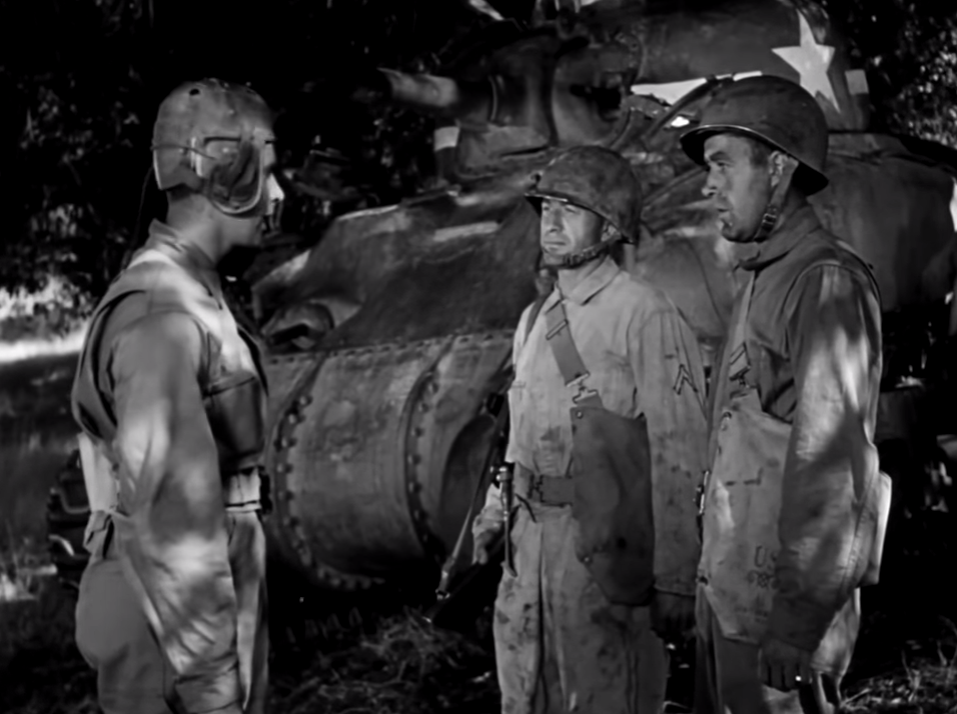
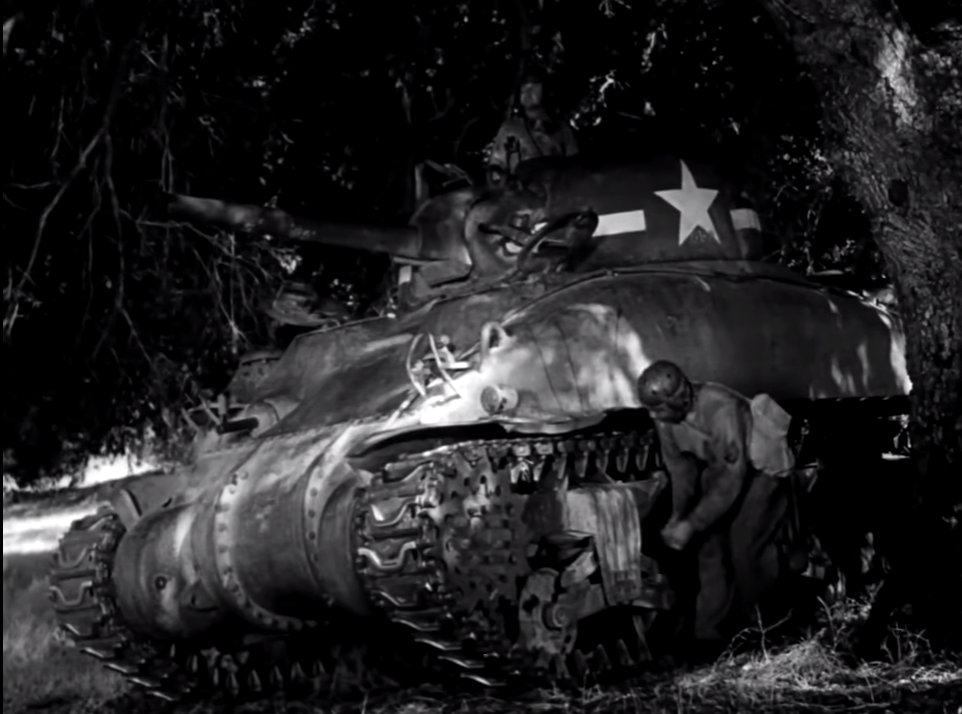
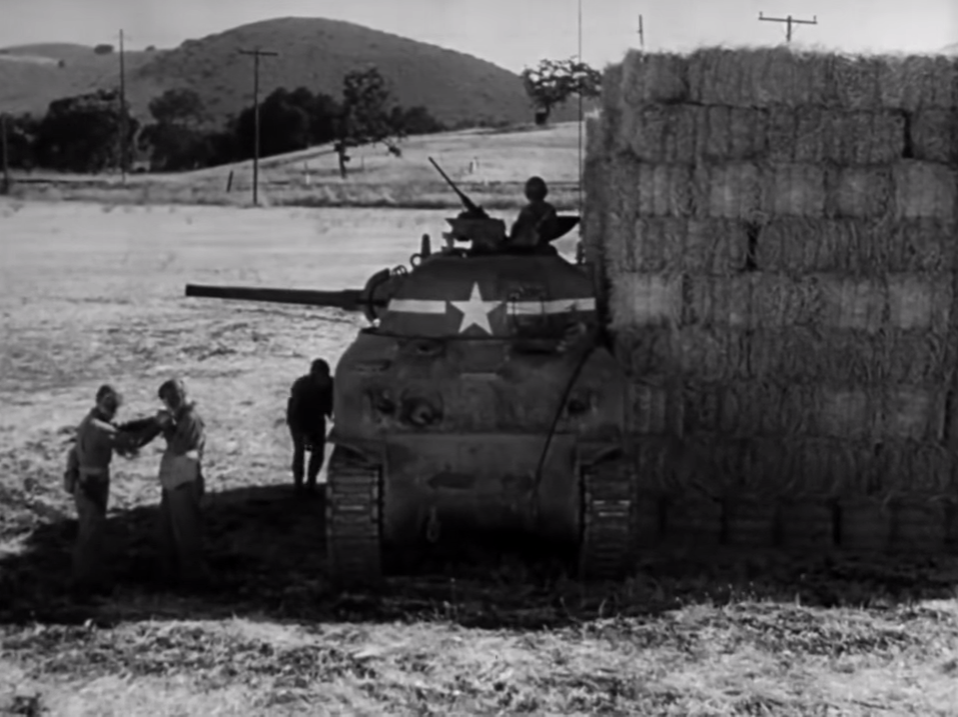
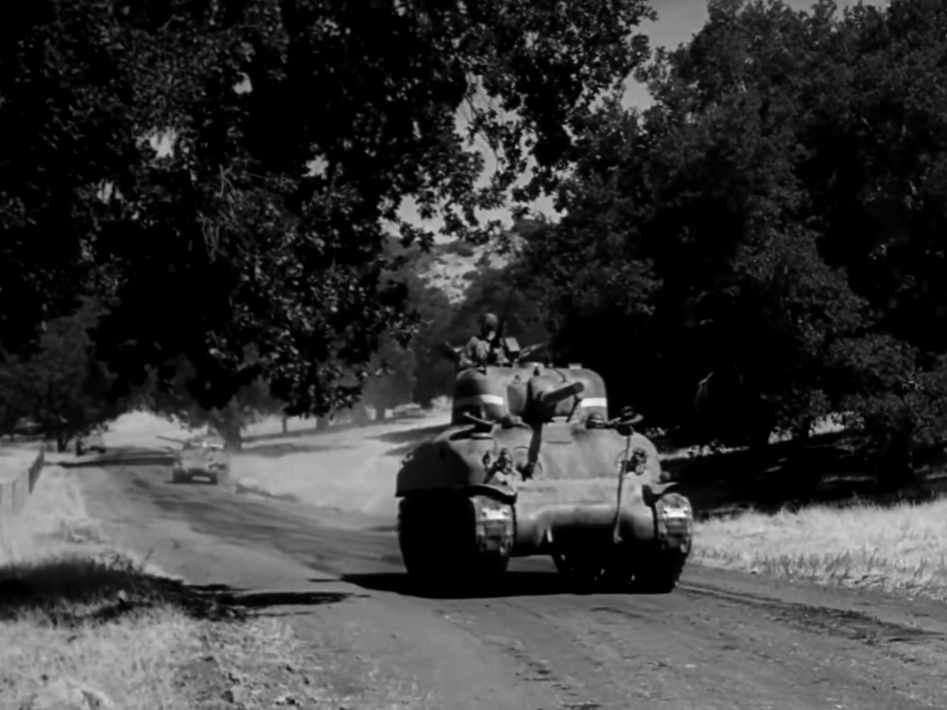
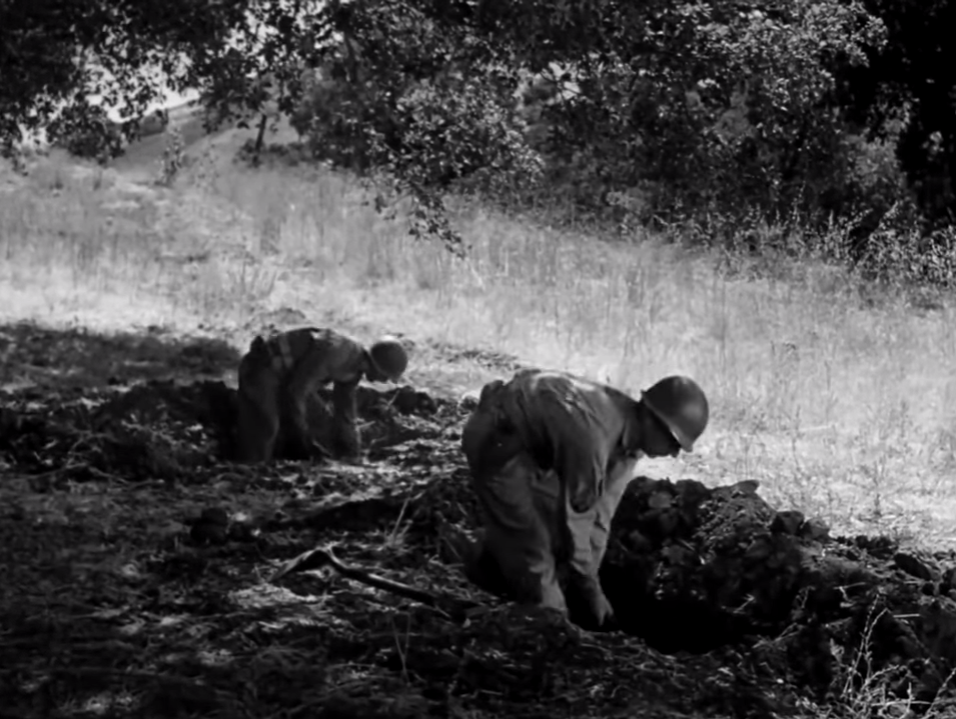
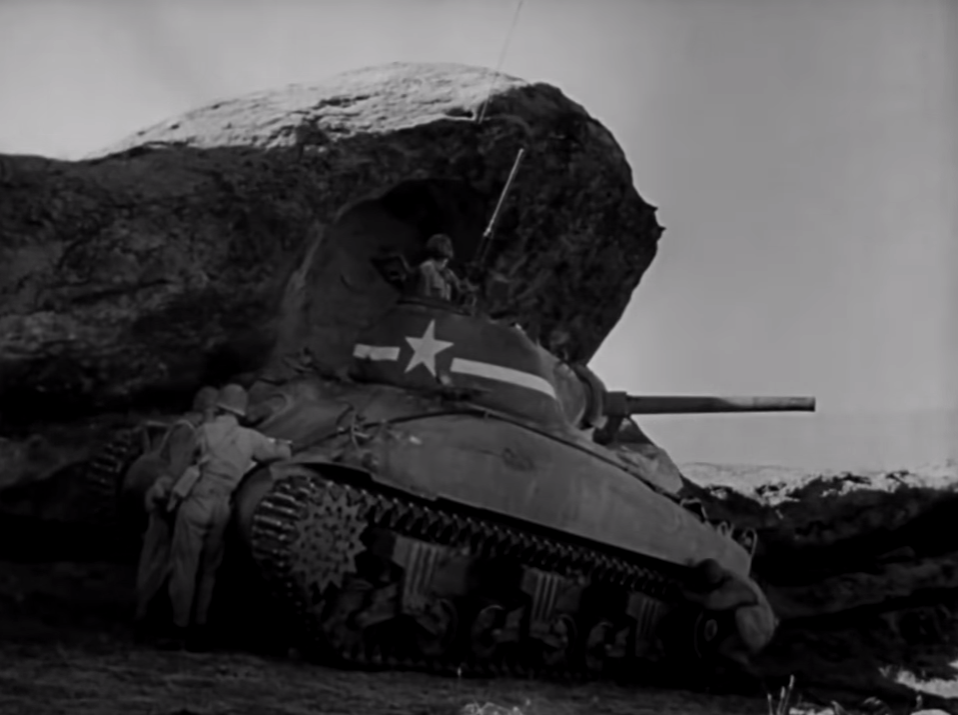
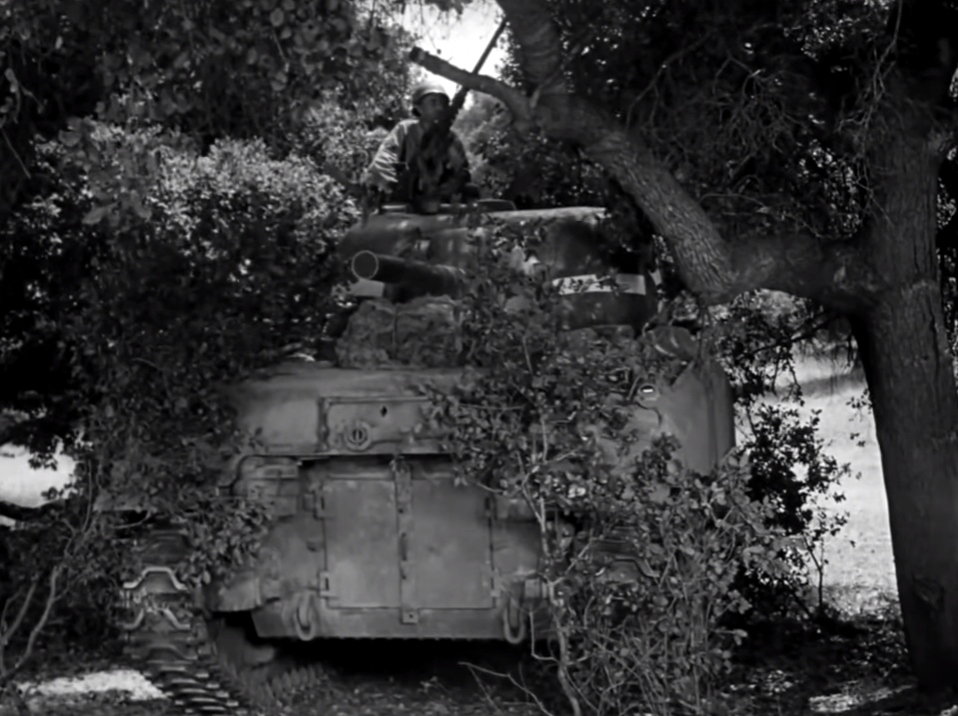
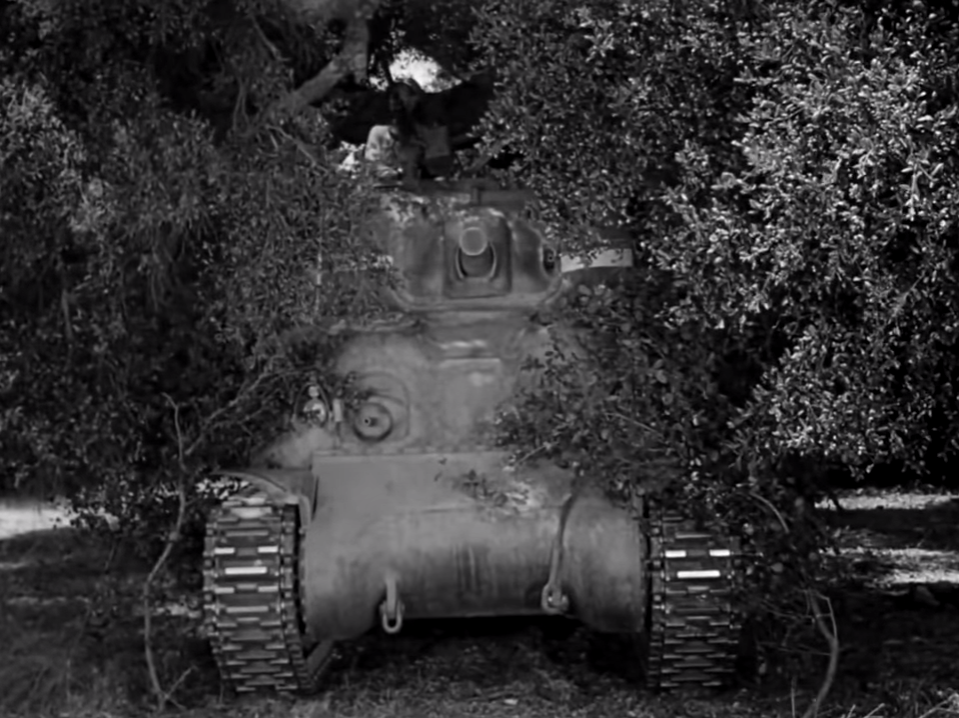
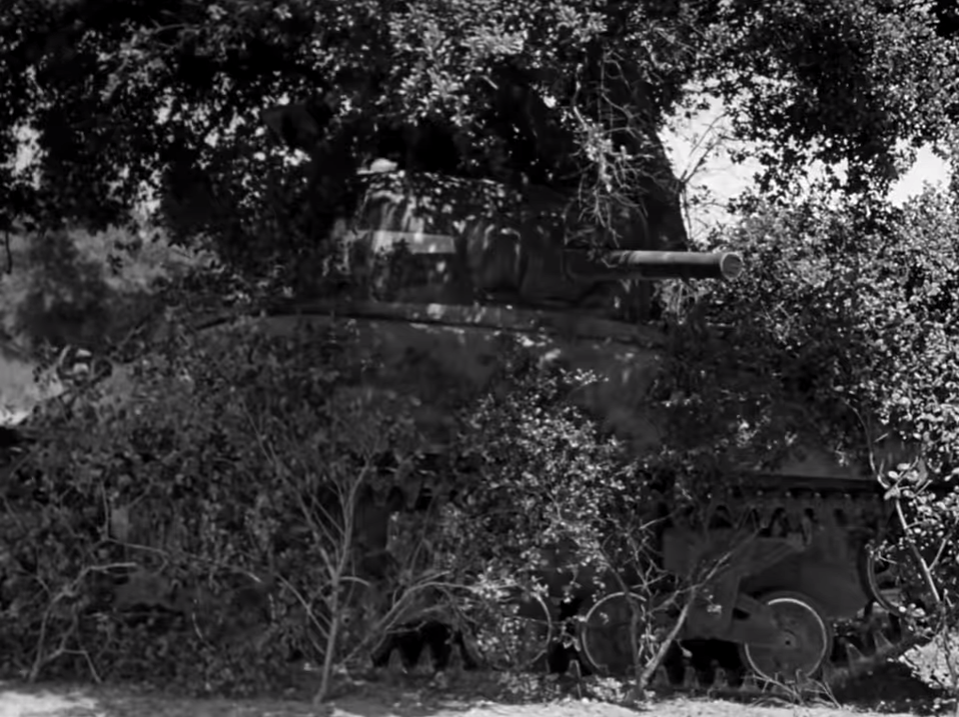
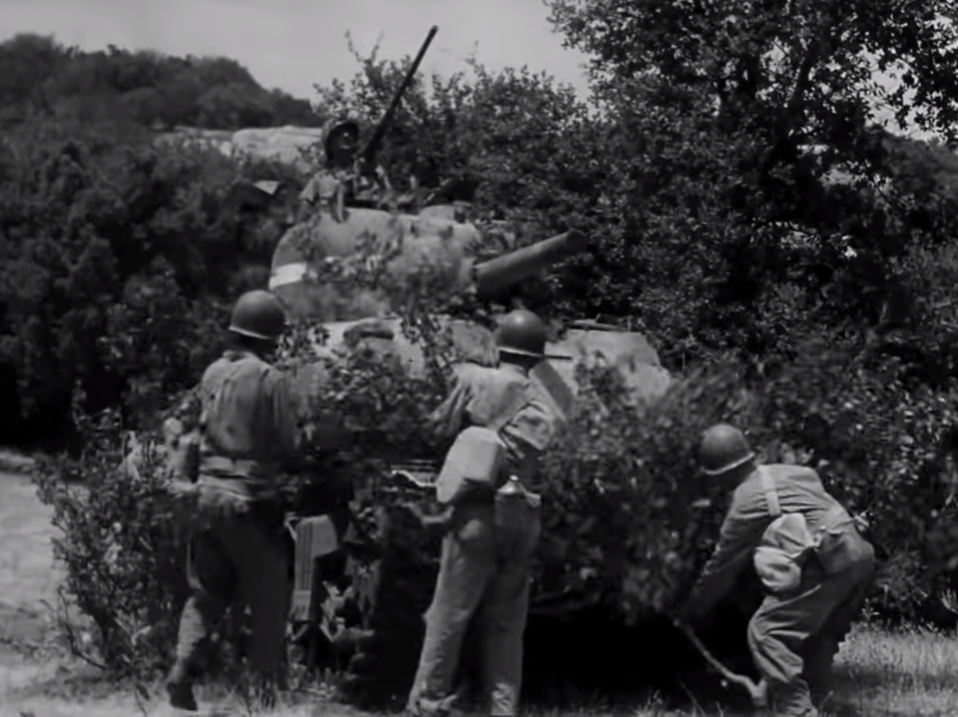
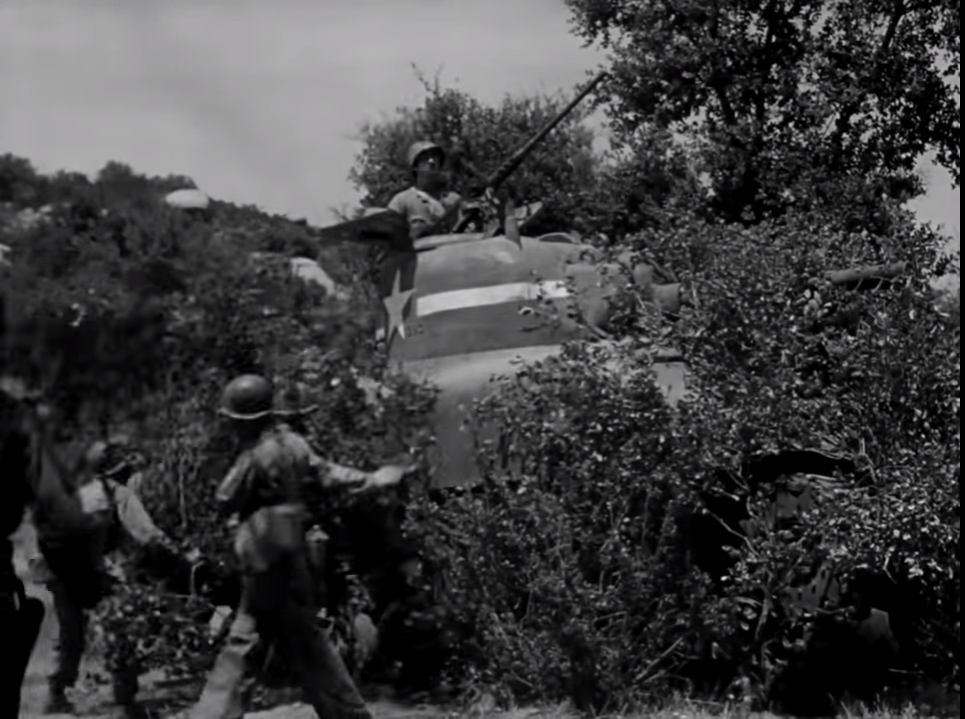
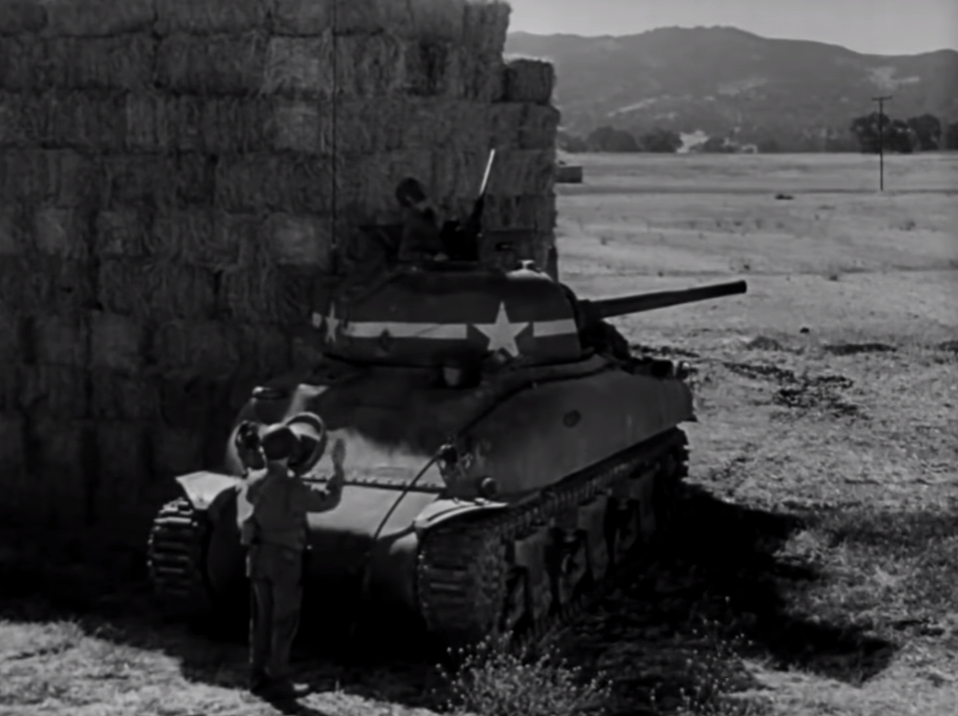
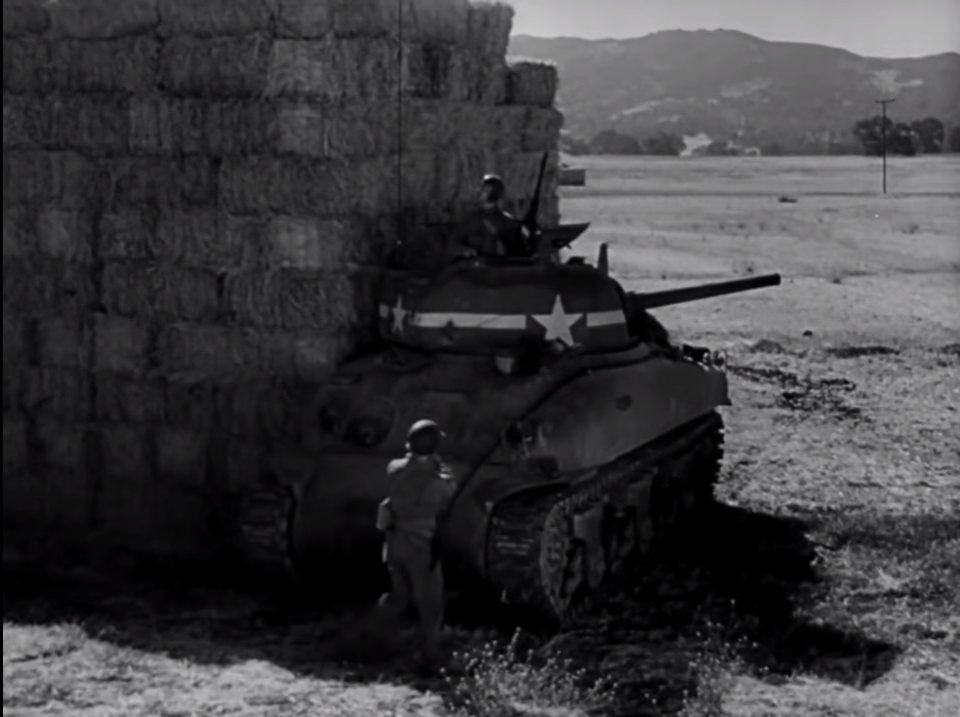
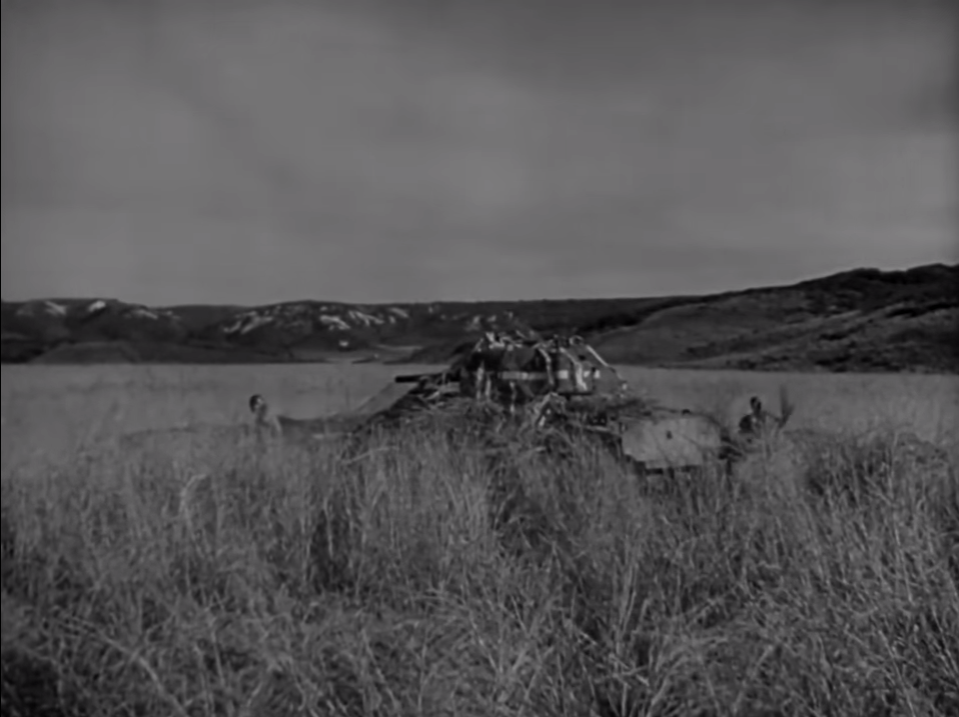
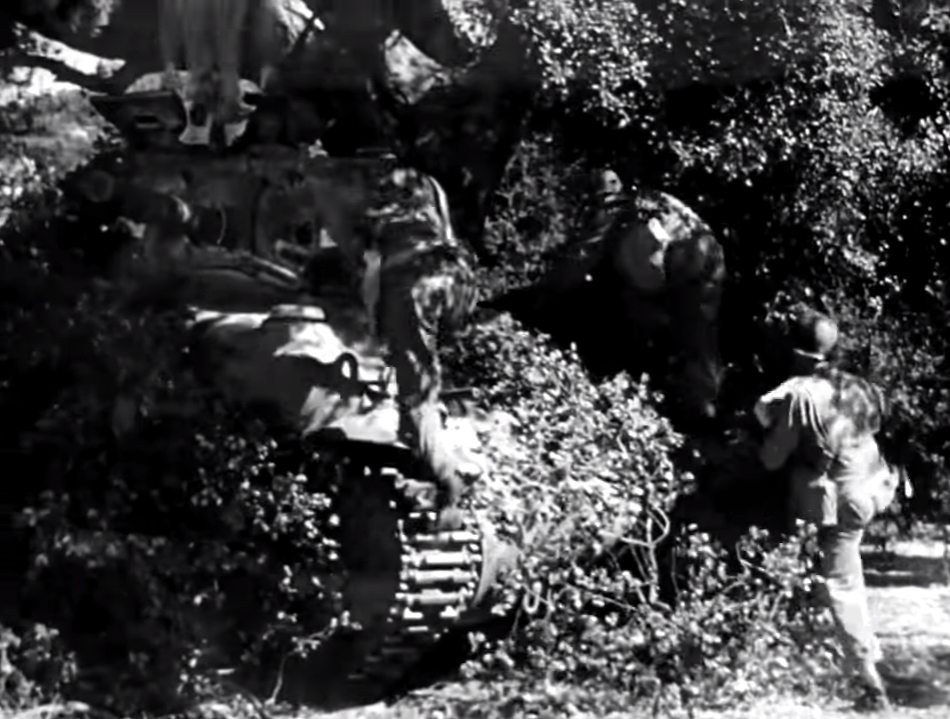
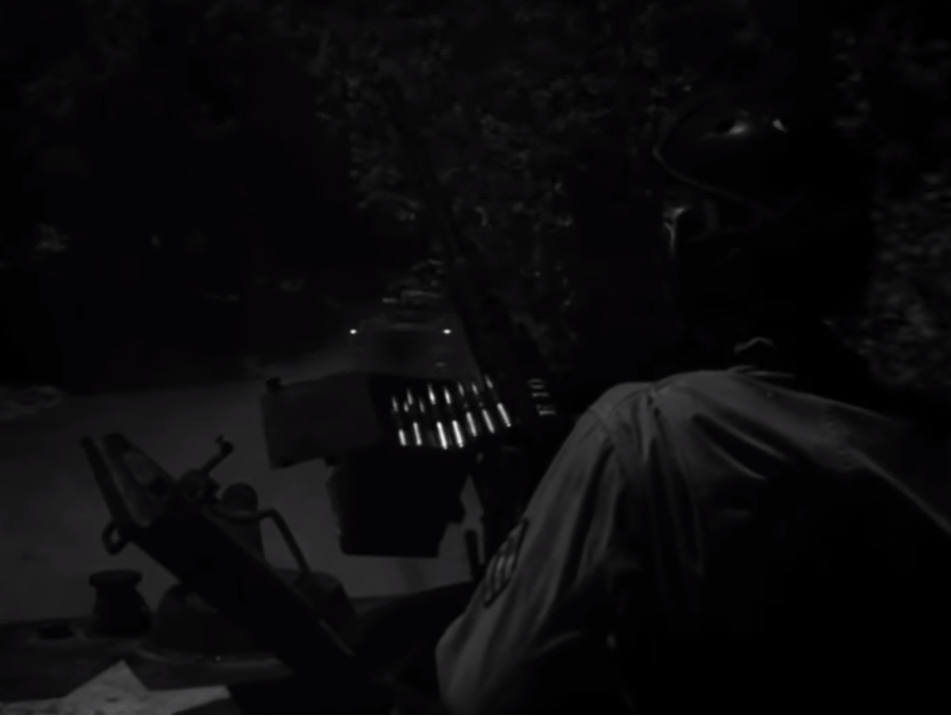
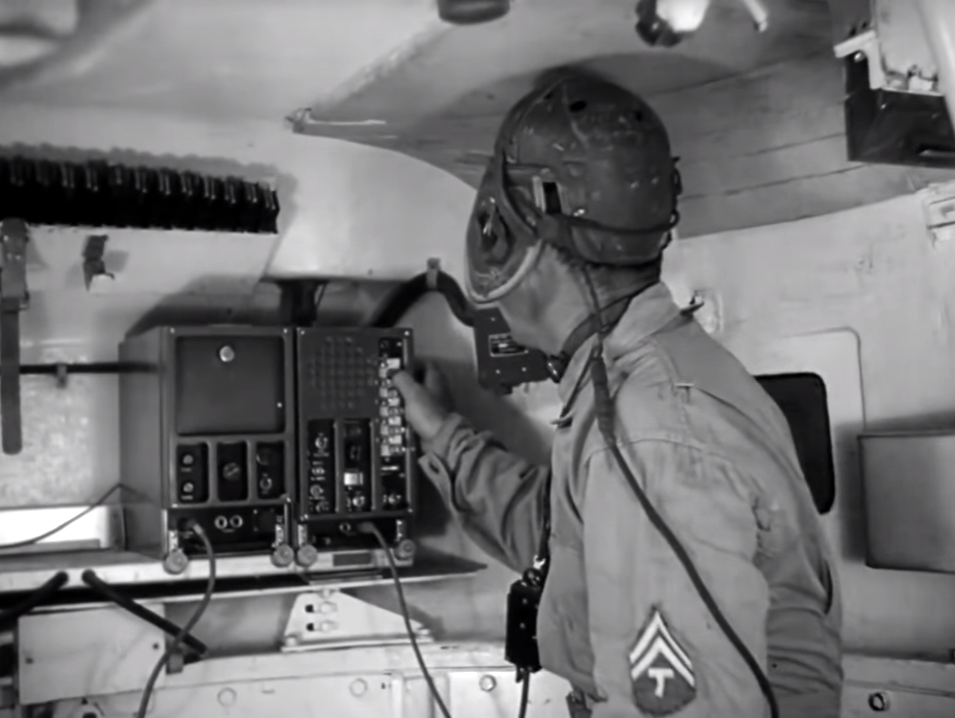
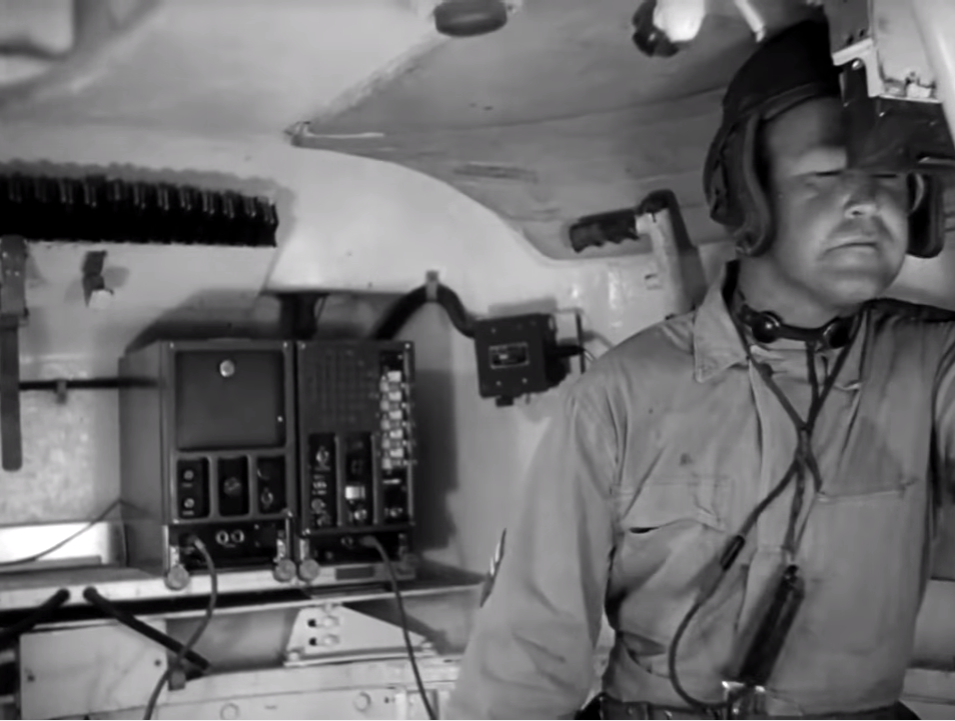
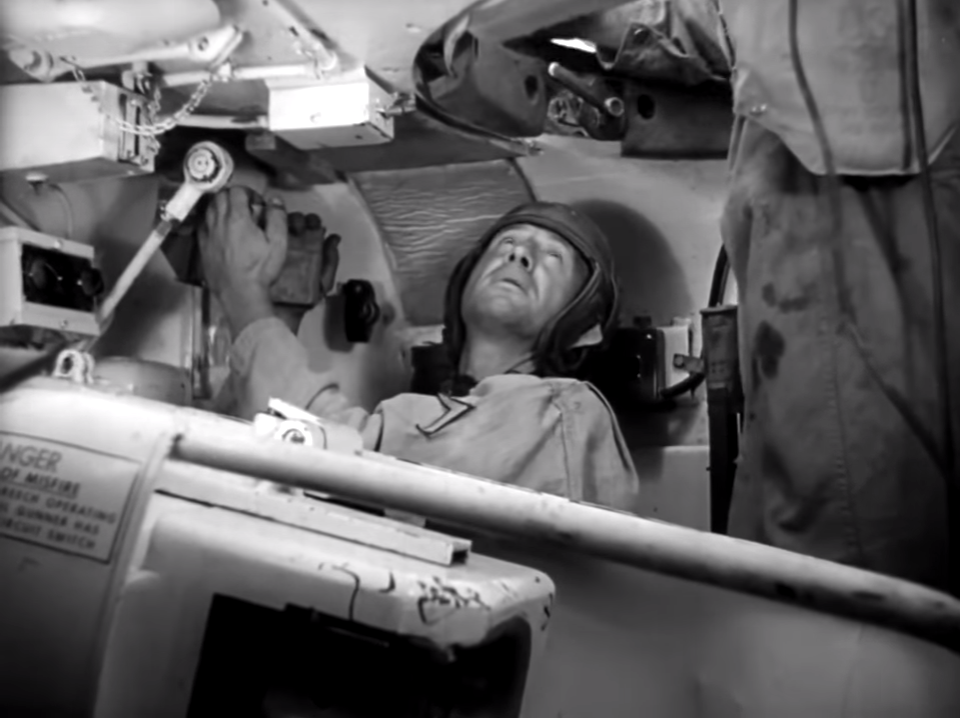
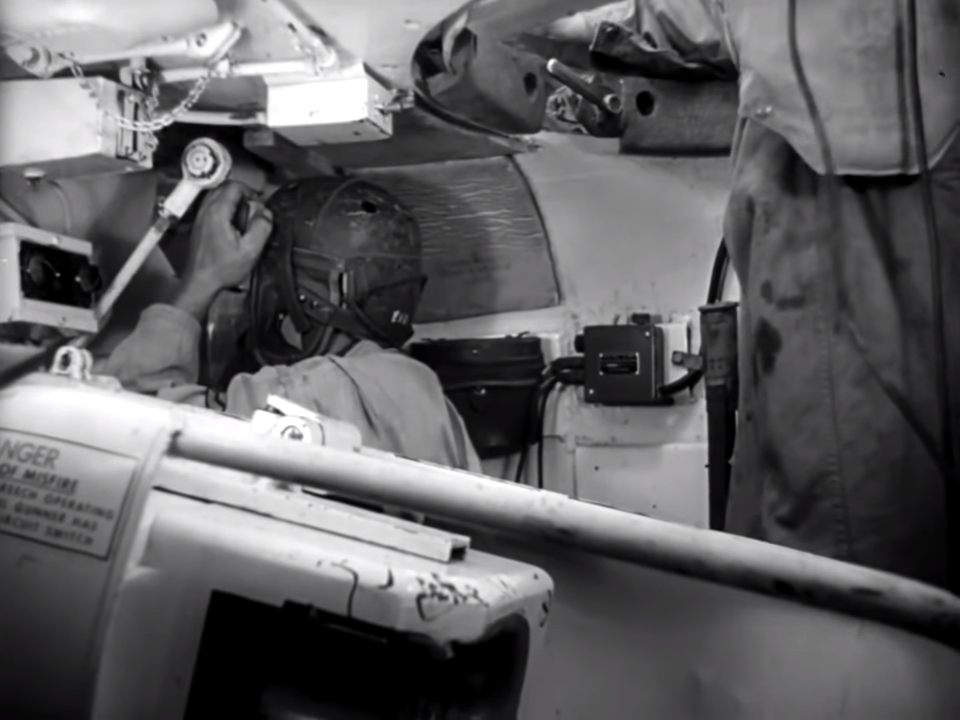
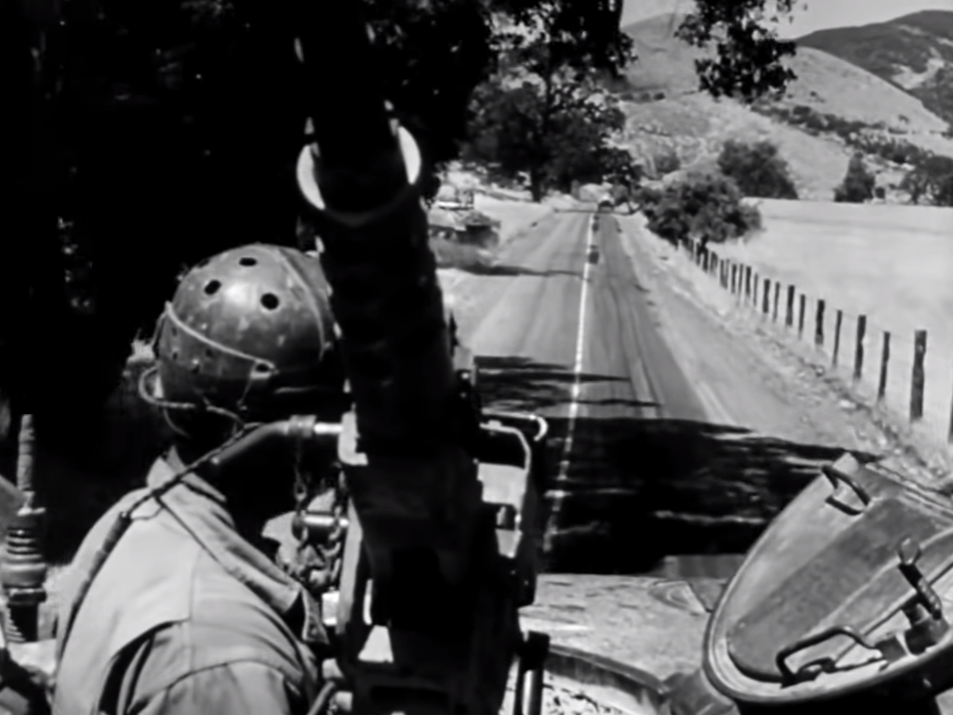
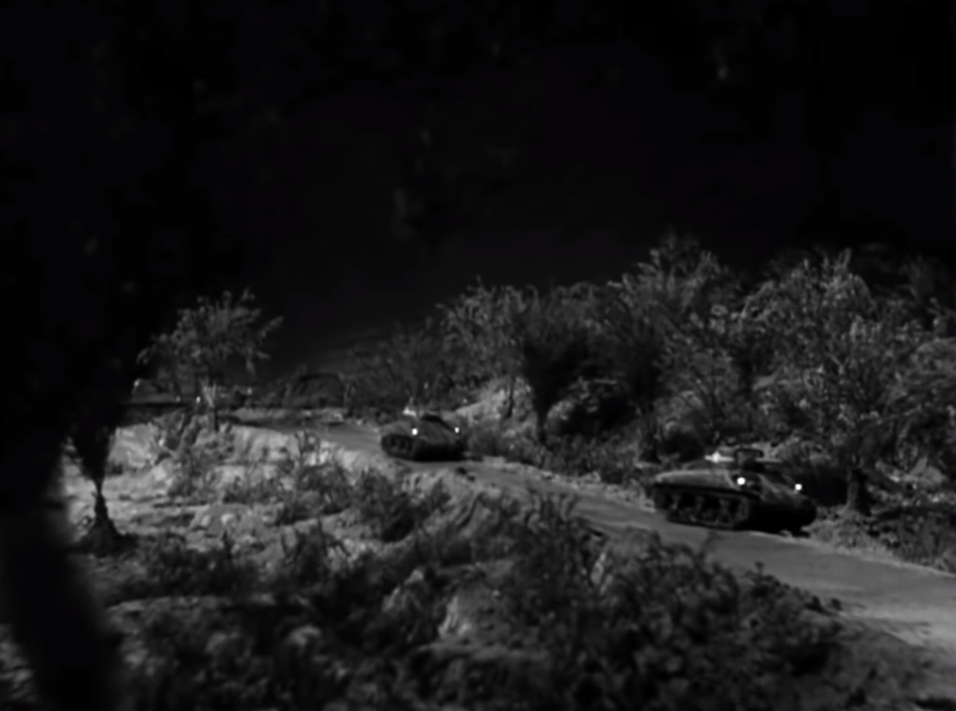
Tank and AFV News posted a link to a fascinating YouTube video covering march security of mechanized units, the film is from early 43. This Army training film is almost a half an hour long, and it’s really interesting, and has some rare shots of men working inside a Sherman. The film takes place somewhere in the US, probably on a Hollywood backlot, the Desert Training Center was pretty close so getting the tanks to Hollywood wouldn’t be hard. At times the film is clearly using special effects, and that lends more credence to it being done in Hollywood. The film covers security on the march, and does it by covering a tank platoon, and what it should be doing. It covers night movement, camouflage when stopped and gives tips on being stealthier in your tank; it also covers how to use the columns firepower if attacked from the air.
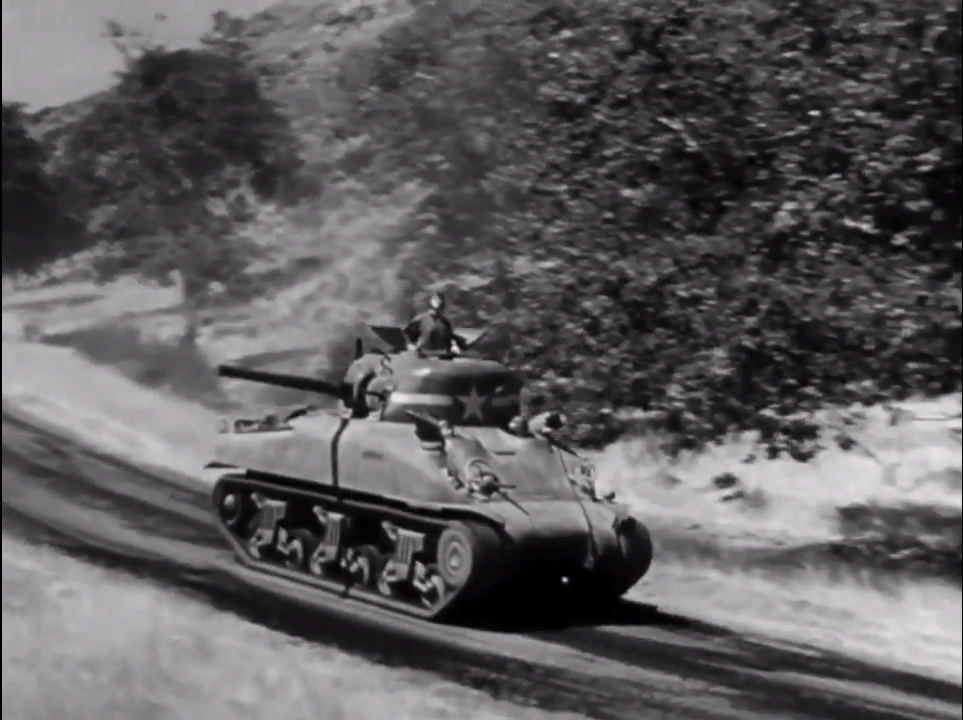
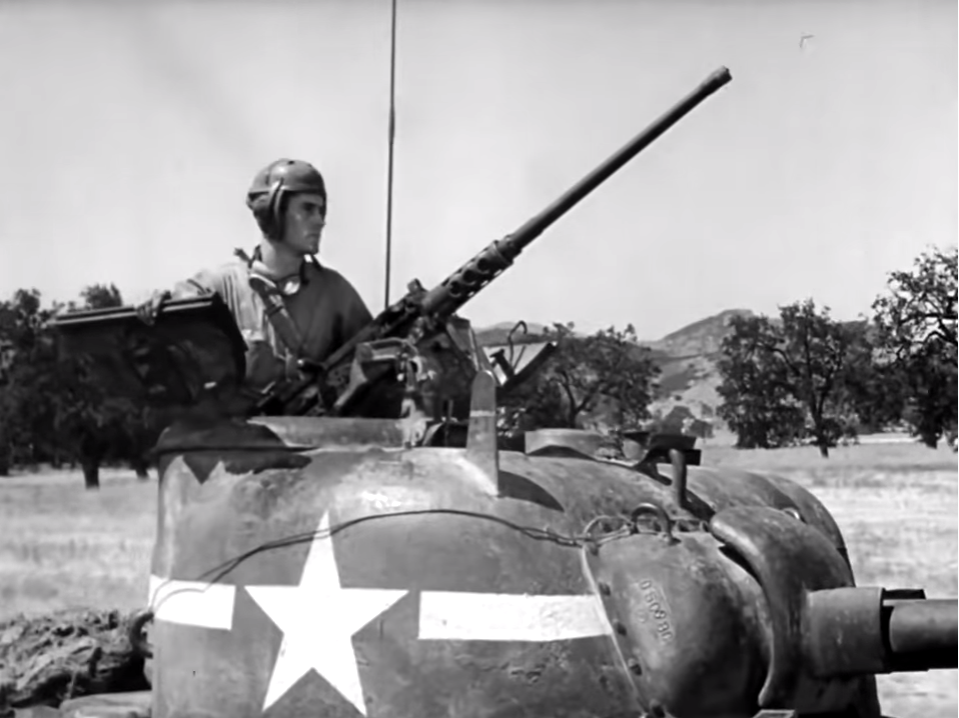
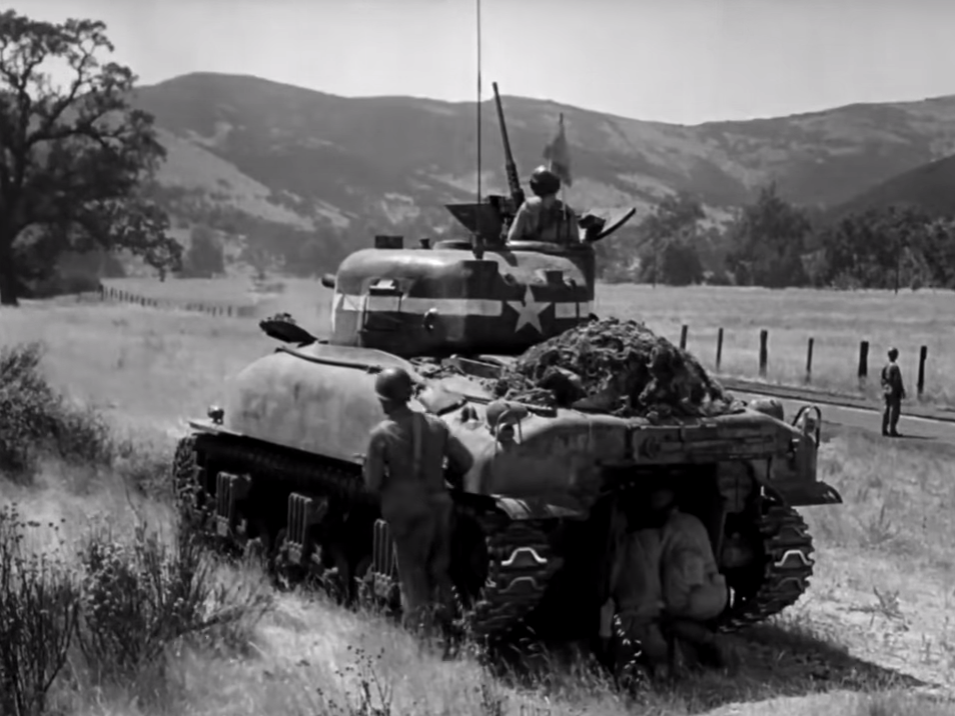
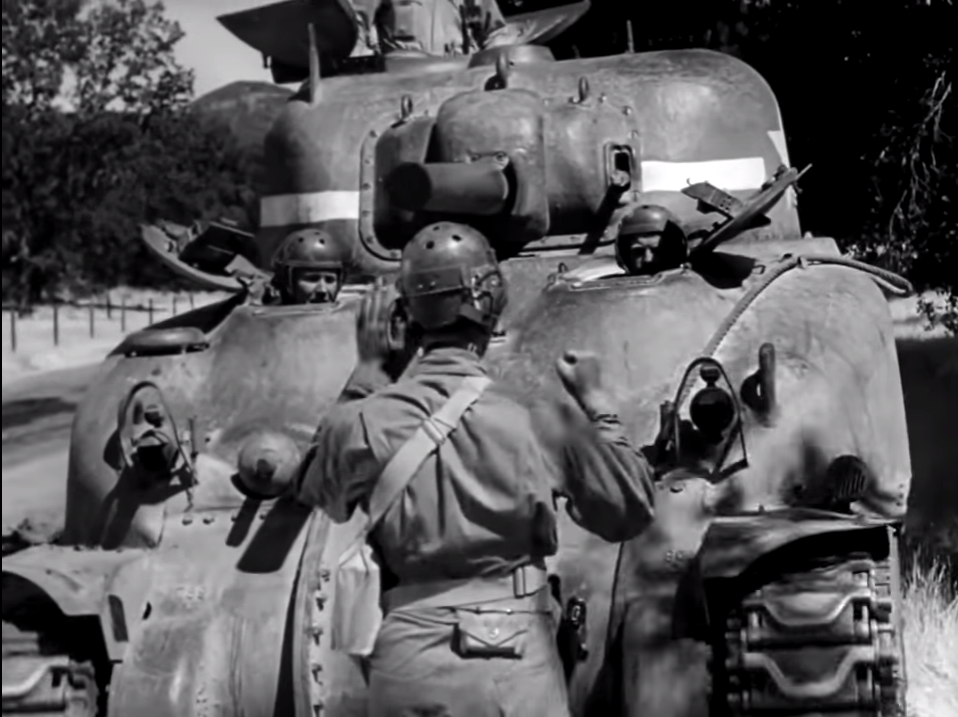
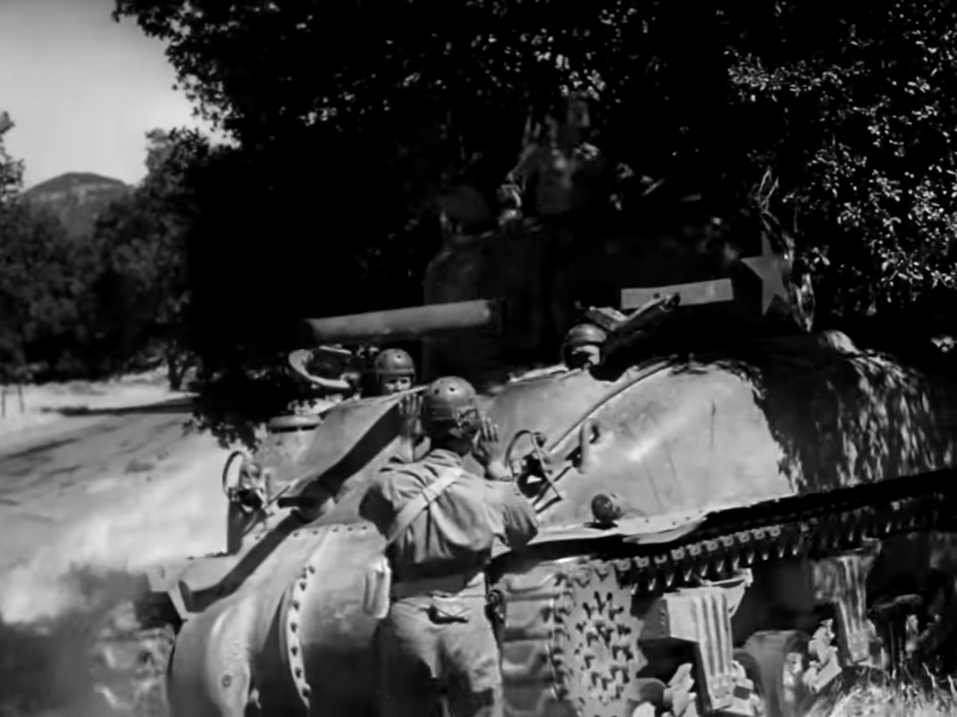
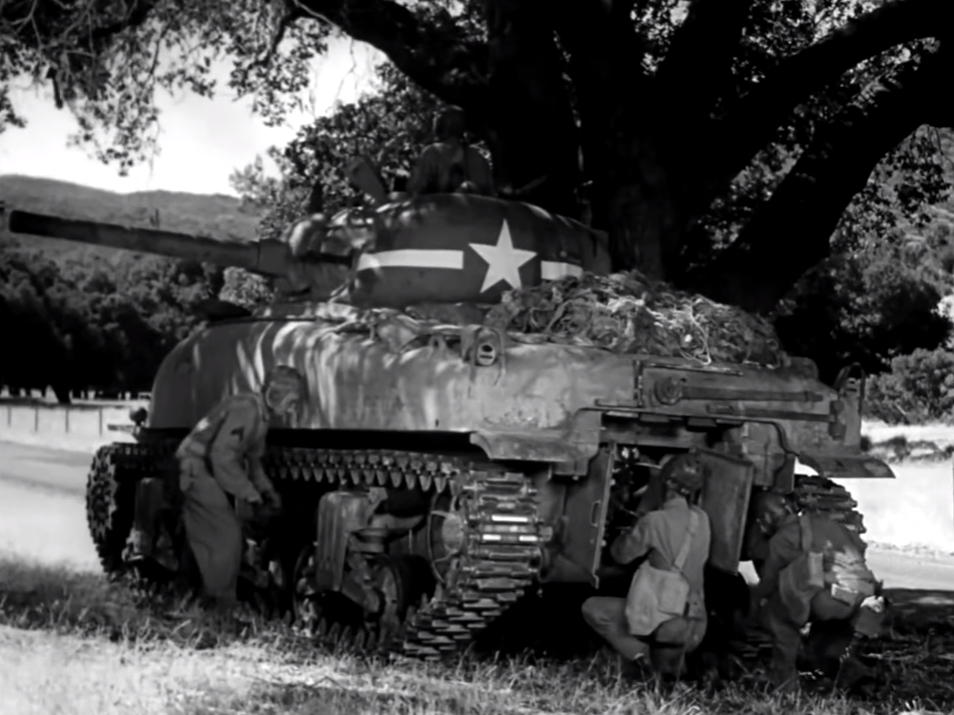
The tanks used were all early M4A1s, but not super early since they are not DV tanks, but still have shorty gun mantlet and no telescopic sites, they do have heavy duty suspension as well. The tanks also have full turret baskets, with the 12 unprotected ready rounds, and no armor over the sponson ammo racks or the turret cheek add-on armor. Its possible training tanks did not have these features removed like tanks slated to see combat, or the film was made very early in the war.
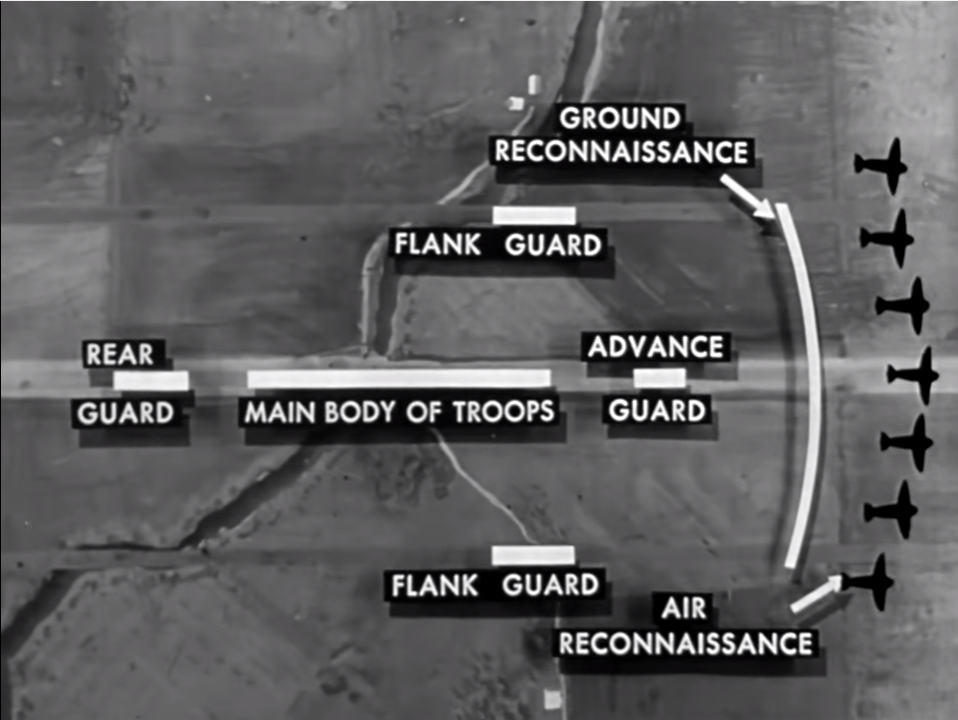
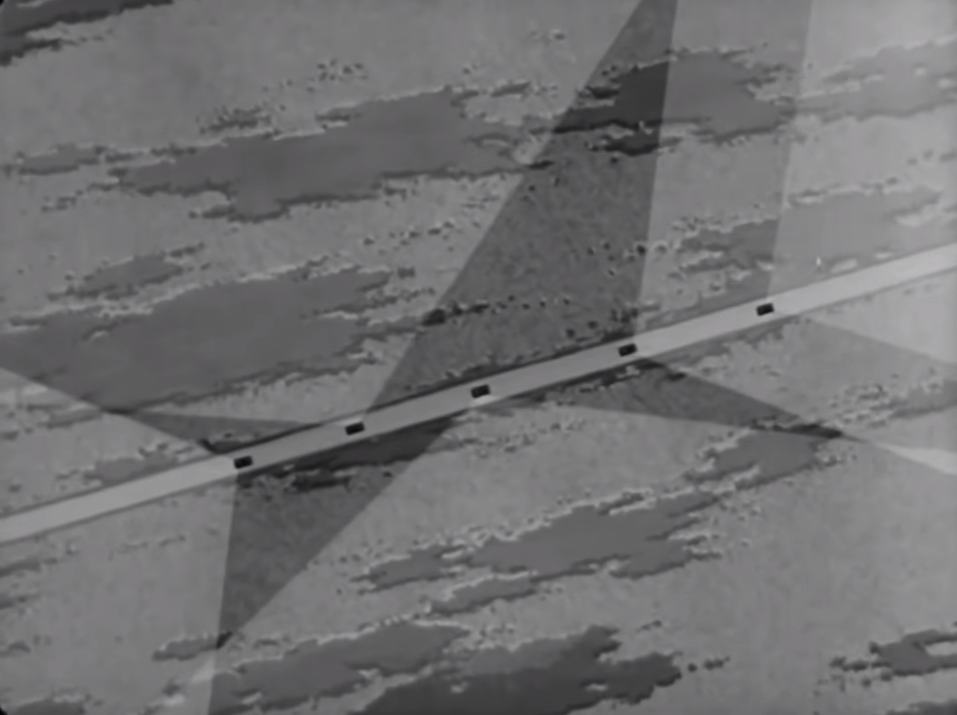
This image shows the big picture of a moving column a troops. This film only covered the role of the main body.
It is an Official War Department Training film, number T.F. 21 2035, and I want to make sure and thank Jeff Quitney for putting it up on YouTube! I had never seen it before so it was a real treat. He has a lot of other good content up on YouTube as well so check it out.
Now let’s talk about the contents of the Training Film.
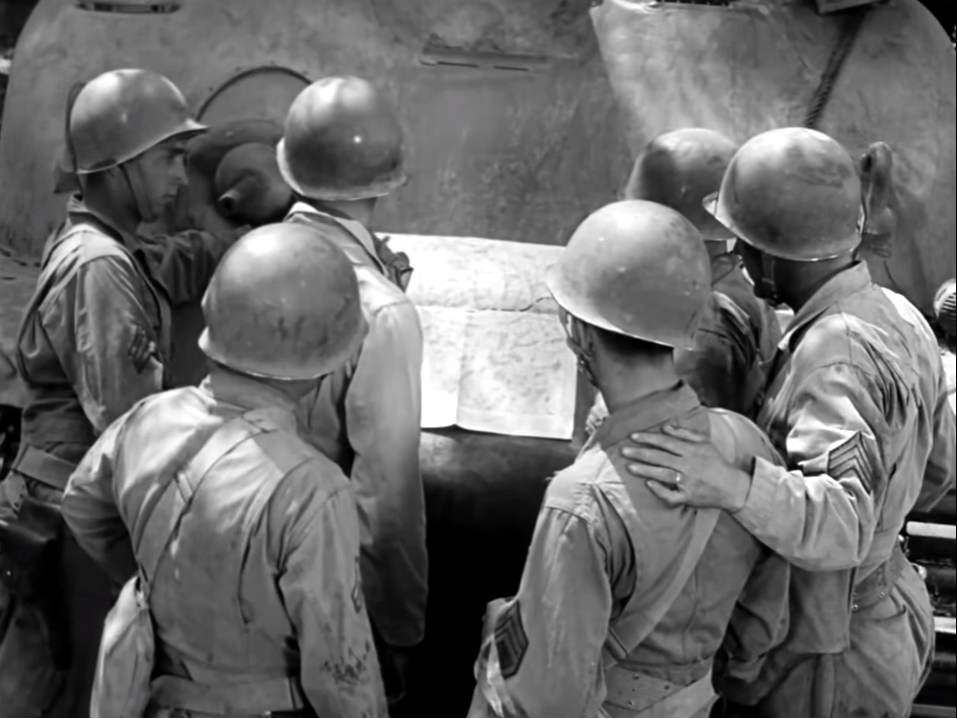
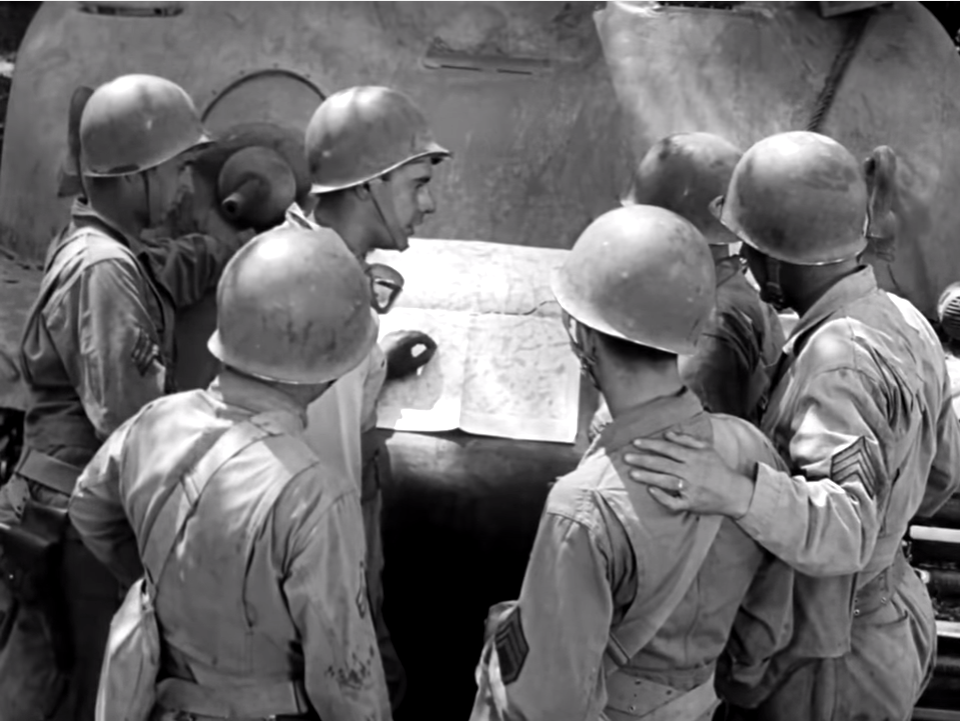
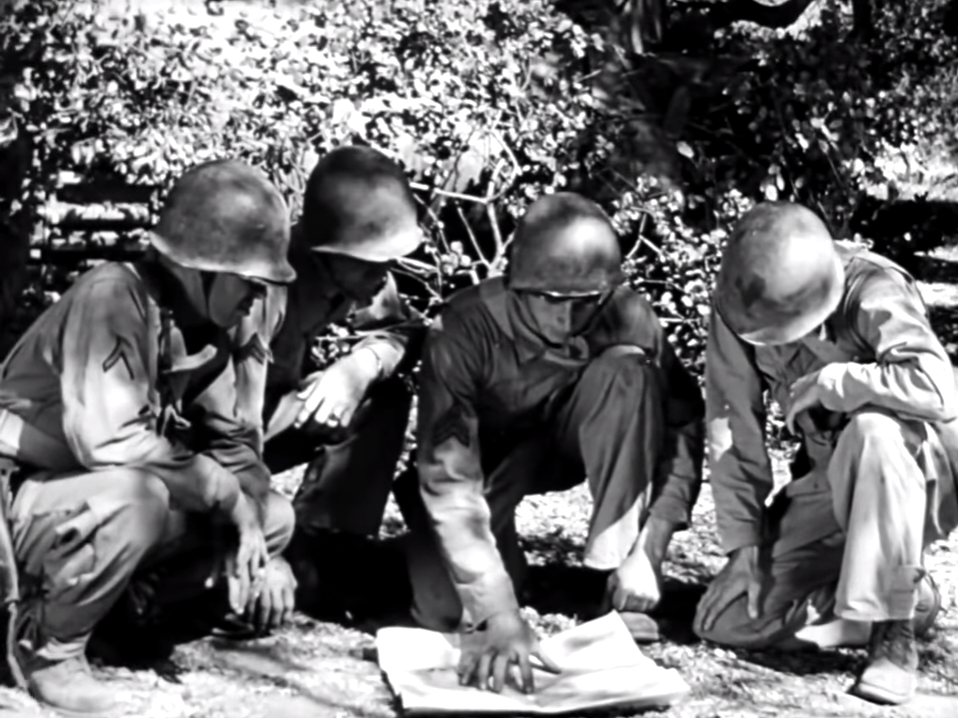
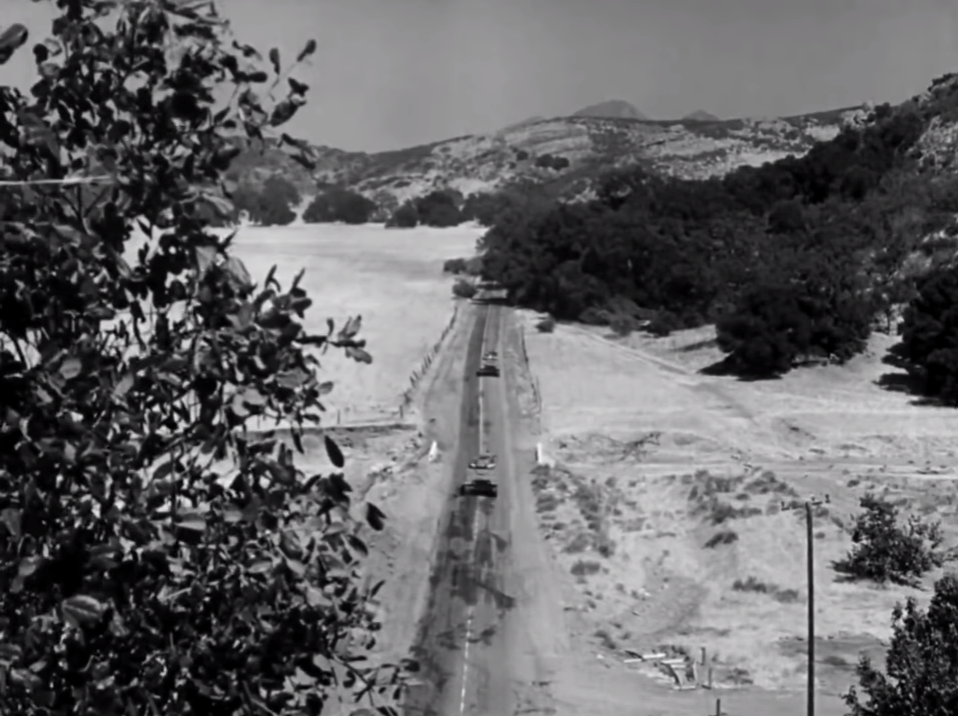
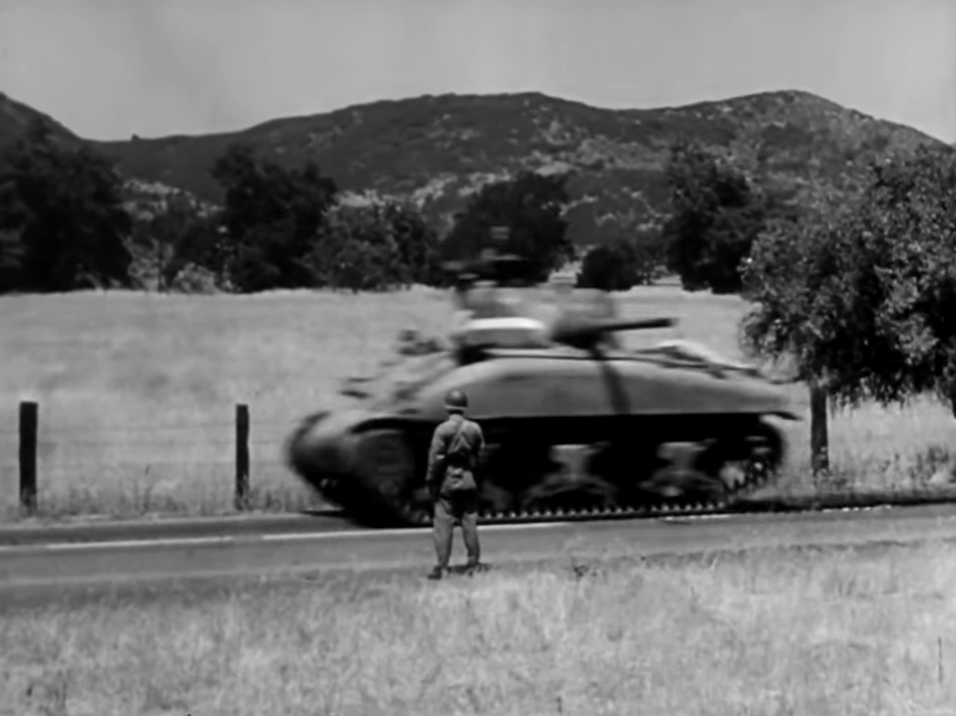
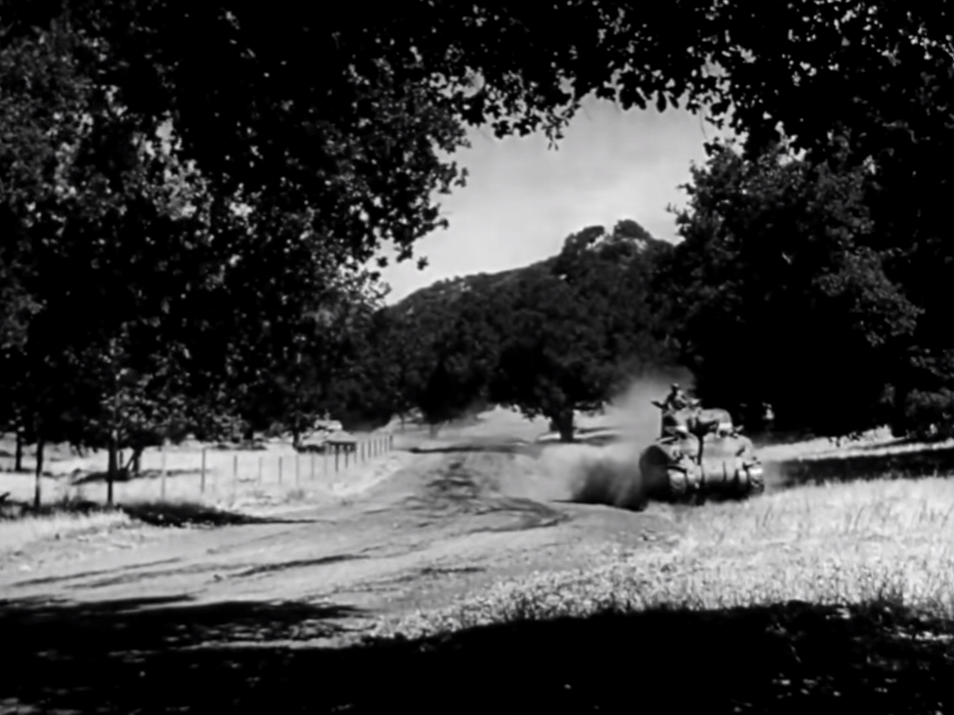
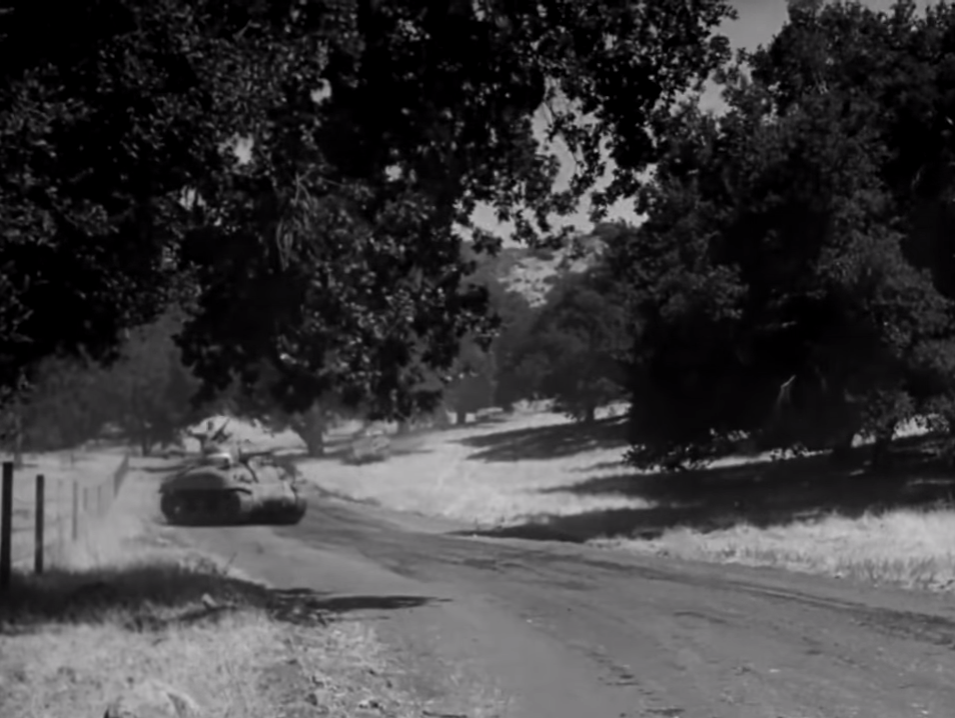
Right off the video starts off with a M4A1 driving by on a dirt road, it’s going at a good clip, and you can just make out another M4A1 trailing behind it at a few angles. The next shot shows a tank crew in front of their M4A1 going over a map with commander, and it just keeps getting better. I took well over 100 screen caps watching this film.
The training film makes it clear there are the five things that need to be kept in mind at all times to make a road march safe.
Advanced prep
Alertness
Concealment
Dispersion
Firepower
The enemy’s goal in an ambush would be to get to the main body of the column, and the film talks about how they should move, and covers things down to where each vehicle is to point its gun, to be prepared for an attack that might come either from the air, or ground. The film focuses on the actions of a single, five tank, platoon in the main body of the column, and then covers each of the five steps previously mentioned, and how that platoon would do them.
Advanced Preparation: Because good prep makes for smooth operations.
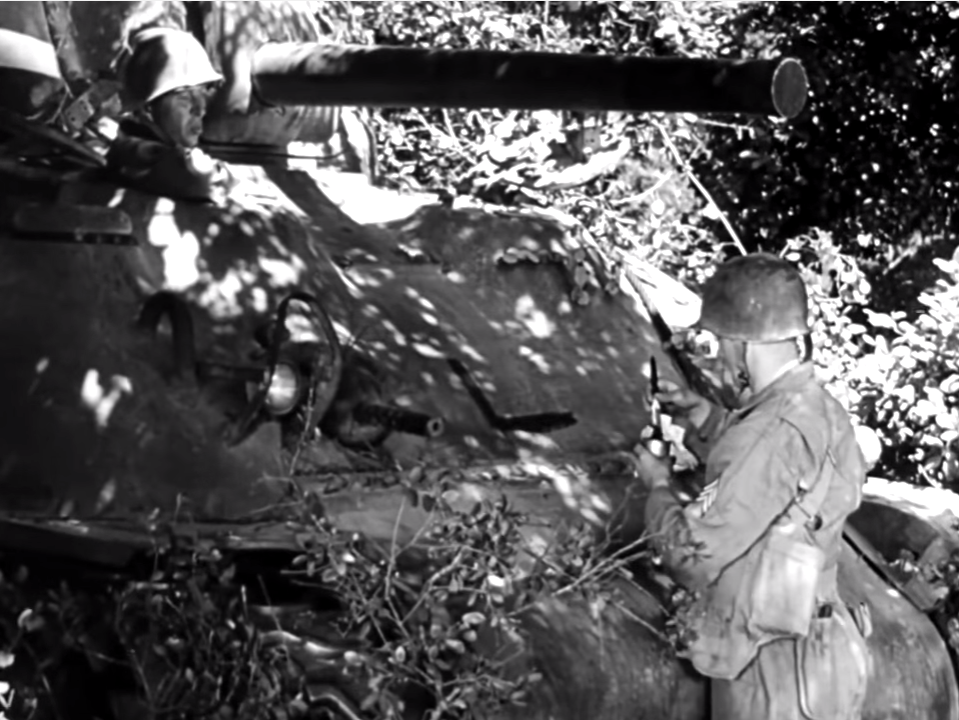
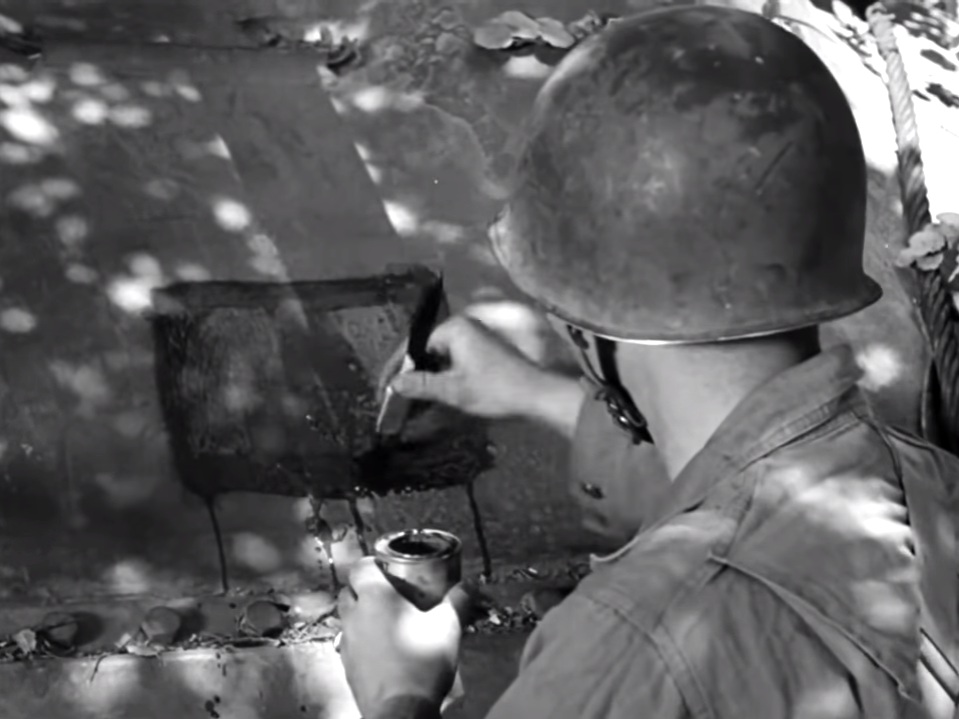
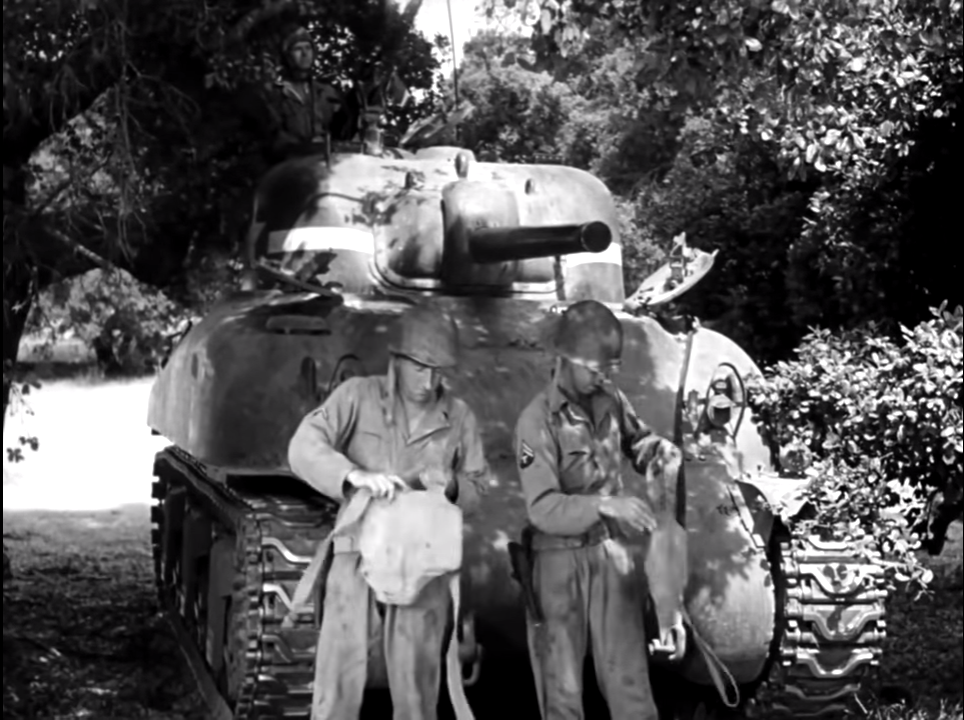
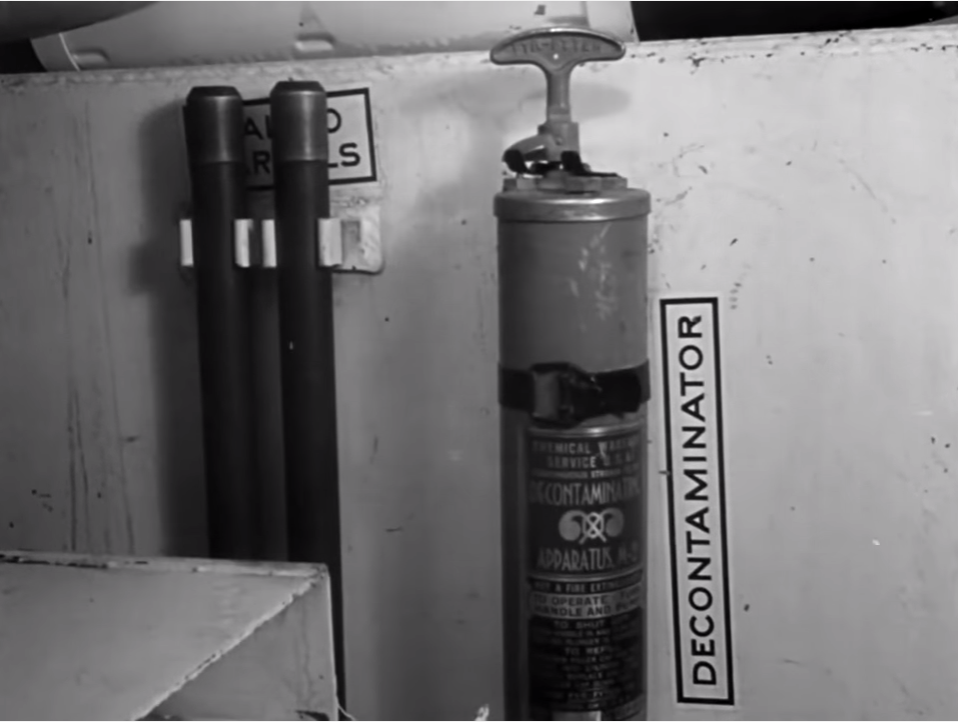
Be ready for gas, liquid vesicant detector paint, this pain, turns green to red when vesicant gas droplets touch it. A large square of this stuff was painted on the front of the tank. Then the decontaminator stored in the tank could be used to spray down the tank. The crew was also issued gas masks, and this was the time to make sure they were in working order.
Check the tanks readiness out. The Commander needs to check the tanks fuel level personally. The Crew, checks the engine out, checks the tracks, and checks out the ammo load. Do not leave with an empty ammo rack if ammo is available. Main gun rounds should be clean and undented.
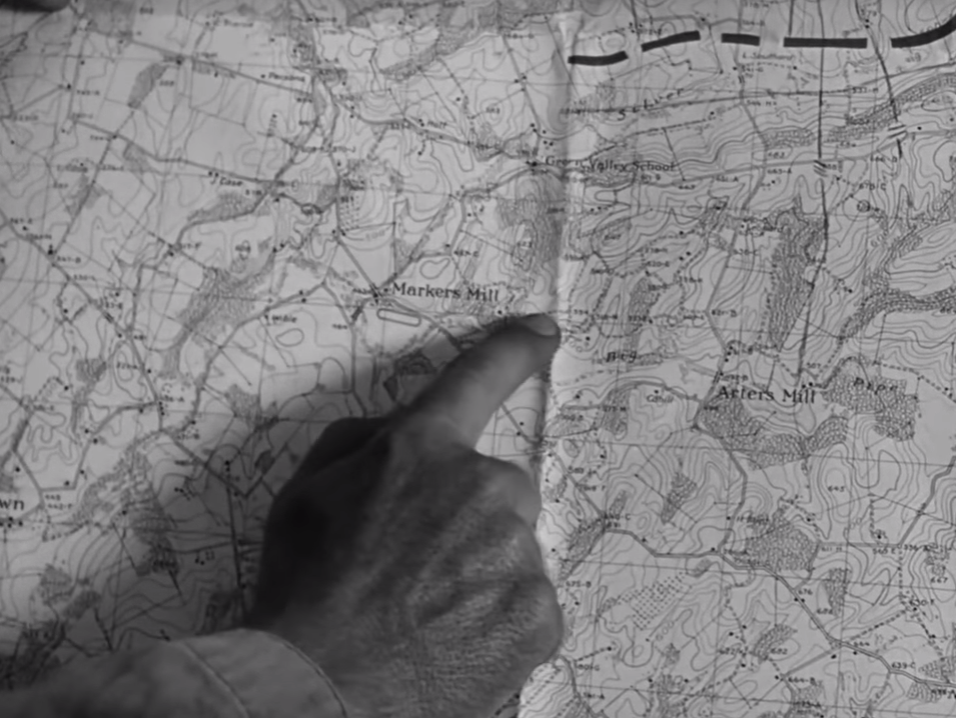
Platoon leader review whole route on the map with all tank commanders. Cover all points of interest along the route, likely ambush spots, landmarks, areas of good cover for rest points etc.Each tank commanderwill then pass all this info along to all his crew members, ensuring they can all fill in for each other. If one tank has to fall out for any reason, its crew knows the whole route and plan.
Alertness: Because surprise is the enemy’s best weapon, always be on guard for attack, air or ground.
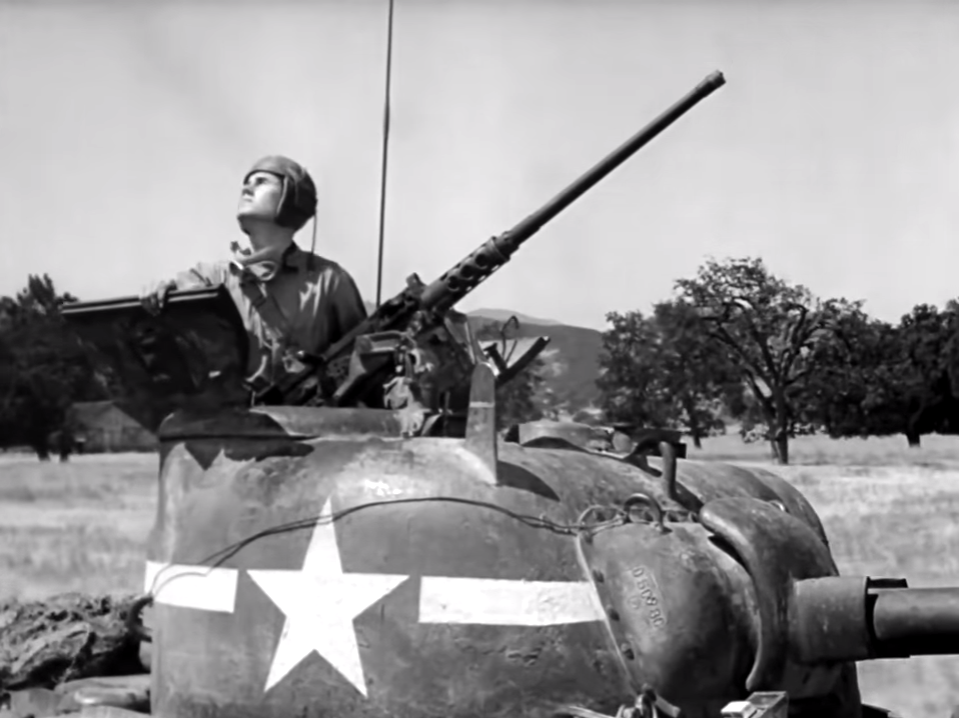
Every man in each tank turret is an air observer, the Tank Commander should always be looking around the tank, scanning the ground and air, and looking back. The Co-Driver should be watching the flanks, because the Driver is watching the road. The gunner and loader should be using their periscopes, all scanning for an attack.
The crewmember in the turret hatch needs to be alert, so when the commander is tired and needs to take a break, the gunner or loader will swap places with him. The Commanders position, no matter who is manning it has to be ready to receive signals from the platoon or company commander and pass them on, be they flag, or hand or radio. He also has to be able to see a messenger that needs his attention. The Loader should help the commander tend the radio, and the crew should listen to the radio to keep informed.
Concealment: Keeping a 32 ton tank as hidden as possible!
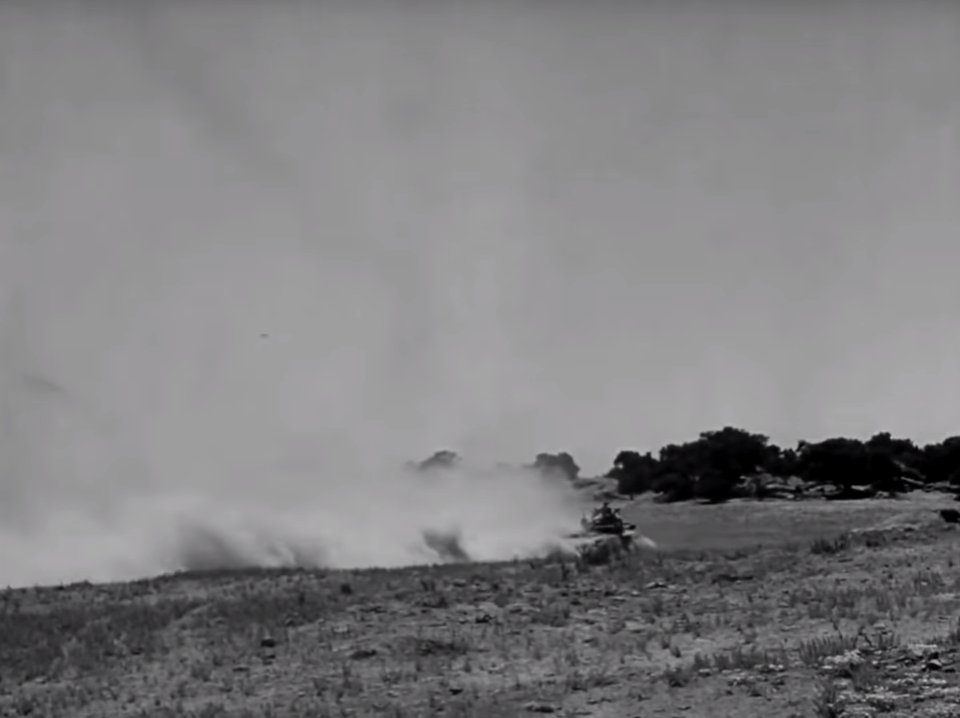
Dust is bad. You can’t hide tanks in a dust cloud, so don’t drive on soft dusty shoulders if you’re on a road. Even if that shoulder is shady, and will make the tank more pleasant inside, the dust can be seen for miles. Sometimes it can’t be avoided, but try to do so as much as possible. Line formation is best for use in places dust cannot be avoided. Driving at a slower speed can help minimize dust as well.
Shielding Terrain is to be taken advantage of anytime it won’t produce large amounts of dust.
Shade is ok is it does not make extra dust, and can help hide you from air observation.
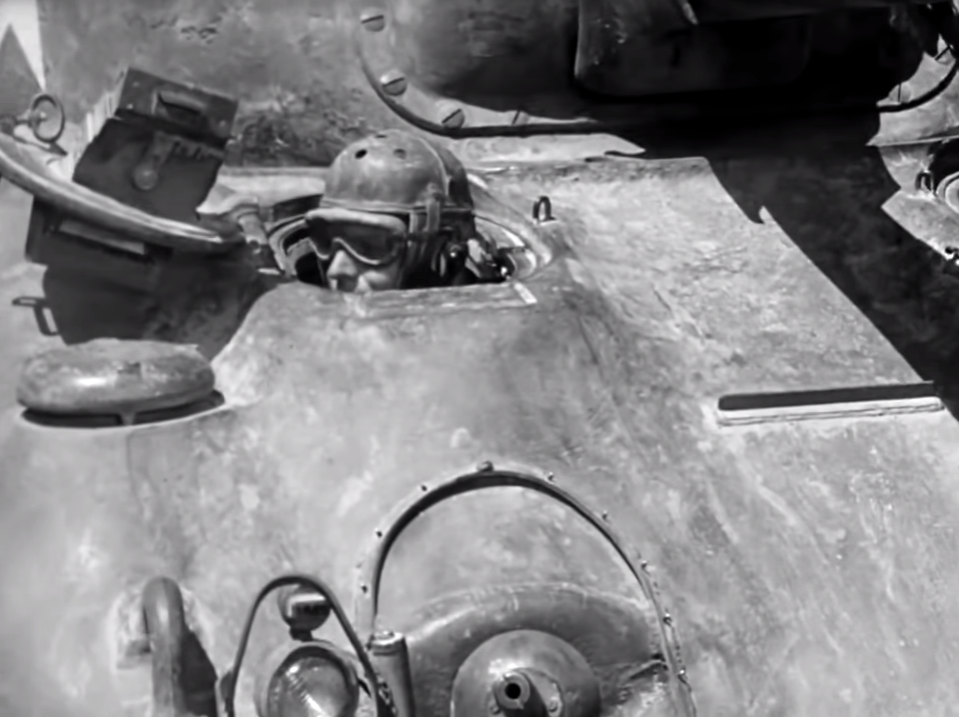
Your goggles can reflect light for miles; if you’re not wearing your goggles store them in the tank. If they are needed to protect your eyes, they should be covering them. This applies to any shiny object.
Do no silhouette your tank on a hill or high ground. Drive around the base of the hill. If you have to drive on a hill stay below the crest.
Dispersion: Bunching up is bad, if you are to close one artillery round, or bomb can damage multiple vehicles.
Bunching up like a bunch of cows with their tails in the breeze is bad. This makes you a big target.
Proper daylight spacing is at least 75 yards between tanks. If visibility and terrain allow, you can have more than 75 yards, but never less. In hilly terrain it is easy to bunch up, keep your eyes on the tank in front of you if it starts slowing down; you will have to as well.
Falling Out. If your vehicle has to fall out for some reason, engine troubles, or some other issue, make sure you pull far enough off the path to not cause a bottleneck on the path, and slow the rest of the column. Make sure and signal the column and platoon so they know what is going on. Don’t try and catch up, wait for a halt, then retake your position. Fall in with the rear guard until the halt.
Firepower: A Sherman tank packs a lot of punch, keep it ready, it’s your ace in the hole
The main gun should be trained out and ready, but not loaded. The lead tank and the next in line keep their main guns aimed straight ahead. The third tank in line keeps its gun trained out to the right. The fourth tank keeps its gun trained out to the left. The fifth tank will have its main gun traversed to the rear.
M2 .50 anti-aircraft guns should be kept half loaded, so they can be quickly brought to bear on any attacking aircraft. To keep the column covered, alternating tank commanders look forward and to the rear during air attack.
Do not halt, during an air attack. Your tank is much harder to hit when moving. Even if you have good concealment, do not stop. When a plane is sighted signal the rest of the column, close all hatches but the commanders, alternate the .50 AA guns and engage the aircraft.
Report the results of any air attack up the chain of command. TCs report to Platoon Leaders, Platoon Leaders to Company Commanders, etc.
Halt security: Units on the move have to stop, for human reasons or mechanical ones, and you can’t just do it willy-nilly, there’s a plan for that too.
There are two kinds of stops a unit on the march will make. The short ten minute halt, to check the tanks out, for the crews to stretch their legs, no major maintenance will be taken on these short halts. The second kind is the Long halt. On the long halt, the tanks can be repaired if anything major popped up and refueled, and the crews could get some chow.
Security rules and things to note on the short halt:
Check the ground where the tank will be parked, make sure the tank won’t get stuck, or sink in. Back into the spot so you will not have to back out if the tank needs to move out in a hurry.
First Echelon Tank Maintenance should be done on the short halt, check the tracks, tighten the end connectors, check the motor out, lube as needed.
Review the course, check out the route the column is taking on the map, and review it with your crew and the rest of the platoon.
Be Alert, post guards, at least two from each crew. One man must always be on the platoon leader’s radio. Do not let the enemy sneak up on your position.
Disperse on the halt, in the same pattern as on the move; each tank is still responsible for covering the area they were covering with their main gun. Use any cover available on the halt to conceal the tanks as best possible from air or ground observation. Spacing cannot be less than 75 yards.
Each tank will have the commanders .50 manned.
When pulling out, each tank will keeps its spacing, and will not stop on the road to form up.
Security Rules and things to note on the long halt:
All the rules for a short halt apply
You can pull further from the road on a longer halt. A guard has to be posted near the road to receive any signals though.
Dig Prone Shelters, you might not be able to get back into the tank in a surprise air raid or artillery attack.
Eat while you work, you never know how long the halt will be.
Take more time to conceal the tanks, cut or break off tree branches and use them to break up the tanks lines. Rake the tanks tracks leaving the road away.
Use shade and any local cover to hide the tank, move the tank as the shadows used to hide them move with the sun.
If no cover can be found, use the camo net.
Some camo is better than nothing.
Special Rules for night marches:
If under air attack, Stop, for both concealment, and to prevent bunching up.
If under air Attack, Do not fire, unless you are sure you are spotted.
If under air Attack, Turn off your marker lights, the video doesn’t say this, and they used models in the film, but I think it’s a safe assumption.
No light, not even a smoke, and smoking is bad anyway, mmmkay.
…
Now for some thoughts on the film, it is really very interesting for several reasons, and the quality is very good. The main reason it’s interesting is the look at prewar combat, or pre air superiority march doctrine. The attention paid to defense from air attack would not be pushed nearly as much even by the Italian campaign and would be almost an afterthought by Normandy. Later films probably pushed very carefully searching for well concealed AT guns and infantry that the lead and flank scouts may have missed.
It is also interesting how gas attacks and preparation for them is first thing they cover. I’m sure shortly after most unit got in combat they ended up losing or discarding most gas related gear, and I can’t ever recall seeing a man carrying a gas mask case or a square of the gas detecting paint on any vehicles in combat photos.
The night shot of tanks moving is clearly done with models. The machine guns used during the mock air raid also appear to be prop guns. If you watch carefully, most of the film, the .50 M2s have the normal short cooling sleeve with round holes, during the shooting scene, these have slotted sleeves, and the barrels do not seem to recoil at all. The explosions look like typical Hollywood fare as well. It should come as no surprise Hollywood was willing to help the war effort; this is just one example of many. All the big studies did propaganda movies and even Bugs bunny and Disney got into the act.
I have been looking the tanks over, they are all M4A1 75 tanks, they are all small hatch hulls, but none are DV, they all have heavy duty suspension bogies. Two have three piece cast differential housings, the rest have the first version of the cast one piece diff housing. The turrets all look the same for the most part, with the short mantlet, so M34 gun mounts with no telescopic sights. Some of the gun mounts have slanted lift rings, others don’t seem too. At least one turret has the port for the spotlight on the roof. One tank has the siren mounted in the front plate with the odd single brush guard, the rest seem to have them mounted on the fenders. Two or three of the tanks appear to have T54 steel chevron tracks, while two or three seem to have T47 steel bar cleat tracks. I’m bad at spotting the little clues that give away who made what, but I think two of the tanks were made at PCF in Washington; I think the two tanks with three piece diffs are from PSC in Illinois.
This week we got the post about Drivetanks.com out, and Subjegated Shermans also got a signifigant upate as well. I have several other posts in the works, unfortunately all are about 80% done! That’s what I get for jumping around I suppose.
Anyway, Hedgerow and Forest fighting are in the works, also in the works is a post on Mountain tanking with the Sherman. I’ll be doing a post on the various SPGs based on the venerable Sherman hull soon as well too. Also coming soon, stories from actual tankers, or one in this case.
In other news, the website he talked about in the links section, The Lone Sentry, seems to have gone down for good. It was a fantastic resource on the US Army in WWII, and had tons of information and hard to find technical and field manuals hosted there. If anyone has the Web Masters Contact info, or knows anything about the site going down, please contact me.
Drivetanks.com: the most Magical place on Earth if you like Tanks, Guns, Machine Guns, or even Artillery Pieces!
Drivetanks.com is an operation out of Uvalde Texas. Uvalde is about 120 miles west of San Antonio. The Drivetanks.com facility is on the famous Ox Hunting Ranch, an 18,000-acre hunting ranch, with its guest cabins, a huge lodge, and its own 5800-foot runway. If you could see warbirds at this ranch it would literally be heaven on earth!
Drivetanks.com doesn’t have just a Sherman tank, but from our perspective, their Sherman is the coolest tank of the lot!
M4A2E8 Sherman: Just like Fury
The Sherman is the star of the show for us! It is fully functional, with working power traverse and a working main gun. All the machine guns work, and you get to shoot them as part of one of their packages. You also get to drive the tank around and fire it’s main gun if you go with the big package.
The M4A2E8 saw action with the Russians at the end of the war, and its M4A3E8 counterpart saw all kinds of action in Northern Europe and Italy. These tanks had the improved HVSS suspension with a wider track, giving them very good off-road mobility and the improved turret and gun gave the tank the edge over earlier German tanks like the Panzer III and IV while giving it a better chance against the rarer tiger and Panther tanks.
I have to say, Drivetanks.com is an amazing place for letting people drive and operate the armament of this working piece of history. Nothing beats seeing an actual historic vehicle drive or fly by, a static display in a museum where you can’t touch, or in some cases even take photos is just not the same.
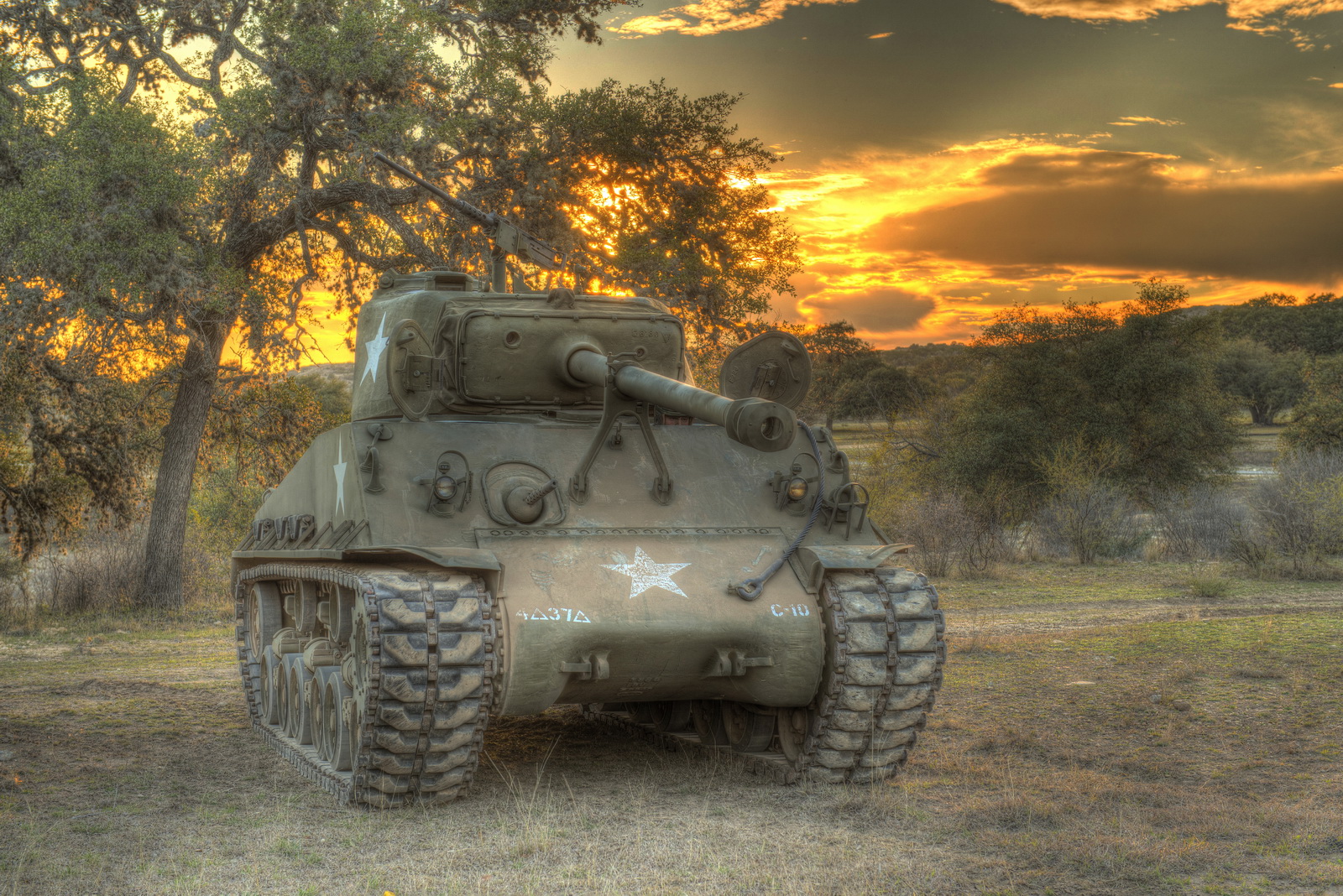
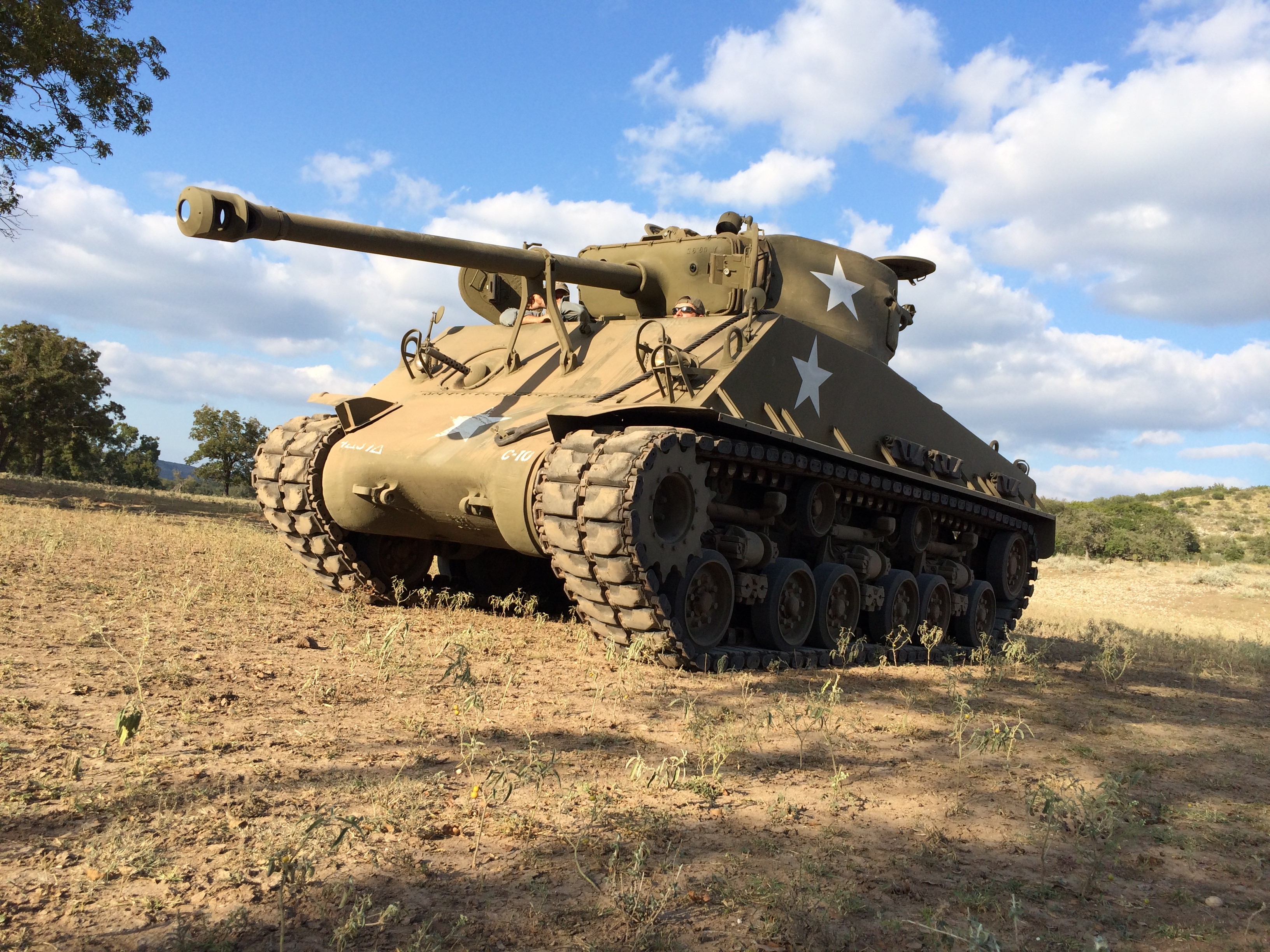
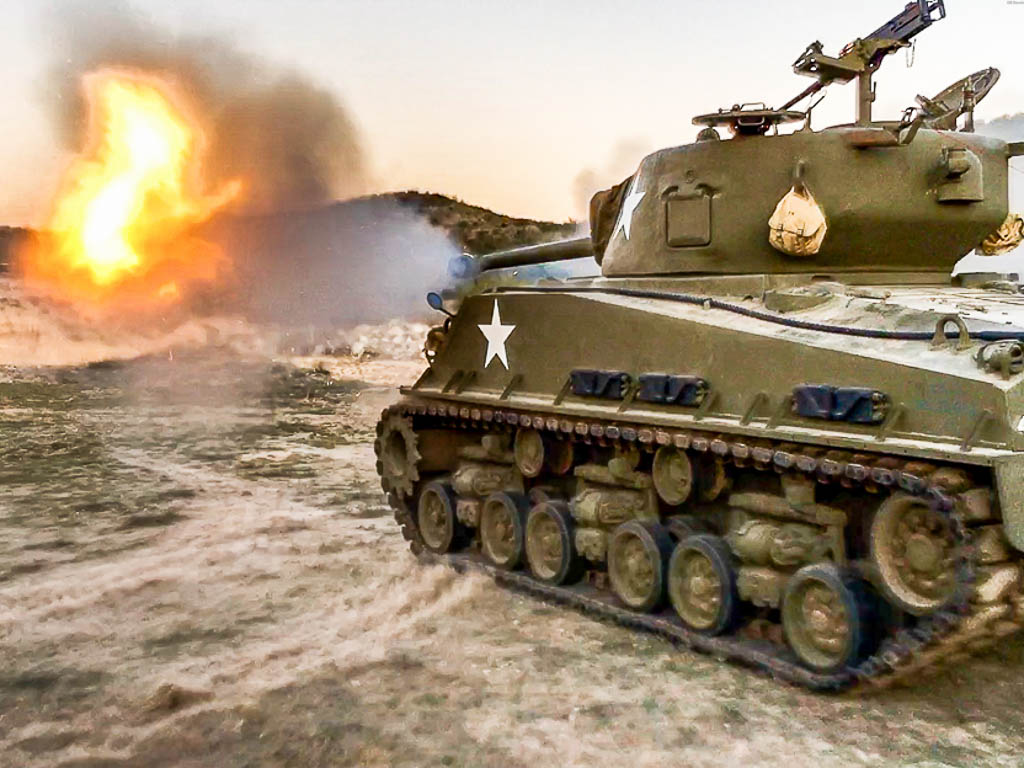
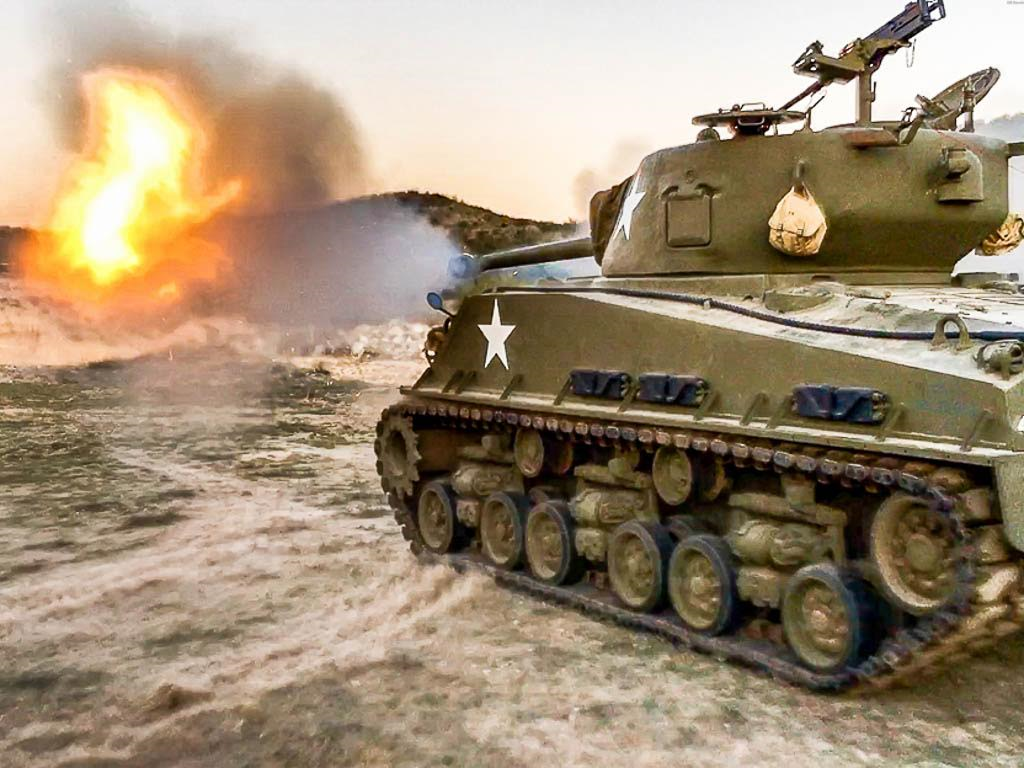
Drivetank.coms awesome M4A2Another shot of Drivetank.com’s M4A2E8 Sherman, this time just after it fired its main gun! Texas Rocks!
So, even by my standards, this place wouldn’t be the most magical place on earth just because it had a working Sherman. This place has several other working tanks, SPG, and APCS, along with towed guns, mortars and a very large variety of firearms to shoot. Let’s list the other tanks:
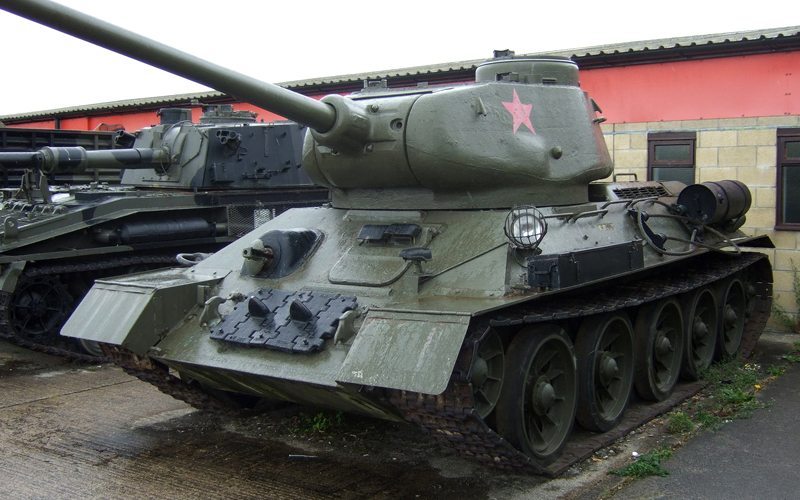
T-34-85: This Soviet tank was the Late War Shermans Russian counterpart!
Drivetanks.com has a fully functional T-34-85 tank and it was produced just in time to see action on the eastern front. It has a working main gun and there are similar, slightly to the Sherman but slightly cheaper packages for this tank.
That’s the last of the WWII tanks but they have two more modern ones.
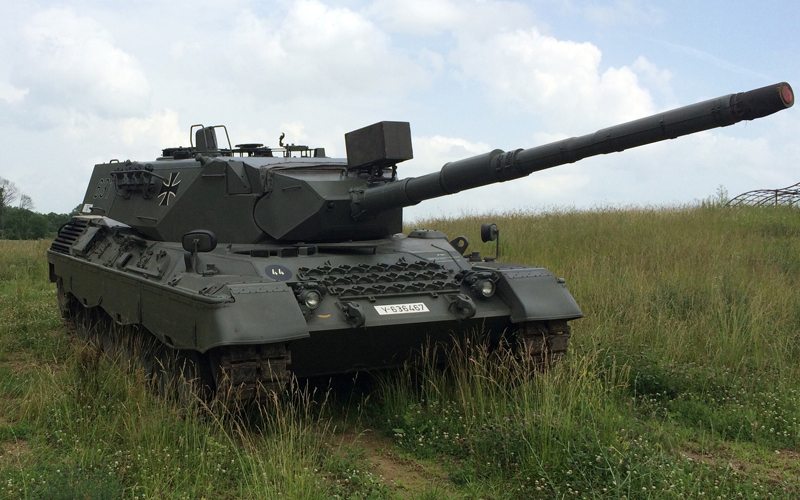
Leopard 1A4 MBT: An updated version of Germany’s first Post War Tank!
This tank is bigger and faster than either the T-34 or Sherman, and its gun doesn’t work, and the prices on its packages reflect this. This tank is probably easier, and more fun to drive than either WWII tank, but just not as cool. This tank is still in use by armies around the world.
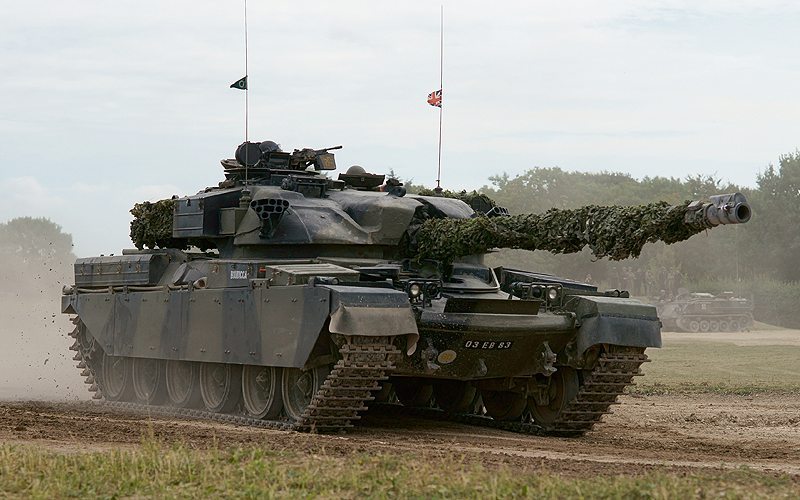
Chieftain Mk. 6, MBT: Big and British, and their Car Crusher.
Another tank with no working gun, this bad boy is big and tough, and therefore they use it when someone wants to crush something. This tank went into action in the mid-60s and was still going strong into the early 80s when the Challenger replaced it.
They have a few other tracked vehicles you can drive and get to know:
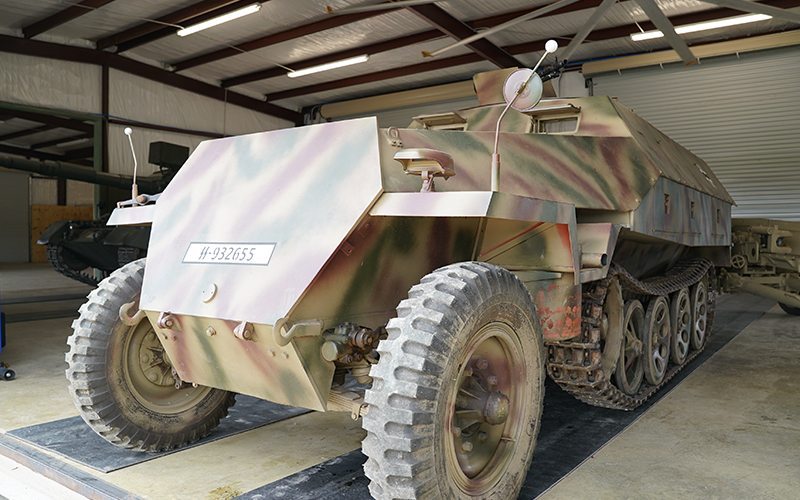
German SD. KFZ. 251 Armored Half-track: The Angular German Halftrack you see in Movies!
If you want to drive something with tracks on a budget, this is a good place to start.
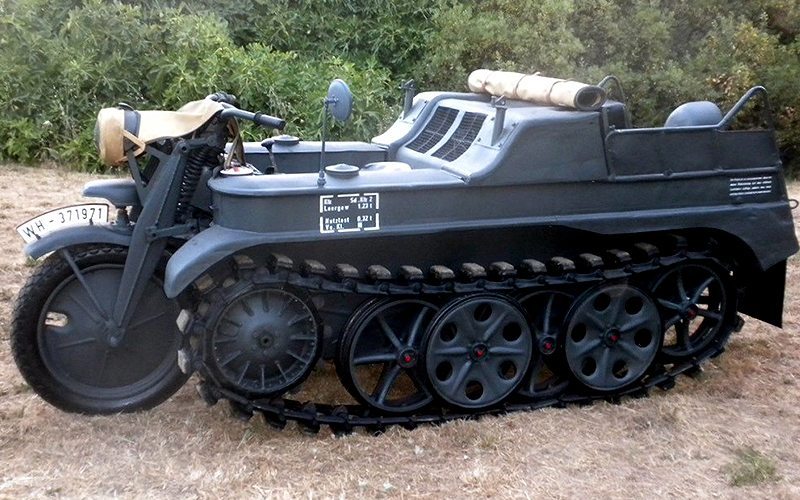
Kettenkrad SDFZ Tracked Motorcycle: Yeah that wonky motorcycle half-track you see towing planes in WWII Pics.
Just look at this pic! Who wouldn’t want to try out this crazy German contraption!
. . .
They also have some other tank-like tracked vehicles that are not tanks.
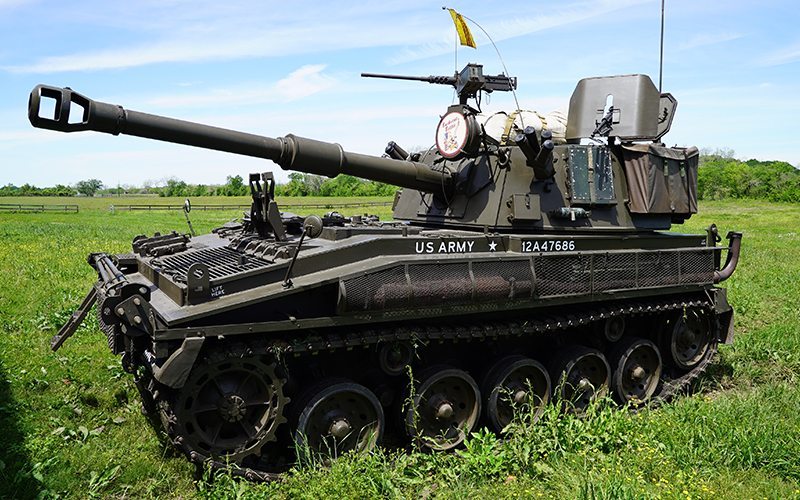
Abbot FV433: This SPG is made up to look like the US M109 155mm SPG still in service.
This is a self-propelled artillery piece, a British one, and has a propane gun that makes lots of noise but doesn’t shoot a projectile. Another option if you don’t want to go with one of the deluxe packages. The M109 the Abbot was modified to look like started its life in the 60s and saw use in Vietnam, and modern versions are still in use by the US Army.
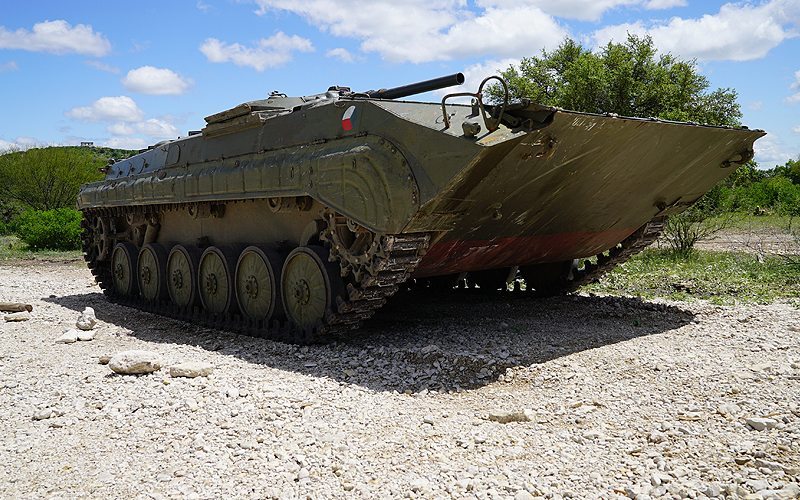
BMP 1: The first IFV
This APC with attitude was meant to do more than just deliver troops like a regular boring APC like the M113. No, the BMP delivered fewer, in less comfort, but it brought some heavy firepower normal infantry didn’t have.
With this bad boy, you can pack a bunch of friends into the back for a very hot uncomfortable ride while you drive! I wonder if Drivetanks.com has an award if you can make all the passengers puke!
But that’s not all! They have Towed Guns, Mortars, and Machine guns!
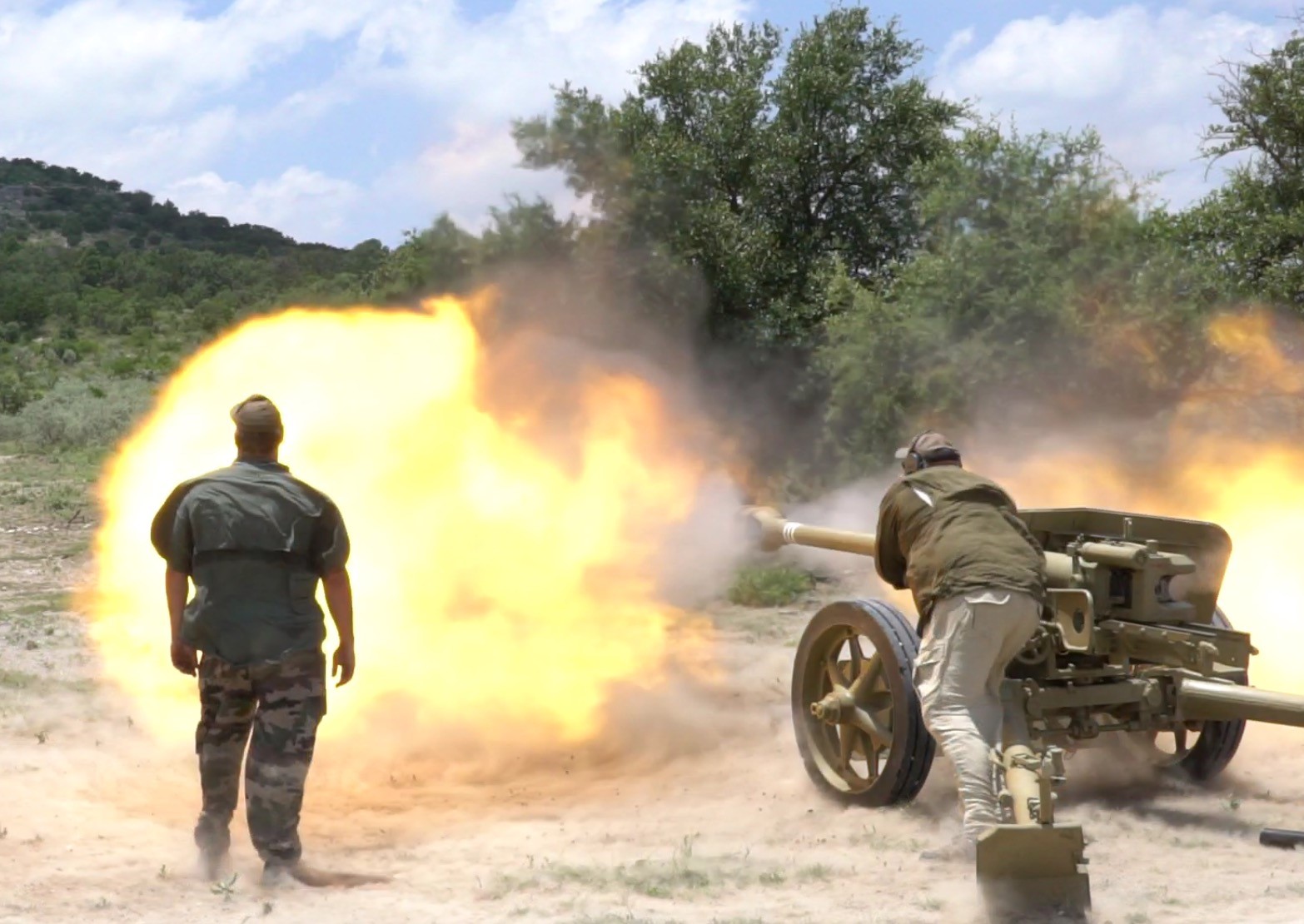
Germann 75mm PAK 40 AT Gun: This puppy works too!
This fully functional German AT gun is available to shoot. not cheap, but less than shooting a tank’s gun. This gun accounted for an awful lot of Sherman tanks during the war, but the Sherman, in turn, killed a bunch of them. I’m pretty sure this gun has been on several TV shows, but I’m not 100% sure.
German 25mm PAK 113: Small bang, small bucks, but it’s still a BIG gun!
A little AT gun for a cheaper alternative to the bigger stuff. not much to be said, if your coming to Drivetanks.com your coming for the big boom boom, right?!
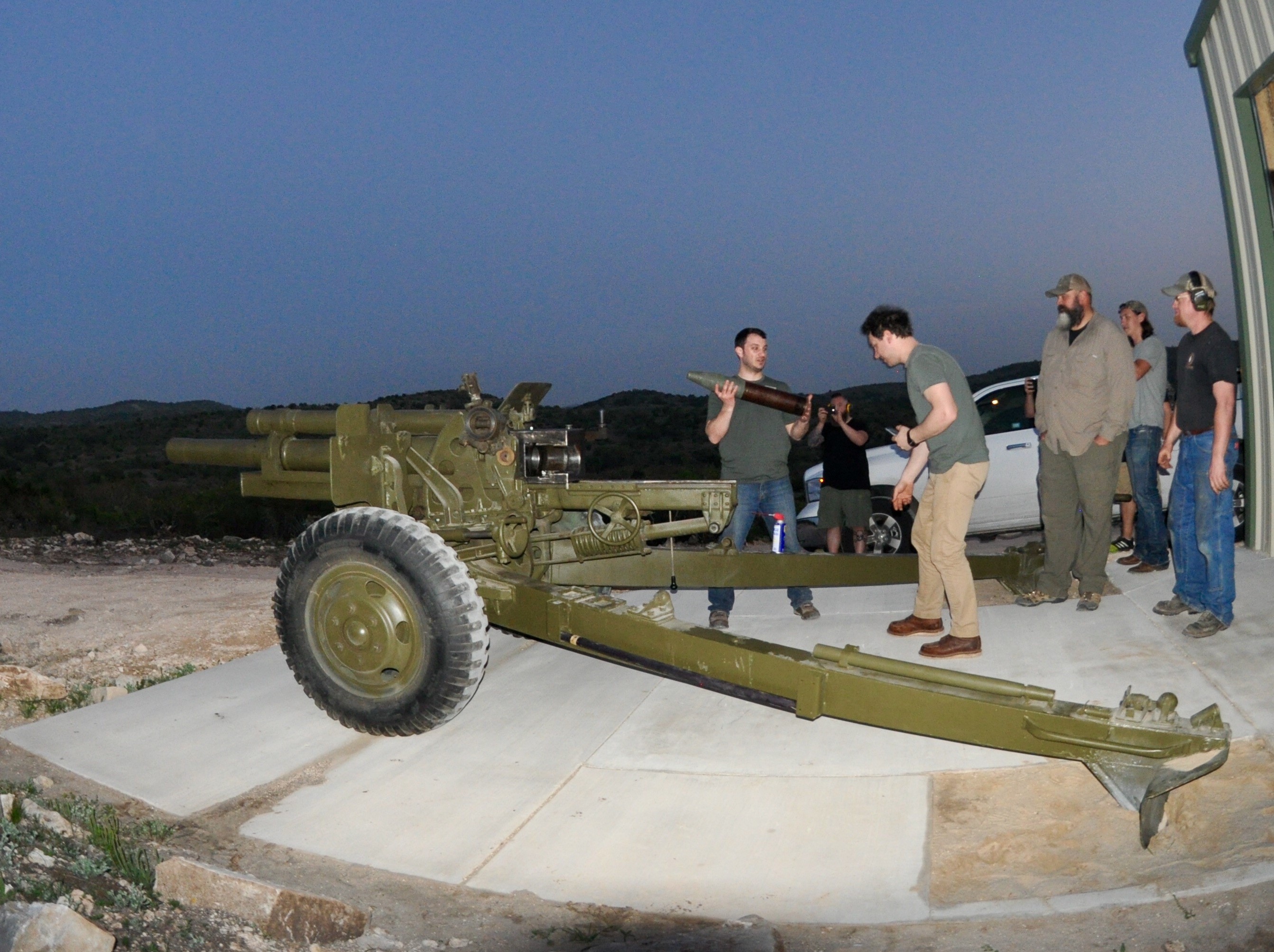
U.S. M2A1 105mm light Howitzer: The 105 towed gun of the US Army for most of the WWII
This gun saw lots of action and was a great gun for its size. For a modest price, you can pop a round off from this gun too! If you want to know what it was like to serve in a light artillery battery, or just want to pop a few rounds off for nostalgia, you can do it here, and that’s damn cool! The Hippies in California would freak out if we tried shooting off something this cool here!!
US M1 81mm Mortar: The main WWII US Mortar!
I do not know of another place you can fire off a mortar, and that makes this option awesome all on its own. The 81mm M1 Mortar was used everywhere the US fought during the war and who would pass up the change to log a hunk of history from it?
U.S. M2 60mm Mortar: In US Infantries Mortar during WWII
This is like it’s bigger brother, just with less explosive charge, less range, and less weight. Oh, and it’s cheaper to shoot off.
The British ML 2inch 50mm Mortar: A small Brit Mortar
The cheapest mortar option. Small, but still a mortar!
Now let’s talk about Machine Guns and other firearms. Machine guns are pretty damn cool. Having been around a long time, there are lots of different kinds of Machine guns, and Drivetanks.com has a plethra of them!
The prize of the Machine collection has to be the M134 GE Minigun. I do not recall ever reading why they called this beast a minigun because it’s a monster of a weapon, bigger and heavier than an M2 Machine gun. These guns are technological Marvels, and contrary to Hollywood use, not man portable in any way. These guns have a selectable rate of fire of 3000 or 6000 rounds a minute. Your average GPMG has a 650 RPM rate of fire. These guns use an electric motor to spin the barrels and drive the feed mechanism, in theory making them more reliable at higher RPM they run, the six barrels allowed the barrels a chance to cool, but sustained fire would melt them down. These weapons have seen a lot of combat over the years, usually mounted on a helicopter of some type, but also on other vehicles that can haul the required ammo and have a compatible electrical system.
Next up on the Bad boys of the Machine list they have would be the M2HB Browning .50 caliber Machine gun. This heavy machine gun has been in service with the US Military since 1933 and is covered in more detail in this post. You get to shoot this gun as a part of the Sherman tank packages.
They have a lot of other more mundane machine guns but come on, a machine gun is damn cool no matter the size or type. So let’s list them!
The GE M134
The Browning M2 HB .50 Browning.
The M1919 .30 Caliber Machine gun (WWII light/Medium/heavy mg of US Army)
The M60E4 7.62 Nato Machine gun (updated Vietnam Era MG still in use)
M249 SAW 5.56 NATO light machine gun
M3 Grease Gun .45 ACP SMG (used by US Army from 43 into the 90s)
MG-42 German WWII machine gun 1200 to 1500 rounds per minute of fun!
MG-34 German WWII Machine gun (this one is a semi-auto version)
H&K MP7 (modern 9mm SMG)
MP-40 German WWII 9mm SMG
PPsh-41 Russian WWII SMG
PKM Soviet Medium Machine gun
DT Machine gun (Early war soviet light MG
They also have a selection of Rifles, sniper rifles and assault rifles and a flamethrower.
US M1 Carbine.30 caliber WWII Carbine
US M1 Garand 30 caliber (30-06), rifle (WWII standard infantry rifle)
M4 Carbine (Modern 5.56 Nato, US Infantry weapon)
K98 German WWII bolt action rifle
Mosin Nagant Russian Bolt action rifle
AK-47 Russian assault rifle.
Barrett M82 .50 caliber sniper rifle
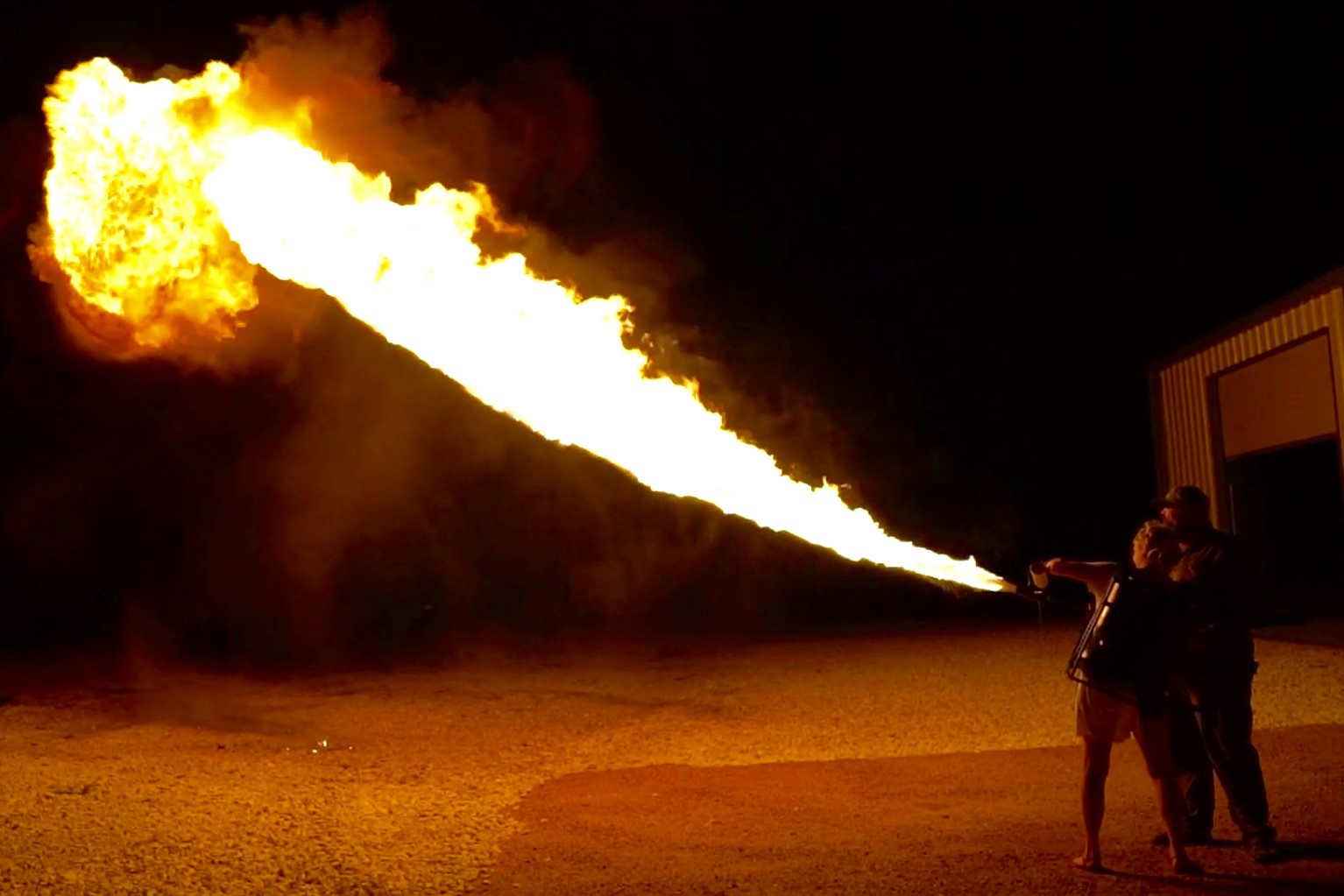
US M9 Flamethrower, (Vietnam era, and last flamethrower used by US troops)
Yeah, a flamethrower! How cool is that?!
So tanks, APCs, SPG, Artillery pieces, AT guns, Mortars, and Machine Guns! If you’re not some kind of wimp, this place really is the most wonderful place on earth. I would rather go here, at any cost versus a trip to any Disney park, Cruise, or show. This place offers a chance to touch, use, and shoot history, hard real history. Honestly though, if this place had no historic value at all, it would still be damn good time, and something really you can only get in good old US of A, specifically in the great state of Texas!
This is all run an own by private US Citizens, and some people might think civilians running around owning tanks with working guns and tons of machine guns, and letting anyone willing to pay a chance to use them is a bad idea, well, you’re wrong, and this is exactly the type of thing that makes the United States so great!
There is a process you have to go through to be allowed to own these items, but it’s not all that hard as long as you’re not a criminal and are willing to fork over the cash to the US Government, and your state and county are ok with it. All shooting and vehicle use is only done after people are thoroughly instructed on everything use, (the class time is all part of the fun!), and while the guest is using the tank or Machine gun, an instructor is standing right there making sure everything is safe.
I can think of no place I would rather go for a vacation, if I could dig up the cash, and get the wife’s approval, than Drivetanks.com and the amazing Ox Ranch!
If you are interested in booking a trip to drive their tanks, shoot their machine guns, or hunt big game on the greater ranch, you can contact them with the information below.
So my last post I mentioned some issues, and that I thought they would clear up, well, they did, but they got worse first.
My wife and I had a very serious health issue, and that really took all my attention, but everything is good now. Life should be returning to normal, and since it’s fall, work will get a little slower, so more content should be up soon.
Thanks for your patience if you’ve been waiting on content.
My Comcast problems have been solved. They finally got all their ducks in a row after over three weeks, four techs, and six service calls, I have reliable internet again!
All wasn’t lost in those three weeks. I did spend a lot of time reading books I’ve picked up, but haven’t had much time to read, as a result, the Books section will get a huge update very soon. I also spent time cleaning up and rebuilding my main computer, and it is now running in tip top condition!
This week and last week have been slow and frustrating weeks. Comcast cable is out at my home, the place I run the site from, and may be out for a month.
This week has been a tad slow, my day job was hard, and I’ve had a cold for over a week now.
I have picked up a bunch of new books on the Sherman. In particular on the Firefly and British Sherman use. I will be updating a bunch of posts after I read through it all. Expect a lot of updated photo captions.
In the new posts, I will update you on what’s been going on a bit behind the scenes for the week.
This week has been interesting, it’s 4th of July night, and I’m just wrapping things up for the evening before hitting the sack. It sounds like a firing range outside as people celebrate with fireworks and firearms. The Dogs gone deaf, and doesn’t notice, but the cats are scare, and I havn’t seen them in hours.
Anyway, this weekend I spent time on sorting through all the stuff I’ve downloaded over the past few months. I’ve literally downloaded thousands of pictures and hundreds of PDFs on various topics. The Sherman related ones will be going up on the site soon.
I should have some posts on Sherman tank plastic models and French Shermans up soon, and I’ll be doing a post on Dutch Shermans, and Sherman based SPGs soon.
In other news, Drive tanks.coma outfut out of Texas noticed my site and has contacted me! I’m going to be doing a post on them soon with info on their fully operational Sherman tank, and that includes all it’s guns people, and what you can do with it with American Dollars! I hope to be able to take a trip out and see what the whole thing is all about! This place looks like it may be the most magical place on earth, not Disneyland!
Drive Tanks.coms Amazing Easy 8No this isn’t a painting, just a DriveTanks.com awesome Sherman
In future news, I will be signing up for Facebook and Twitter for the site.
Storage Ammo and Everything Else: The Army packed a lot of Gear and Tools into the Sherman, along with the Ammo, Guns, and Men
When most people think about a tank, wait, well, most people don’t think about tanks, but when people who think about tanks think about them it’s the gun, the armor, the motor and it running around doing tank things that they think about. That’s not all that a tank is about; a tank is also about storing things, lots of things. Not just ammo, I mean sure, thousands of rounds of MG ammo and over 100 main gun rounds on late model Shermans, but even after the crew had packed all that stuff in, there was still a hell of a lot of other stuff they carried around. The tank had everything it needed to be maintained by the men it was issued to, including manuals, and a limited number of common spare parts for certain components and as much gear the tankers could accumulate to make their lives easier strapped on outside too.
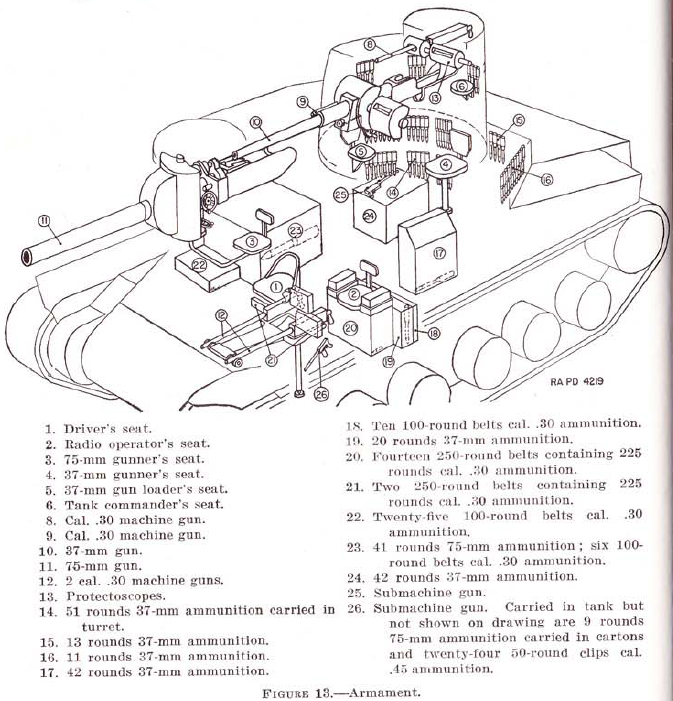
A chart from the M3 Lee manual, TM9-750 showing the internal ammo layout
There are at least 61 hand tools used for maintaining the tanks automotive components. Most of these tools were stored in a tool bag behind the driver. Some items like the non-magnetic screwdriver for adjusting the compass were stored in brackets on or near the device they were specifically for. The oiler was mounted on a bracket by the assistant driver. He probably used it a lot. The huge track adjusting wrench and all the pioneer tools were mounted on the hull on the outside of the Sherman with the 20-foot long tow cable. The tanks weapons, including the main gun, also has a bunch of tools specific to them, also stored in the tank. These included combination wrenches and other special tools to maintain the machine guns, and an eye bolt and breach removing tool for the main gun adding between 6 and 10 more tools. These tools were stored in a toolbox or a spare parts box. The grease gun, or gun lubricating, was mounted on the right rear lower hull, under the turret basket. It had an extension hose stored with it, and probably tubes of grease. This is what the crew would use to lubricate all the grease fitting that just about anything that moved had.
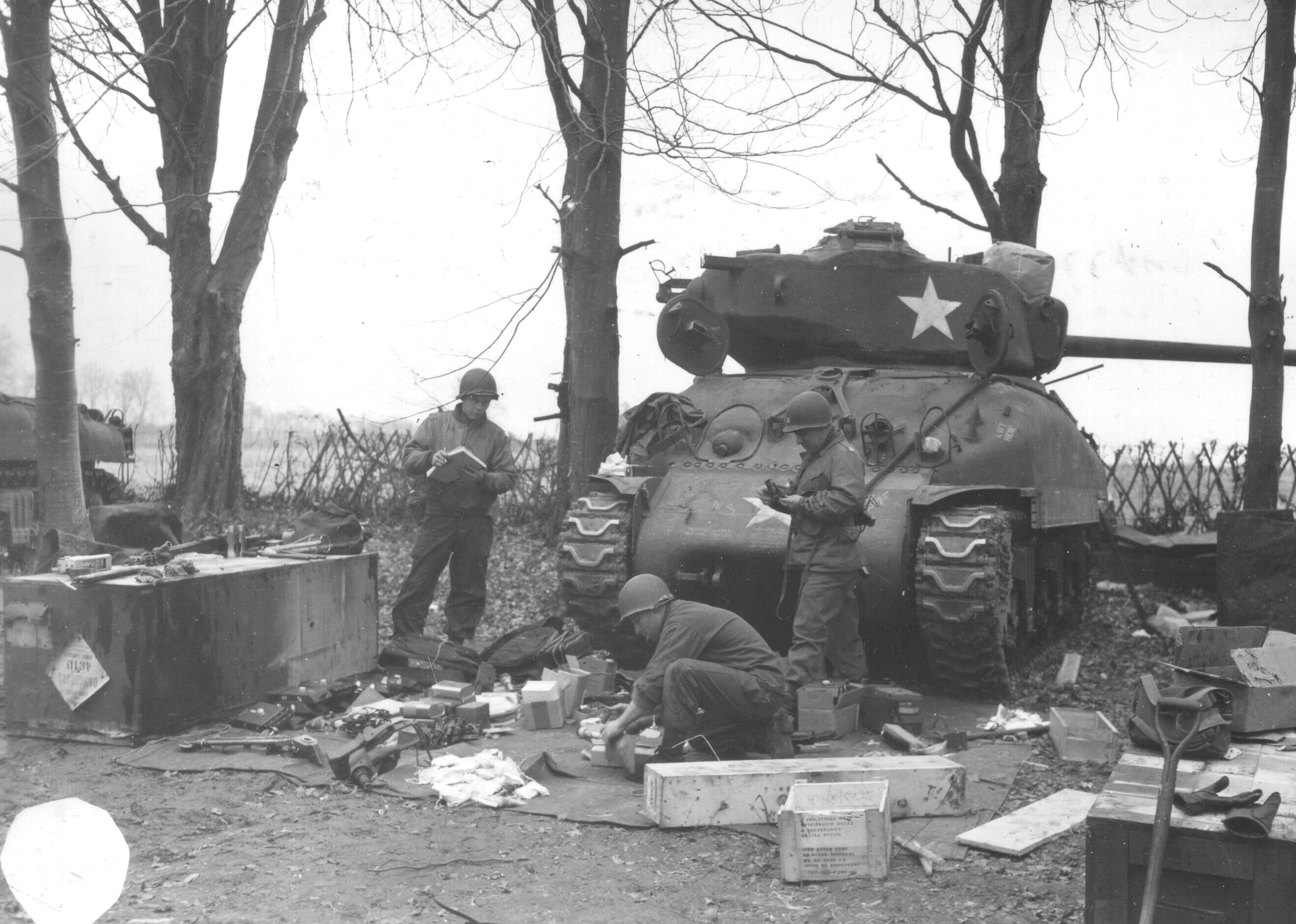
The crew of an M4A1 (76)W Sherman load all the stuff that comes with a freshly issued tank into it.
Now the crew had to pack in the communication gear. The tanks radio antenna broke down into 6 parts including the case and was stored on the blanket roll rack on the rear of the tank on late model Shermans. The early Sherman manuals do not list a location for them that I can find. There was also a flag set, M238, it had its own bracket on the right side of the turret. This flag kit came in a case, had 3 flags, red, orange, and green, and 3 flagstaffs. You also had the radio setup in the back of the turret that was technically removable. The radios also came with a spare parts kit, small tool kit, and spare tubes and a crystal box to change frequencies.
An M4A3 (76)W tank with a lot of stuff stored on the back
The tank was issued with 12 signal flares (they shoot up in the air), and they were mounted in their own box on the battery box. There were 3 white star parachute flares, 3 white star cluster flares, 3 amber parachute flares and 3 green parachute flares. Then there was the panel set. The set, I think was the big orange panels they put on the rear deck, so attacking fighter-bombers could tell US tanks from German ones, came with two panels, and two cases for them. They were also stored in the blanket roll on the foldup shelf on the rear of most late model Shermans.
The Sherman had two fixed 10 pound CO fire extinguishers that could be triggered from inside the tank, and outside if you knew where the pull handles were. They also provided the crew with 2, four pound CO fire extinguishers, on mounted on a bracket on the right side of the transmission, and the other mounted on the rear of the turret basket. They also supplied a small decontaminated apparatus, called the M2, essentially a 1 ½ quart fire extinguisher, filled with a decontaminating agent instead of fire retardant. These were issued all the way into the sixties as a way to clean something like mustard gas residue from the areas of the tank the crew needed to touch. It was stored in a box in the hull, and probably got thrown away a lot.
The crew’s needs were taken into account, and there was a specific storage location inside the tank for 2 days of rations for the five-man crew. Each crew member also had an M1910 canteen mounted near their position. There was a ration box in the right rear sponson, and it could hold either, 30 boxes of “K” rations, 60 cans of “C” rations or 2 or the much larger “D” rations. There was a small 1 burner Coleman stove stored with the rations. You see an awful lot of pictures of Sherman tanks and other AFV with a lot of ration boxes tied on the tank, so the crews appear to have liked to have more than two days food on hand. Of course, rations boxes are not bulletproof, and I bet it wasn’t all that uncommon to find shell splinters or bullets in the ration cans when stored outside.
We are not even close to done here, next up, sighting gear. The tanks were issued with an M13 binocular set; this consisted of the M13 binoculars and the M17 case. These were secured to the turret wall in its own bracket, near the commander’s position. On late model Shermans, there was a box next to the radio that held 2 spare vision blocks for the commanders all around vision cupola. In a box behind the driver, you could find 10 spare bulbs for either the elevation quadrant or azimuth indicator. There was also a case for the Gunners Quadrant M1with its own bracket above the 5-gallon water can installed in the right sponson.
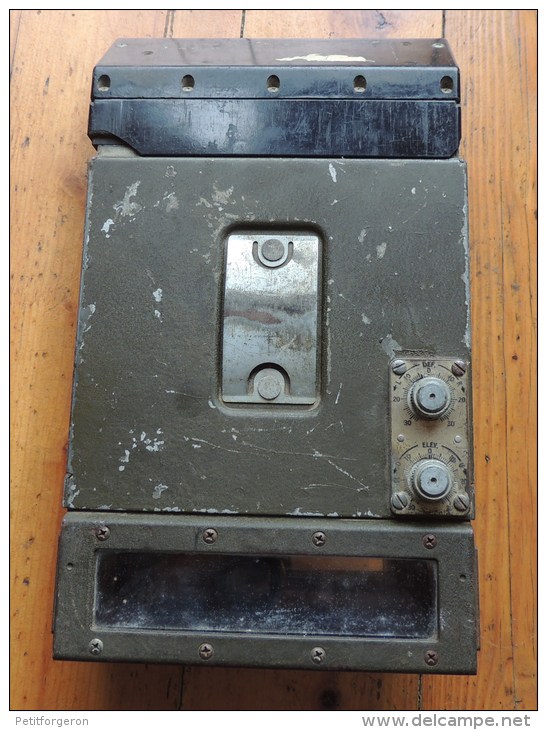
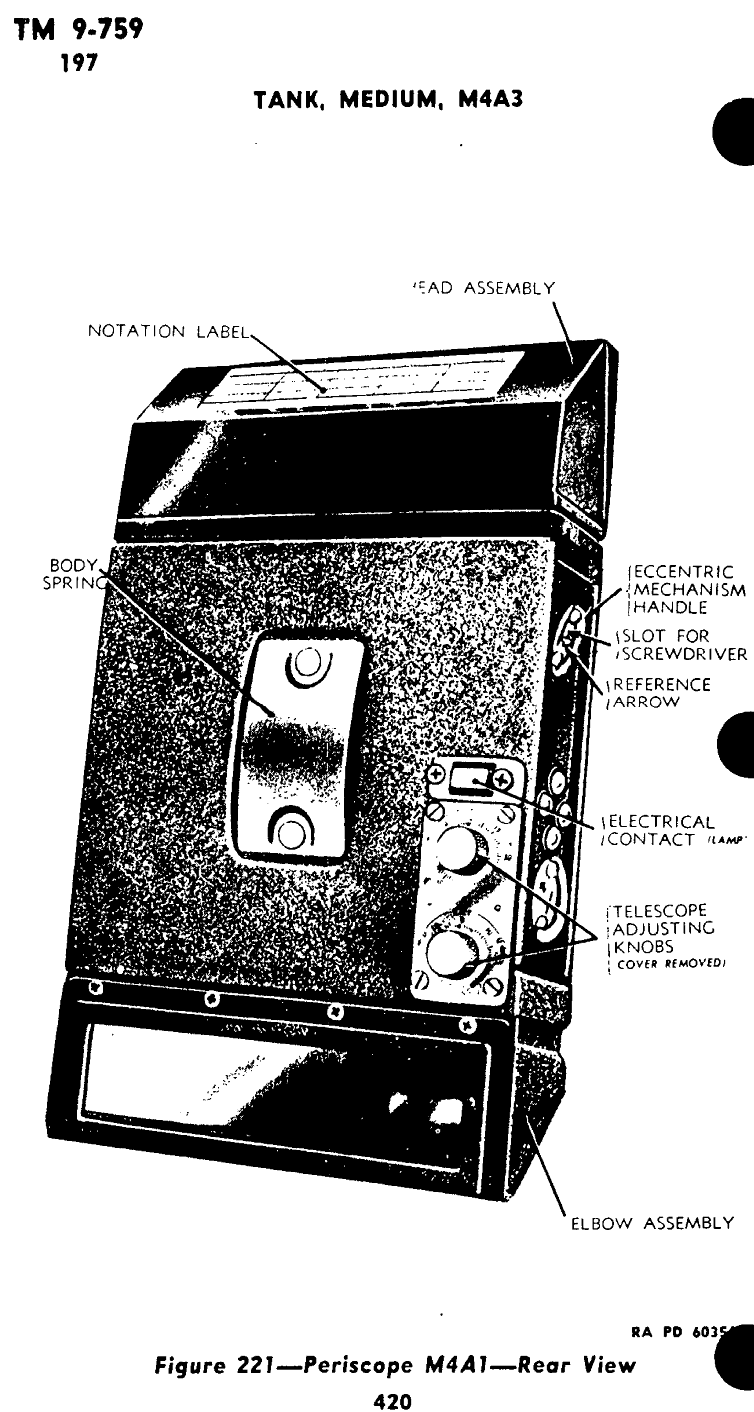
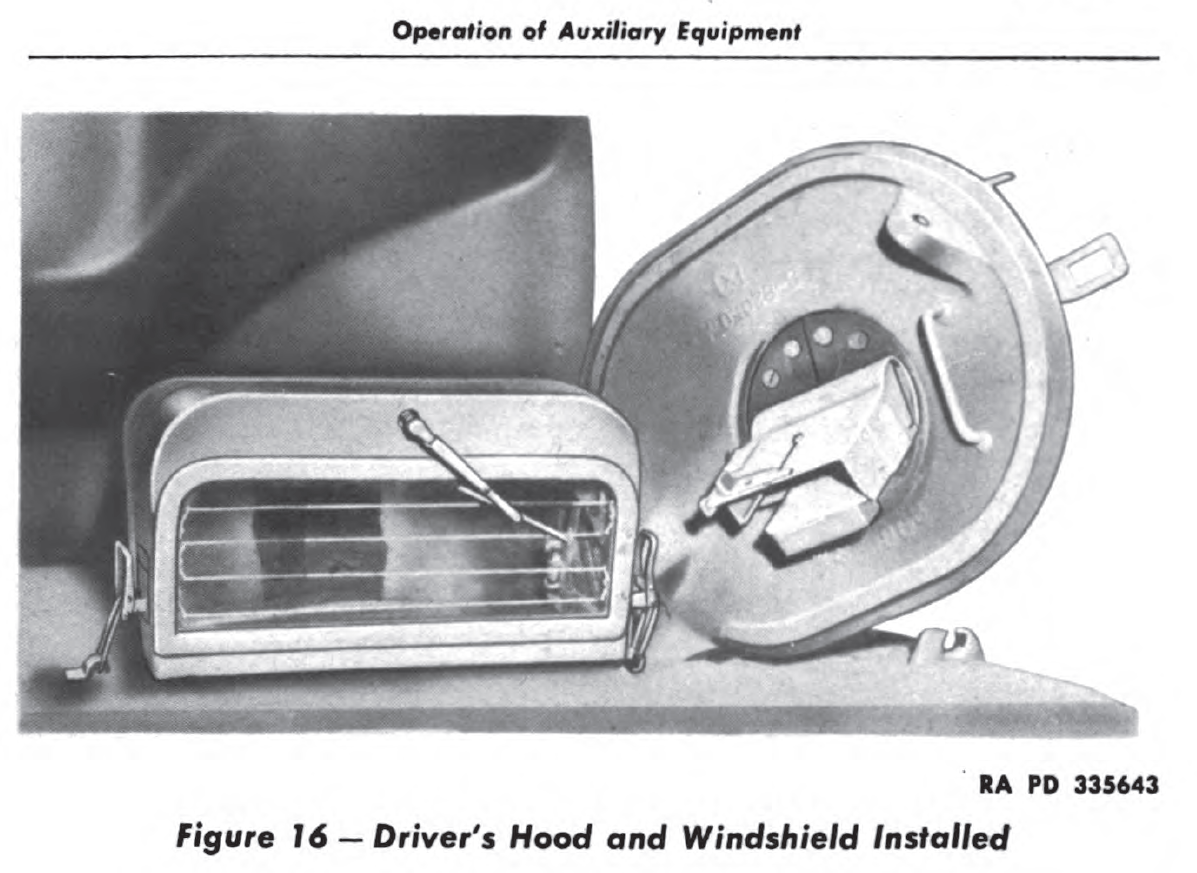
The periscopes and telescopes deserve their own section so here it is. There was a holder for the periscope in the periscope box in the turret, along with 3 periscope heads, for the M6 periscope. There were two hull periscope boxes with the same contents. There were 6 more periscope heads on the bracket for the driver’s hood for a total of 15 spare heads. I’ve read several accounts where both the Germans and Japanese aimed at the periscopes and vision blocks to blind the tanks. In at least one case in the Pacific, the tanks ran out of spare heads during the battle and were blind without opening a hatch. I bet periscope heads were popular as an extra spare on the tank. Now, that was just heads, there were 12, M6 periscopes in each late model Sherman. Six mounted in in various places, one in the driver’s hatch that rotated, and a fixed one in front of him. The co-driver had the same layout, just on the other side, he used the hatch or fixed periscope to aim the bow machine gun. The loader had had a rotating periscope at their station, and the commander had one in his hatch. There were two complete M6 periscopes in brackets on the turret walls, one near the loader, and the other by the commander. The amazing piece of American tank engineering, the driver’s hood holder, stored four complete M6 periscopes, along with all those spare heads and the drivers hood!
This is the predecessor to the M4A1 periscope
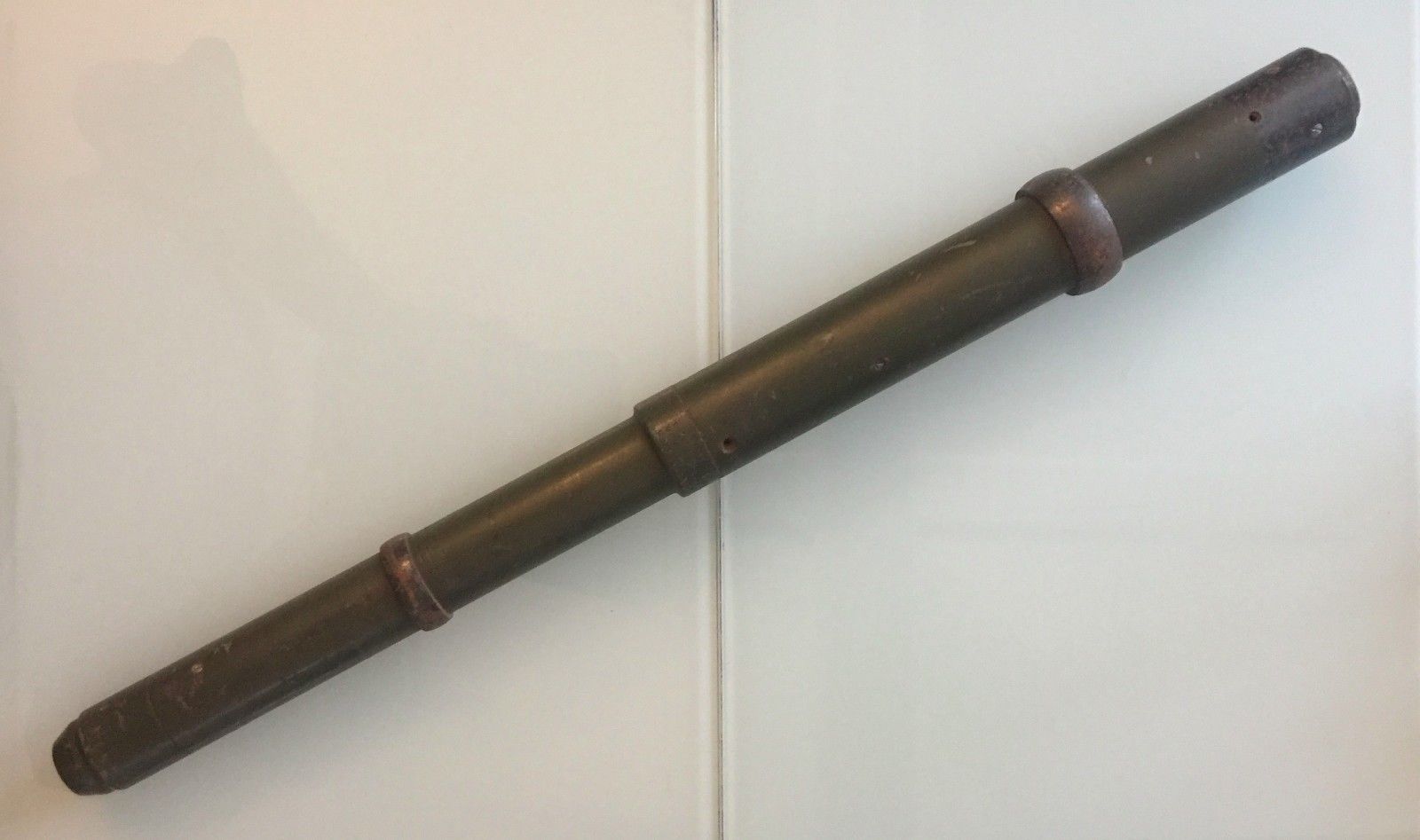
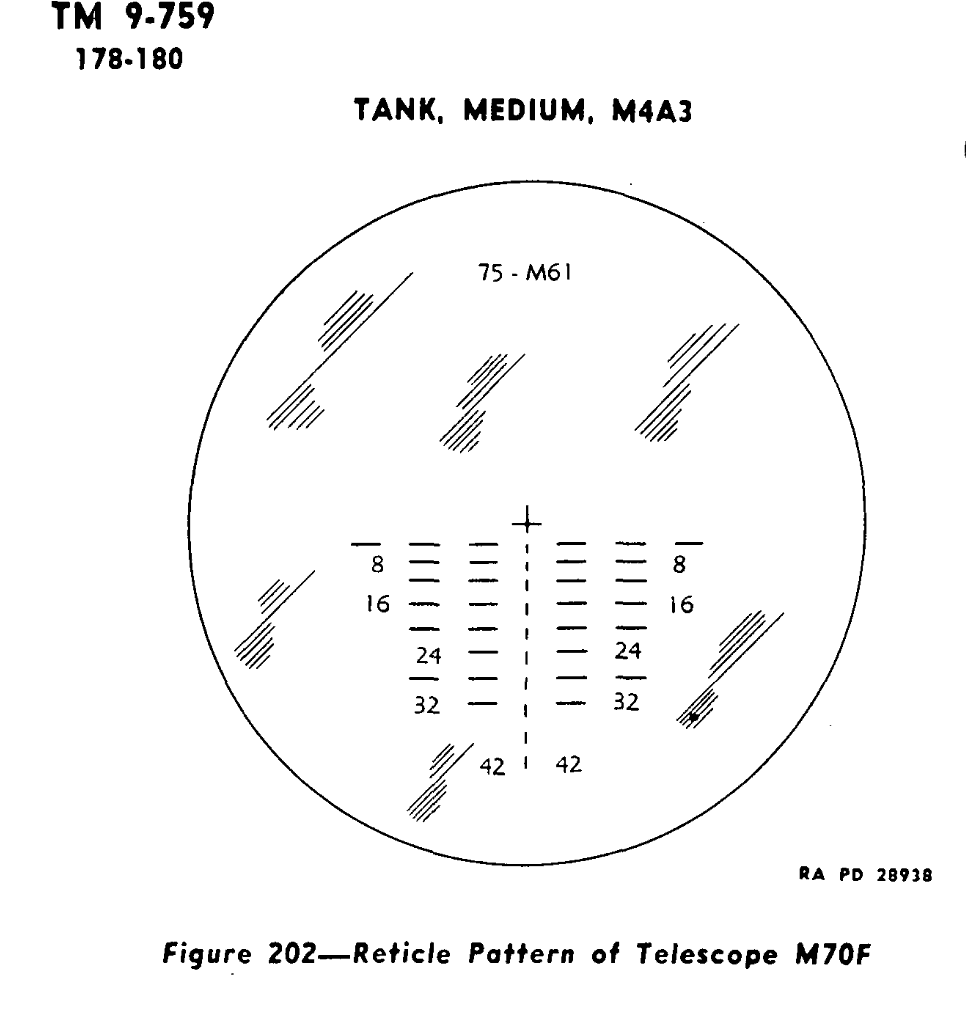
The gunner had his own special set of periscopes. He had an M4A1 periscope with telescope M38A2. On late model Shermans this was the auxiliary sight but allowed the gunner to have a nice wide field of view to find the target, the commander was handing off, mounted in his fixed periscope. He had a complete spare M4A1 periscope in a box on the floor by his feet. They did not give him a spare telescopic sight, in late model Shermans, the M70F was used, and it was mounted on the gun mount. He also had a series of lamps to illuminate the reticles of the M70F and M4A1 sights. He also had lamps for the M1 quadrant, and another for the M9 quadrant.
Oh, we are not even close to done here people, so hang on, it gets even more exciting when we get to the ammo storage and storage changes in a few paragraphs. Anyway, let’s cover some more ‘general equipment’, before getting to ammo storage. Let’s see, the tank had 5 M1936 OD canvas bags to store much of the gear that’s been mentioned, and 1 tool bag for most of the tools listed, stored behind the driver. There were 3 flashlights TL-122 on brackets around the turret, one near the commander, one by the gunner and one by the loader. They carried 12 spare batteries in box C101039. This is the same box all the lamps for the gunner’s sights went. There were also 5 safety belts for the crew’s seats, it may not seem like a vehicle that doesn’t hit 35mph would need them, but off road, I bet they were handy. The tank came with an 18-quart canvas bucket that was stored in the right sponson. There was a special inspection lamp stored in the toolbox. The spare bulb was stored with the other spare bulbs in box C101039. The Home light auxiliary motor had its own accessory kit, it was also stored in the sponson toolbox in the right front sponson. This little kit had a spare spark plug, and the rope and wood pull handle to start the unit if the batteries were dead, plus a set of tools to maintain it.
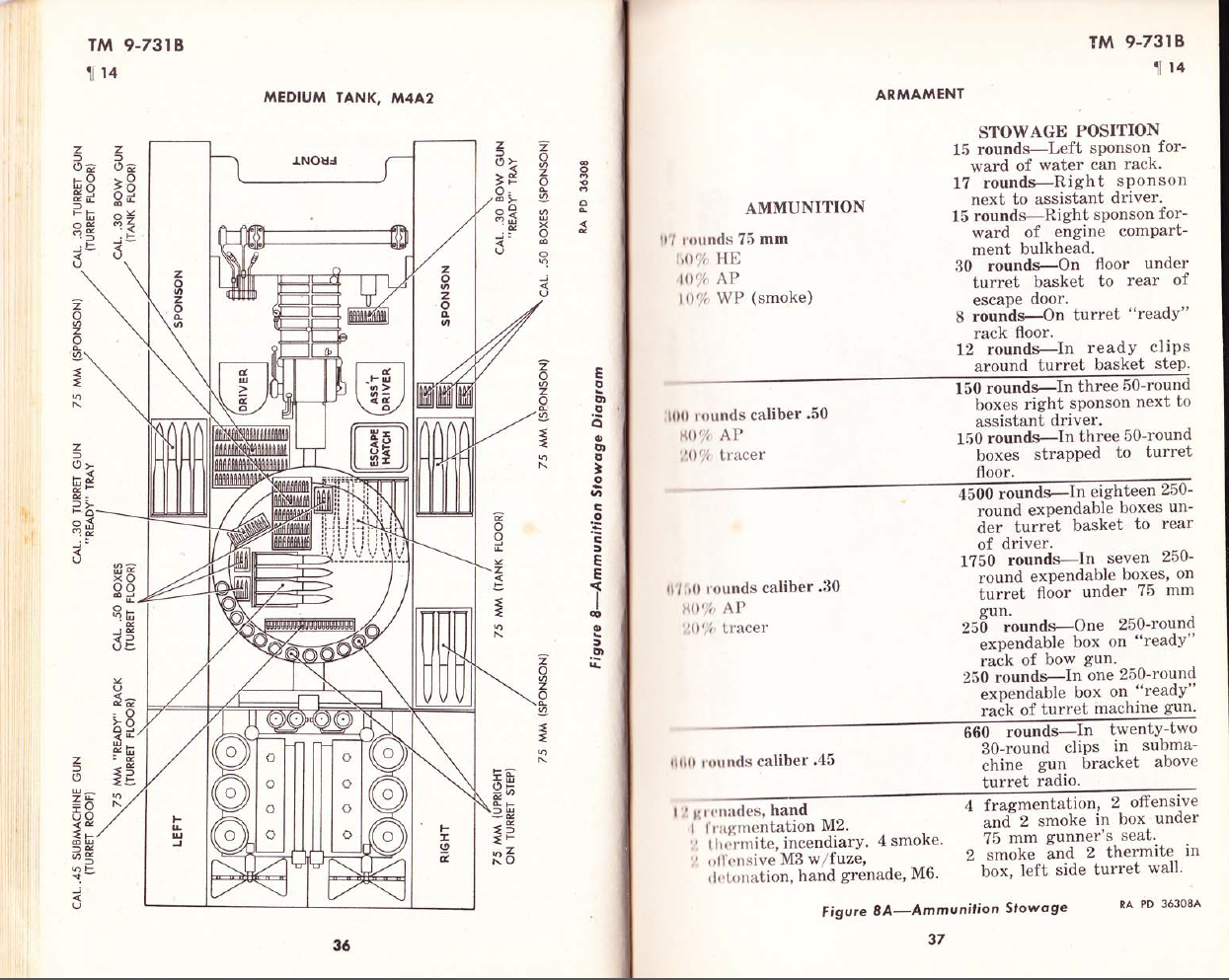
M4A2 ammo storage. Diagrams like this seem to have gone out of favor in the later manuals, as none of them seem to have them.
The Army liked to make sure a tank crew had lots of stuff to read, so they dedicated a small compartment in the right rear sponson for manuals. The manuals ranged from the one for the Homelite generator TM9-1731k, the spare parts list for the tank model, SNL G-104 in the M4A3s case, to manuals for both machine gun types FM23-50, and FM23-65, the manual for whatever main gun the tank had, and the mount it used. There was a manual for the model of the Sherman, TM9-759 for the M4A3, TM9-731B for the M4A2 etc. If there was a system on the tank the crew was expected to maintain, there was a manual available to tell him how to do it. I’m sure in some cases what actually got to the troops with the tank when it was finally issued varied a lot though.
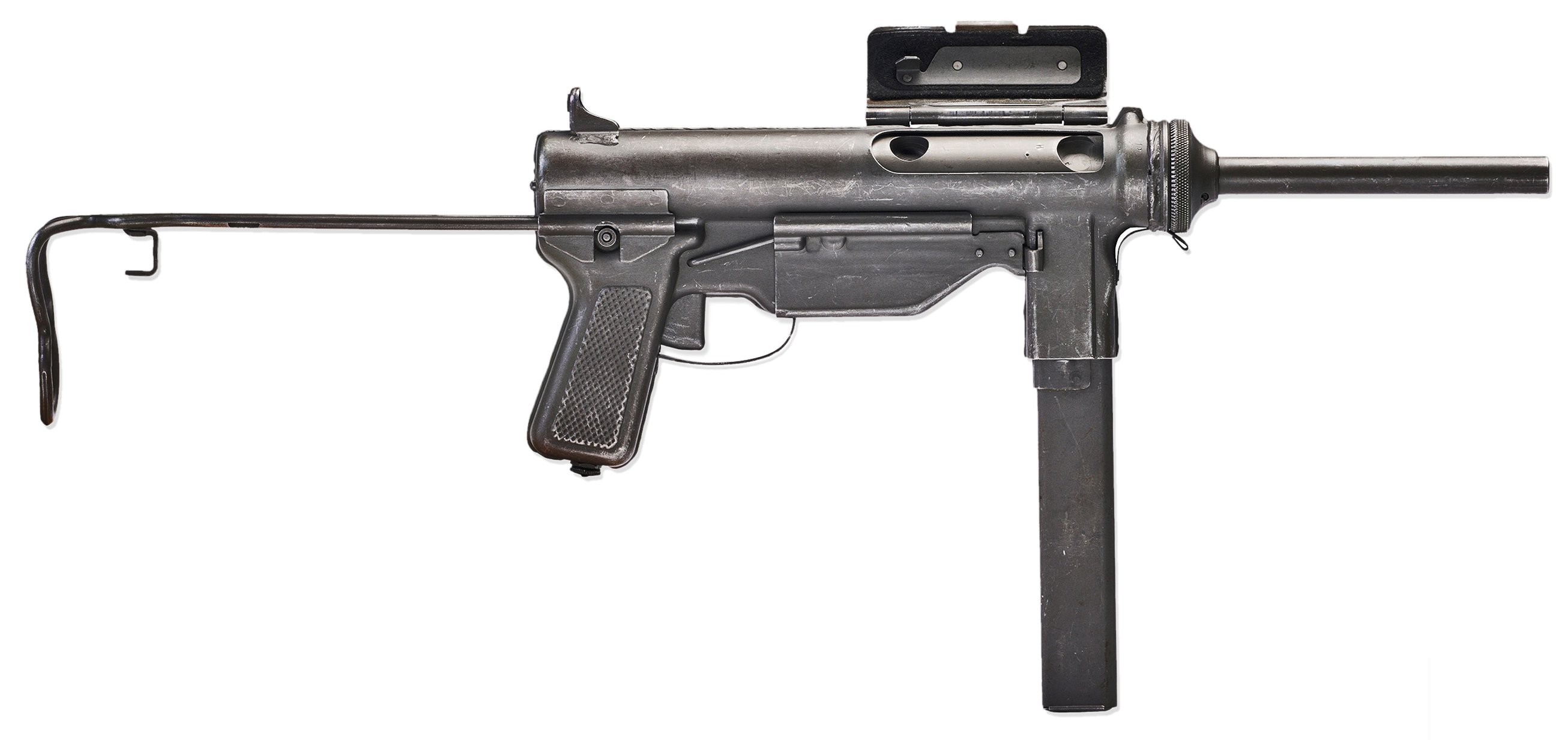
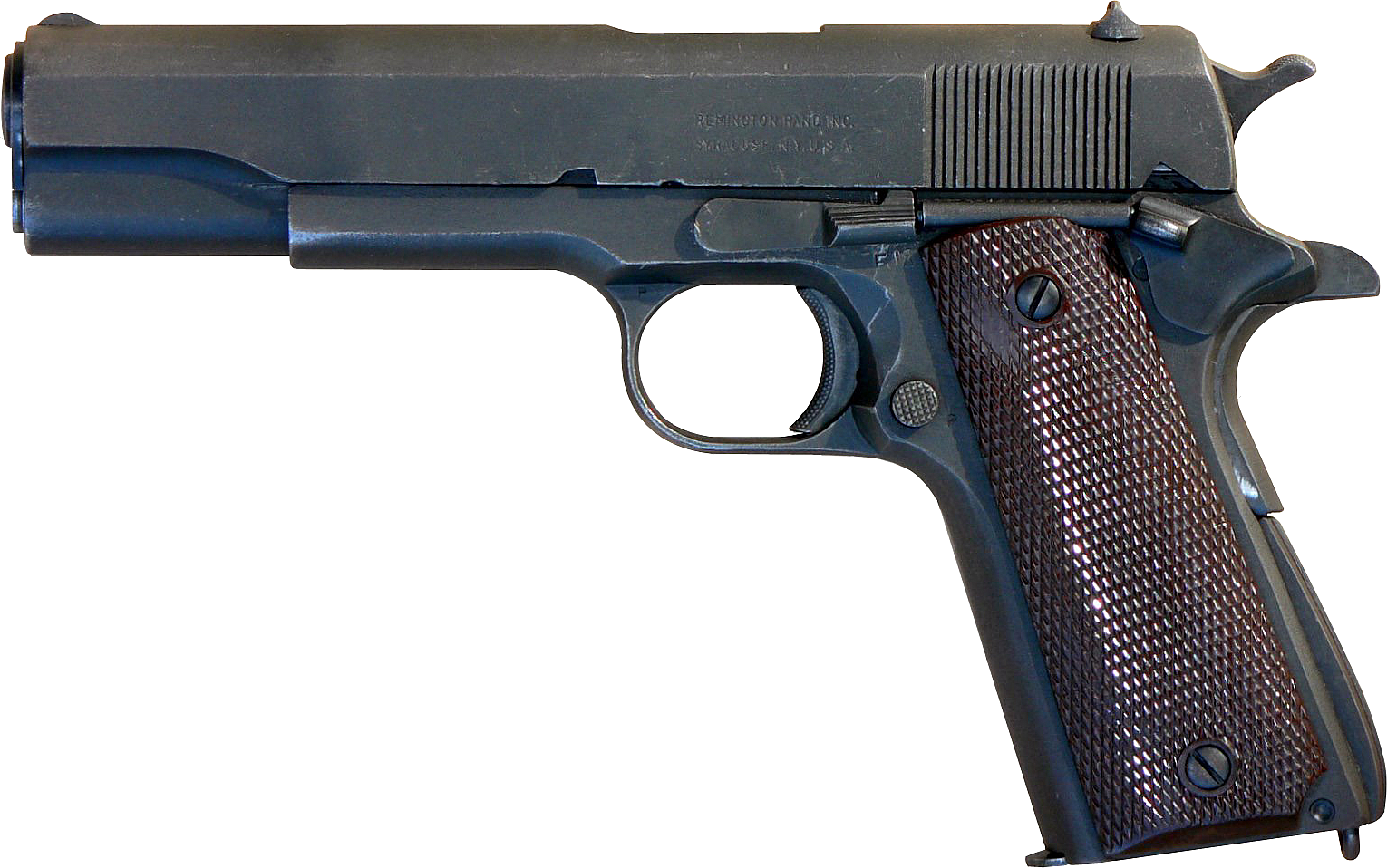
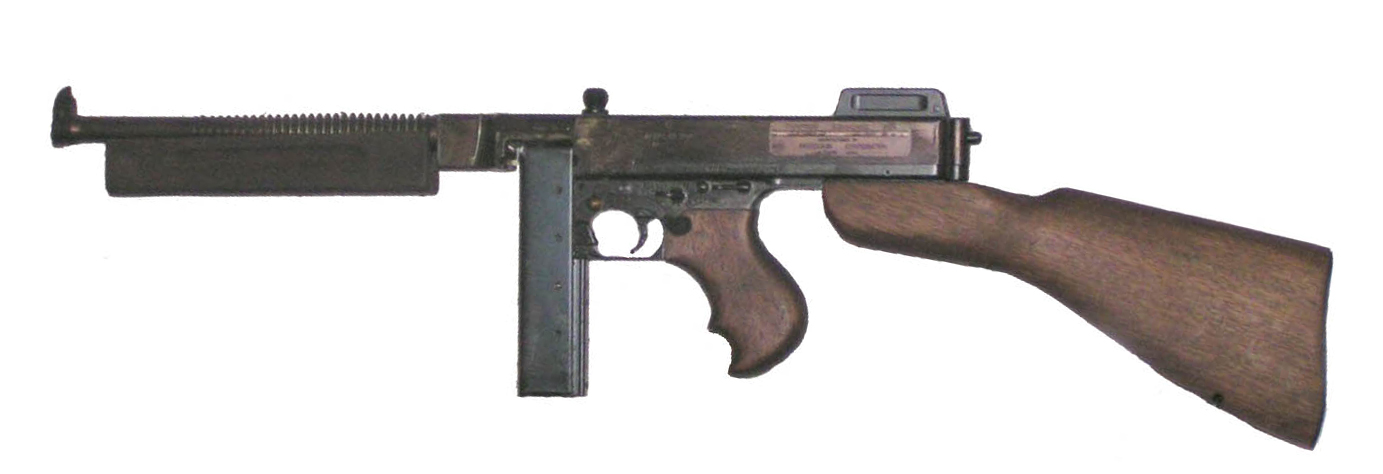
Ok, now for the guns and ammo, as we know, a Sherman could have the M3 75mm gun, the M1A1/A2 76mm gun or the M4 105mm Howitzer. They all also had 2 and in some early models 3, M1919A4 Machine guns and one M2 HB machine gun. On many models, there was a two-inch smoke mortar as well. Then there were the personal weapons of the crew, on late model Shermans, 5 M3 .45ACP submachine guns were supplied, on early Shermans, a single M1928A1. Each crewmember was issued an M1911A1 .45 ACP pistol as well. These weapons, biggest to smallest all had kits to keep them working, and for the machine guns, they carried a lot of spare parts for known parts that wear on Browning machine guns. These spare parts and tools were scattered around in various tool and parts boxes.
M3A1, five of these were issued with the tankM1911A1, each crew member had one of these as well. One of the finest handgun designs ever made.Early Shermans had only one of these.
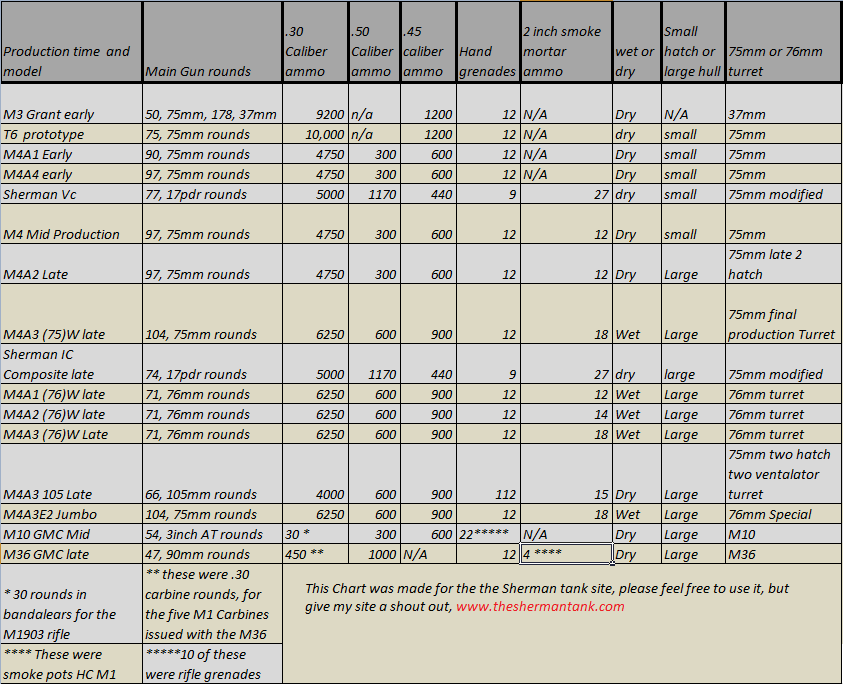
All these weapons needed ammo, and in the main guns case oil! This all had to be stored in the tank. The chart below breaks down the changes in ammo loadout for all the weapons on the Sherman, as the tank went through production changes. The earliest Sherman tanks had ammunition stored all over the vehicle in ammo racks with no additional protection. Ammo was placed in sponson ammo racks, with some around the base of the turret, and in a floor ready rack. More was stored under the floor. These early tanks had a fully floored, and screened in turret basket, with only two sections open to the hull. On these early Shermans, and we could be talking, an M4, M4A1, M4A2 or M4A4 most of the direct vision tanks would fit into this category. These tanks, once the ammo around the base of the turret, and ready rack were used, would have to rotate the turret so the openings I the basket matched up with the hull racks, and or co-driver so he could hand in ammo from the rack near him. The idea behind the full turret basket was to protect the crew from getting their limbs severed by the rotating turret if a crew member stuck it in the wrong place.
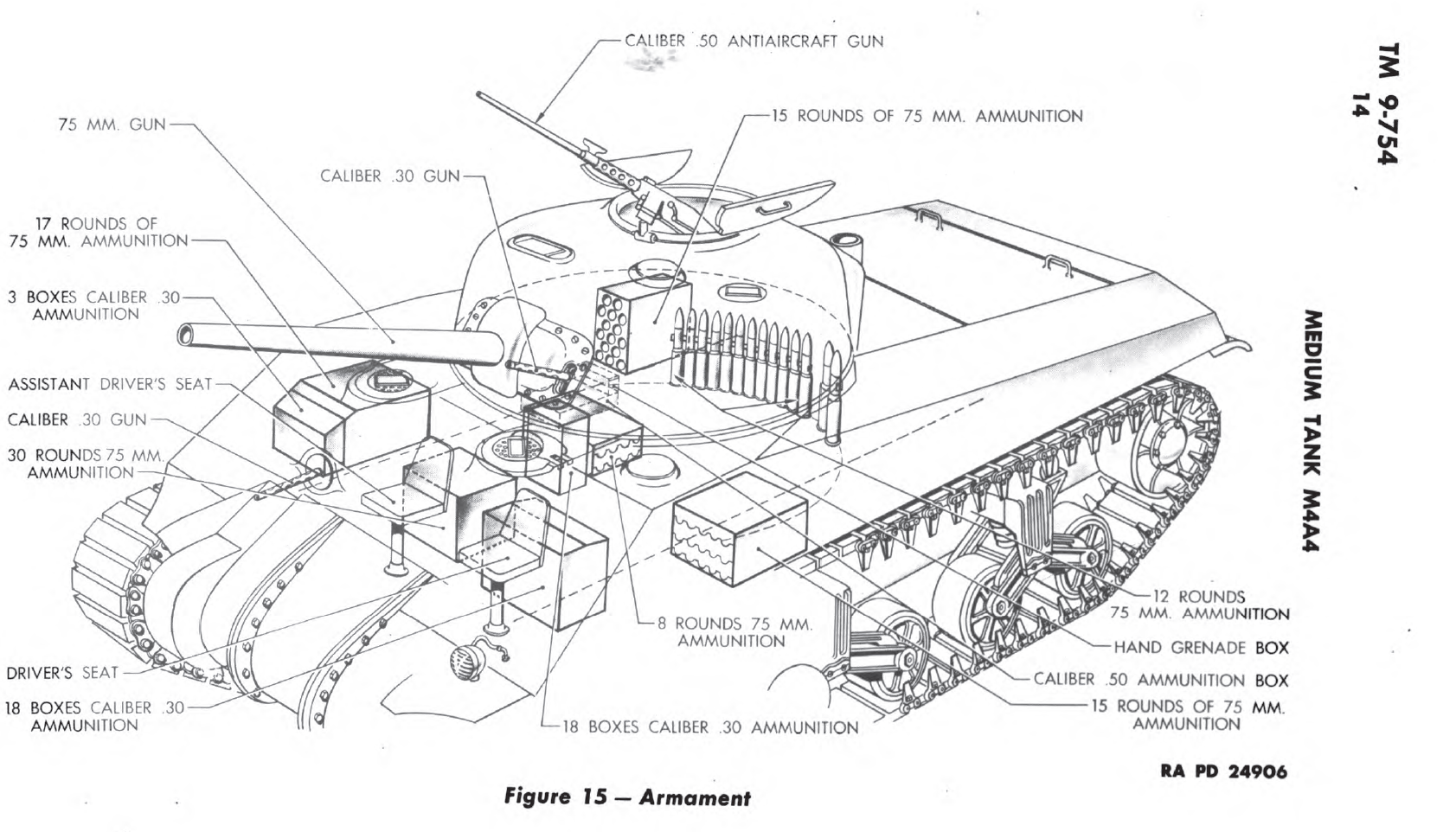
As soon as the Sherman saw extensive combat use, it was clear, they were prone to fire. This was nothing new, every tank was prone to fire, and the Sherman had a tendency to burn catastrophically often launching the turret in the air. When the Army did a study into why this was the case, they found the main gun ammo was the main cause of catastrophic fire losses. When you take a look at the ammo layout chart in the other image, you can see with the ammo stored, in unprotected internal bins all over the crew compartment, an ammo fire was going to be common problem.
This is an ammo layout diagram for the M4A4 tanks, this should be similar to all small hatch early non wet setups before the extra armor was added over the ammo bins.
The first try at a fix for the problem started pretty fast. The fix was to remove the unarmored ready rounds from around the base of the turret, and reduce the size of the floor ready rack and to make it armored. The hull ammo racks were all covered in armor, and extra armor was added to the outside of the sponson racks on both welded and cast hull Shermans. On late production cast hull tanks, the thicker armor over the sponson racks was just added to the casting. They managed to keep the number of main gun rounds pretty consistent even with these changes. Another aspect of the early fix was the removal of the turret screening around the turret basket. The ammo rack changes along with some other improvements were offered in kit form to US tank units already deployed, and it was eventually incorporated into the production lines, and tank overhaul facilities. Many Shermans in British use did not see these get these improvements.
An M4 composite hull tank with a lot stuff loaded on the back.
The real big change in Sherman storage came when the hull changed from the small hatch to large hatch configuration, though all the late model M4A2 tanks with large hatch hulls and 75mm turrets still got the dry ammo storage setup with add-on sponson armor. The other exceptions are the M4 and M4A3 105 tanks, they had their on dry storage setup. The M4 Composite hull tanks with large hatch hulls also kept the dry storage layout. So, the M4A1 (76)W, M4A2 (76)W, the M4A3(75)W, The M4A3 (76)W tanks all had the improved wet ammo racks. This change included moving all main gun ammo into the floor of the hull under the turret. These ammo racks were also surrounded by water filled jackets. Early production wet tanks retained the turret basket, and had hatches that could be opened to access the hull ammo racks, later they only installed a half basket, and eventually removed the basket floor entirely.
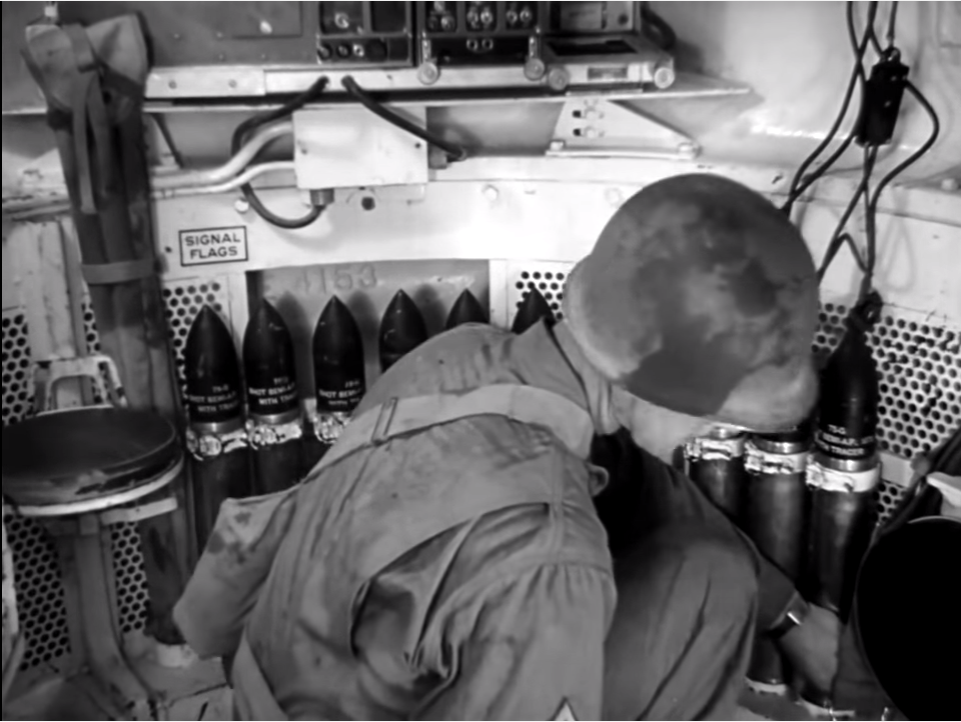
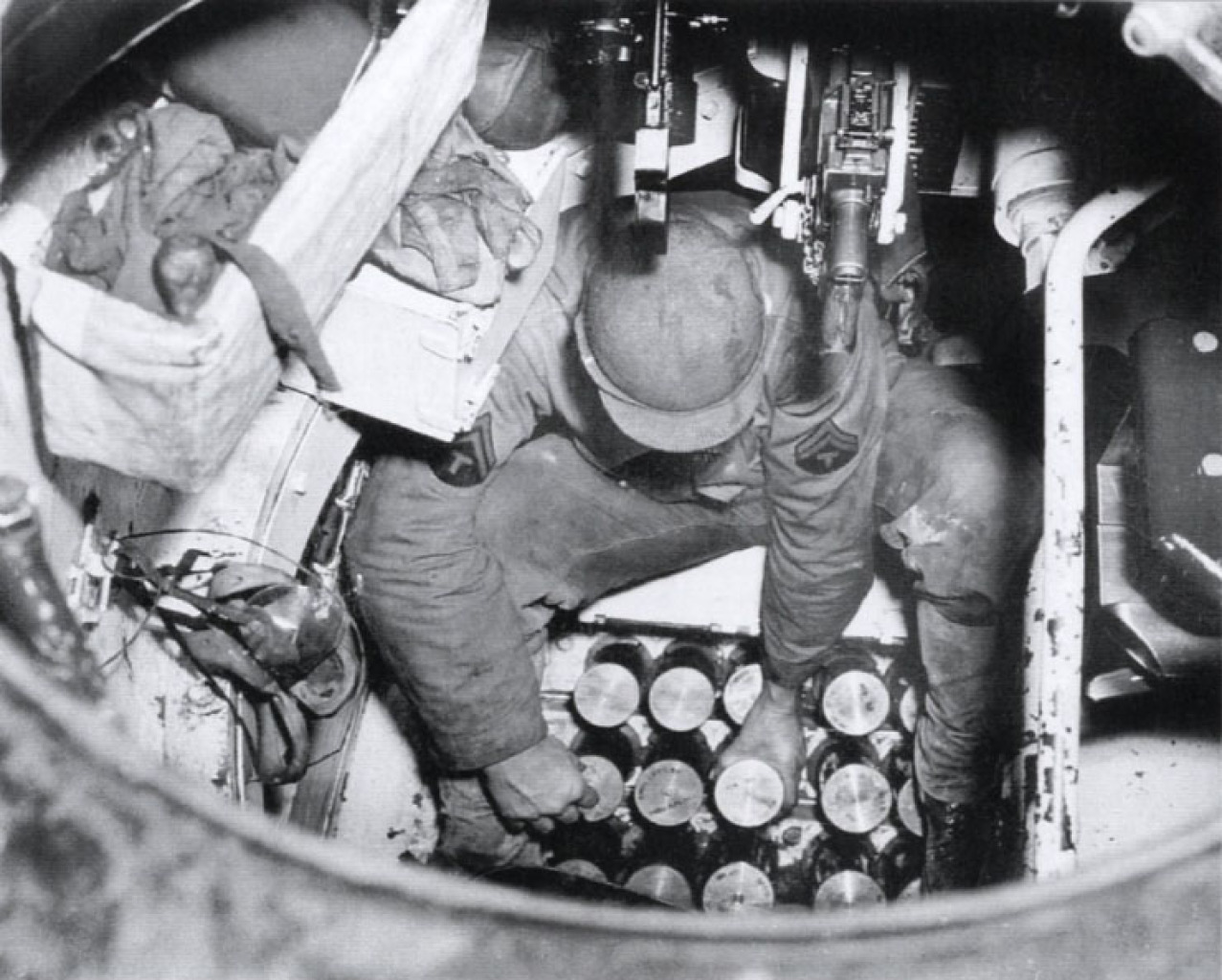
A loader checking out the ammo loaded in the wet storage on an M4A3 (76)W tank
On early Shermans a lot of stuff other than ammo was stored under the turret basket, in the floor, were the ammo was now going. This included the batteries, and a generator setup on some models. Also many of the items listed in the early part of this article were stored in the hull floor. These items including the batteries were moved up into the sponsons. The generator was moved to the rear of the transmission. While making all these changes, they managed to pack even more ammo into the 75mm wet Shermans!
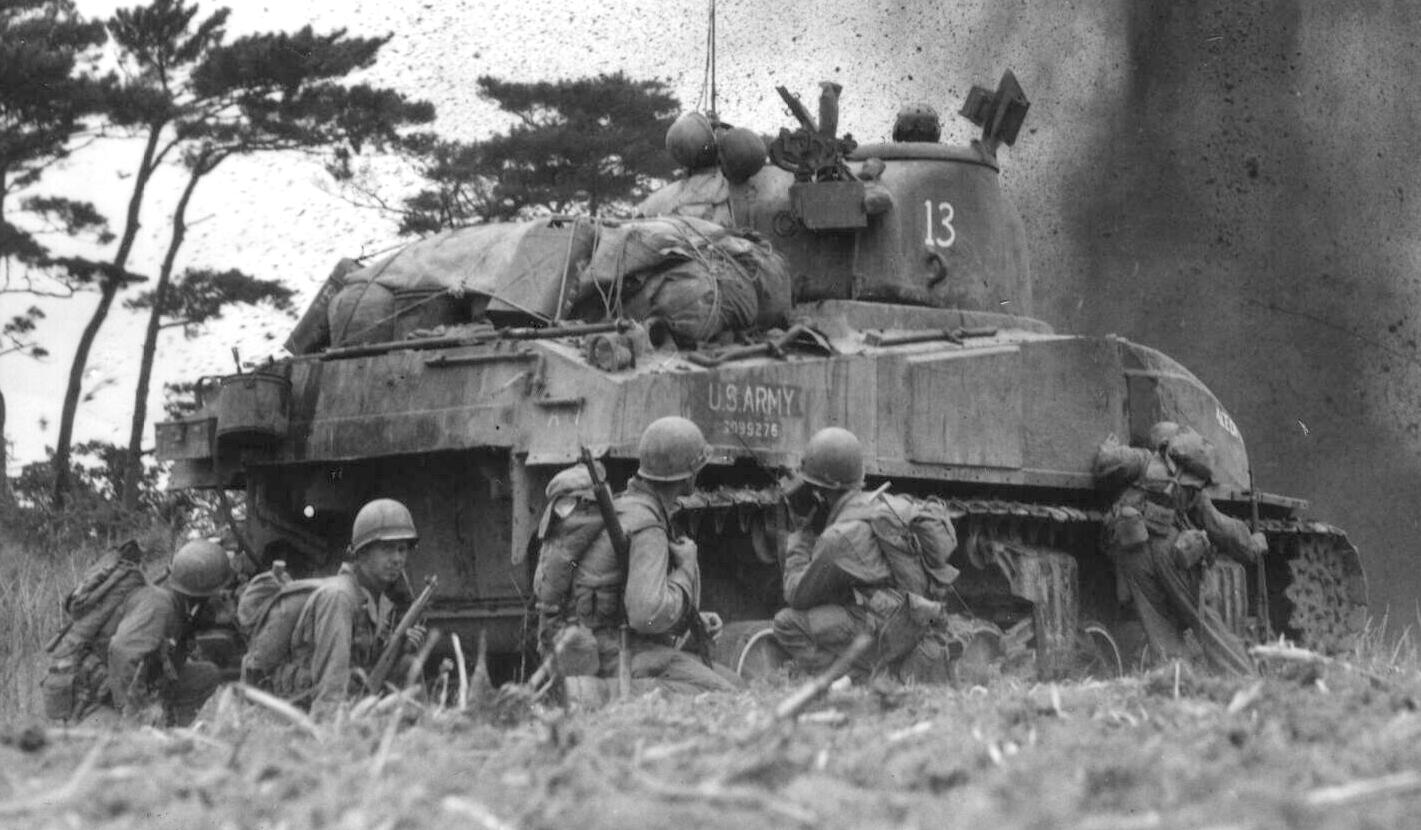
Loads of stuff on the back of an M4A1
So, when all is said and done, if you take into account each round of ammo, a Sherman has nearly 8600 items packed into or onto it, officially. Granted, 7500 of that number is ammo, that still leaves 1100 items stored in or on the tank the crew had to keep track of and I’m sure I didn’t take some things into account. You also have to think about all the personal gear the crew would have stuff in and on the tank. Anything they didn’t want shot or possible stolen had to be stored inside, even with all the official stuff in the tank, the crew would find places to stuff their most valuable personal things. Less valuable things, like their uniforms and anything they decided to keep that couldn’t fit, was all hung outside. If you look at late war pictures of Shermans, they are covered in stuff tied down on their rear decks. It’s no secret US troops were fond of taking souvenirs, and it got pretty rampant once they got into Germany.